LUCKY MATHEBULA | South Africa must return to the basics of public administration
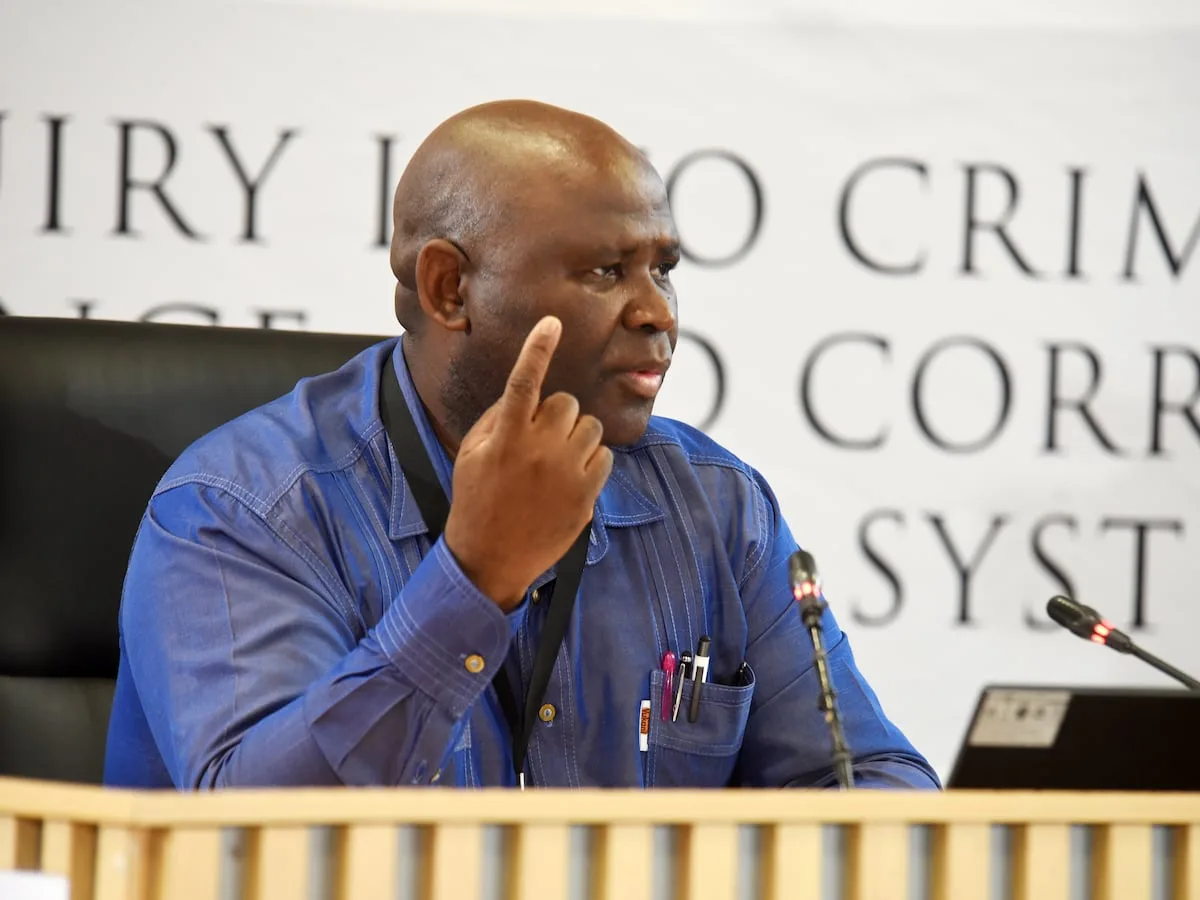
“South Africa has become a graveyard of progressive policies ... a political economy of inefficiency is settling in” — Prof Somadoda Fikeni
Prof Somadoda Fikeni’s testimony before the Madlanga commission should be read as more than another expert intervention in South Africa’s recurring theatre of commissions.
It was, in substance, a reminder that the country’s crisis of governance is not only a crisis of politics, ethics or leadership. It is also, and perhaps more fundamentally, a crisis of public administration and management.
For too long, the dysfunction of the South African state has been explained through familiar categories: political ineptitude, institutional mistrust, constitutional illiteracy, factionalism, corruption and the refusal of politicians to respect the boundary between politics and administration.
These explanations are not wrong. The problem is that they are incomplete. They often miss what Fikeni described, with useful precision, as the political economy of inefficiency.
At the heart of this political economy is a long war against systems: against standard operating procedures, against rules, against institutional memory, against constitutional discipline and against the patient routines through which capable states become capable.
A normative state depends on the supremacy of rules over personalities. A prerogative state, by contrast, depends on discretion, proximity to power and the arbitrary will of those who occupy office.
South Africa’s democratic project has often spoken of the capable state as if it were primarily a political aspiration. Yet the functional mind of any state is its bureaucracy. Without a professional, patriotic, meritocratic and rule-bound public administration, even the most progressive policy becomes a promise without an operating system.
The apartheid state was morally illegitimate, but administratively efficient in executing its own unjust purposes. Democratic South Africa had to dismantle that order. But in the process of de-apartheidisation, it too often weakened the very administrative disciplines required to realise the liberation promise.
In correcting the inherited architecture of apartheid governance, the democratic state did not always build a sufficiently firm normative foundation for what would replace it.
The challenge was never merely to change the faces of the bureaucracy. It was to build a democratic state whose systems could serve constitutional citizenship. That required standards, procedures, institutional memory, accountability and a public-service ethos.
Instead, too many parts of the state allowed transformation to become administratively unmoored.
5News aggregated this summary from the outlet’s public feed. The full article, with all the context, is on www.timeslive.co.za — the content belongs to TimesLIVE.