Rivers of pain in Nairobi and Johannesburg: how bad are they, and what’s (really) being done?
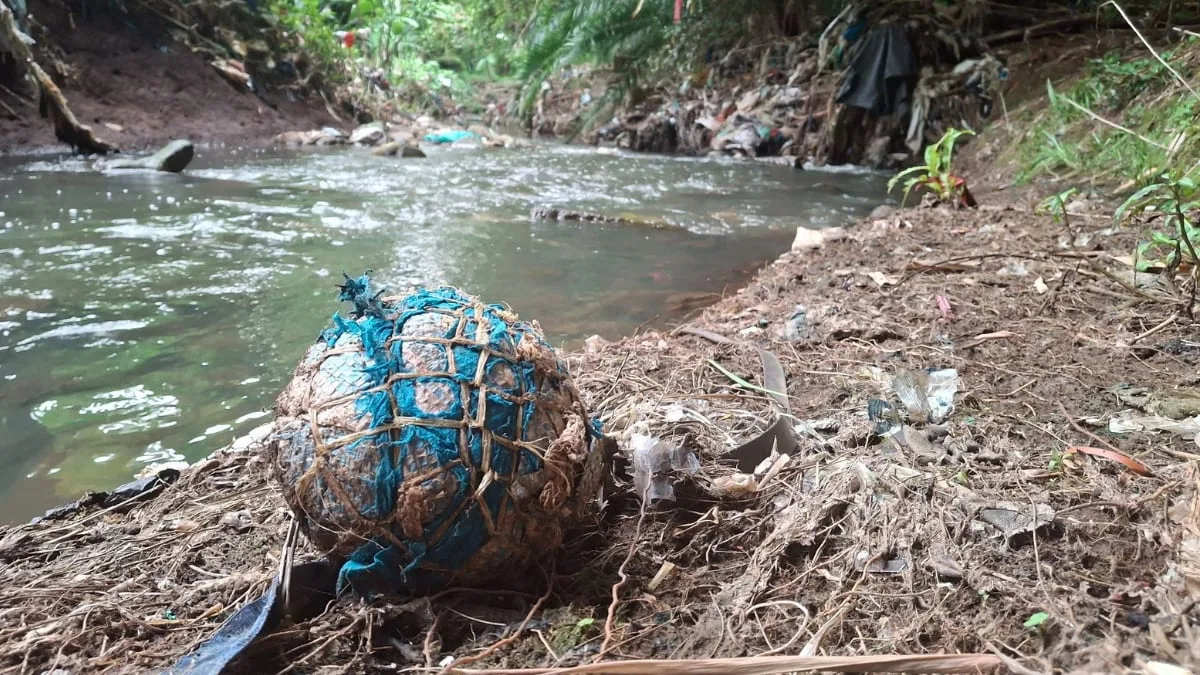
On a recent trip to Nairobi I spent time in Mukuru, a slum divided by the Ngong River, which flows into the Nairobi River.
My first thought on walking in the community was this: I’m in Alexandra, Johannesburg, not Mukuru, and this isn’t the Ngong river, it’s the Jukskei.
I have walked the banks of the Jukskei River for the past 15 years. I have worked in and lived in Alexandra (Alex for short). The similarities with Mukuru are uncanny.
Both are split by rivers, and their low-lying communities are incredibly flood-prone, not least because the riverbanks have been deformed by years of rubble dumping.
Both are hemmed in by industry and highways at their highest points, compressing rapidly growing populations.
They have the same sonic profile (blaring music, shouting, angle grinding, hooting), and the same faecal fug pervades the air, courtesy of terrible drainage in combination with inadequate sanitation.
What might a comparison between these two riverine communities reveal, I wondered? Are their water-related problems really comparable? What about the impacts of those problems on residents’ health and wellbeing? What is being done about it? Are there lessons to be exchanged?
For short rivers, the Ngong and the Jukskei both have a remarkable tendency to break their banks and flood surrounding areas, a phenomenon that has intensified in recent years.
The main problem, most experts I have talked with agree, is rapid stormwater runoff upstream, where buildings and roads have replaced soil and plants, resulting in flash floods. This, combined with the encroachment of both formal and informal settlements to the very edge of the riverbanks, has spelled disaster.
Mukuru experienced its worst floods in 2024, after heavy rains fell over much of Kenya , killing about 300 people and driving 40,000 Nairobians living in slums from their homes.
One of those who lost everything was Faith “Aties” Atieno, who has lived in Mukuru since 1997.
“It came when we were sleeping, and we had to stay and watch everything we have worked for being destroyed,” she says.
Atieno has since moved, but her new home flooded last year, and again in March this year. In May, floodwater still surrounded parts of her neighbourhood in low-lying Mukuru.
Thousands of kilometres to the south, large parts of Alex flooded in March, too. Fortunately, no lives were lost, as happened in December 2022 when floodwaters barrelling down the course of the Jukskei swept worshipers off the banks, drowning 15 of them.
5News aggregated this summary from the outlet’s public feed. The full article, with all the context, is on www.timeslive.co.za — the content belongs to TimesLIVE News.