Who cares for the carers? Malnutrition and its mental health toll
SPONSORED CONTENT The cries of children fill the intensive care unit of the Médecins Sans Frontières/Doctors Without Borders (MSF) Nilefa Kiji nutrition facility in Maiduguri, Borno state, Nigeria.
Nurses move from bed to bed checking vital signs, dispensing therapeutic milk, and reassuring anxious parents.
Every child here is fighting severe acute malnutrition, a condition that continues to claim young lives across northern Nigeria.
Since malnutrition weakens immunity, some children also arrive with other diseases, such as measles, diphtheria, and malaria.
Treatment can last from one week to a month.
Throughout that time, caregivers remain at the hospital, often far from home and burdened with worries of how their families are coping.
The stories of caregivers — often mothers of the children — rarely get told.
Yet their emotional wellbeing is tested by weeks of anxiety from their child’s condition, uncertainty, separation from their families, and the fear of losing a child.
Fatima Ibrahim’s 23-month-old daughter, Aisha, was admitted to the Nilefa Kiji nutrition facility in Maiduguri after battling meningitis and repeated convulsions.
The three weeks spent in hospital were filled with conflicting emotions.
While grateful to see her daughter improve, Fatima could not stop thinking about the eight children she had left at home.
“I am so worried about my children.
Yesterday my older daughter had fever, and her father did not have money for medication.
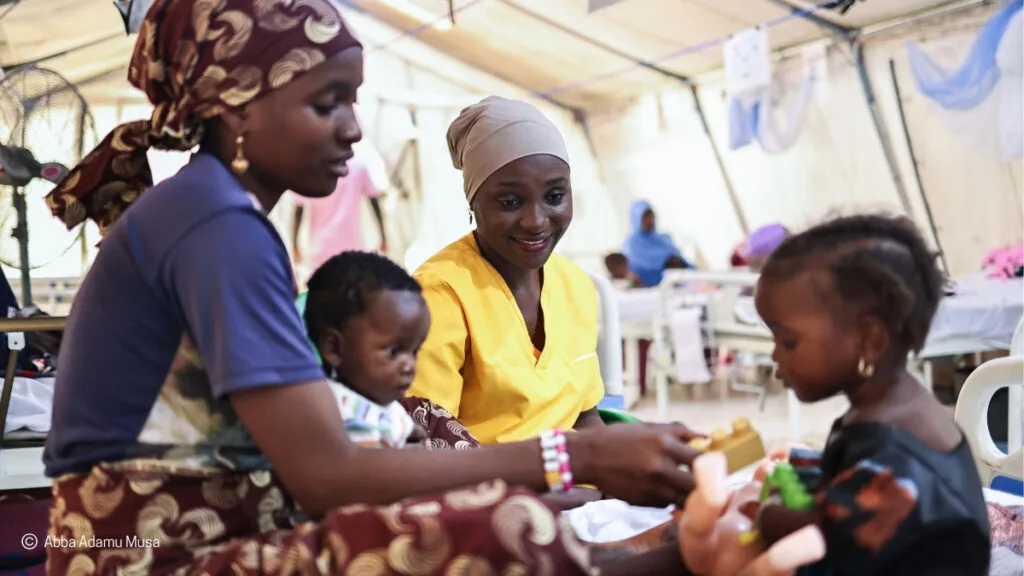
Yesterday, I cried and had no appetite.” MSF counsellor educator, Kethurah John (in yellow) watches as mom Adama plays with her baby daughter, Fatima, at the MSF facility Nilefa Kiji in Maiduguri, Borno state, northeast Nigeria. (Abba Adamu Musa) Stories like Fatima’s reveal an often-overlooked consequence of malnutrition .
5News aggregated this summary from the outlet’s public feed. The full article, with all the context, is on bhekisisa.org — the content belongs to Bhekisisa.