ANALYSIS: SA turns right as Ramaphosa hands economic levers to the private sector
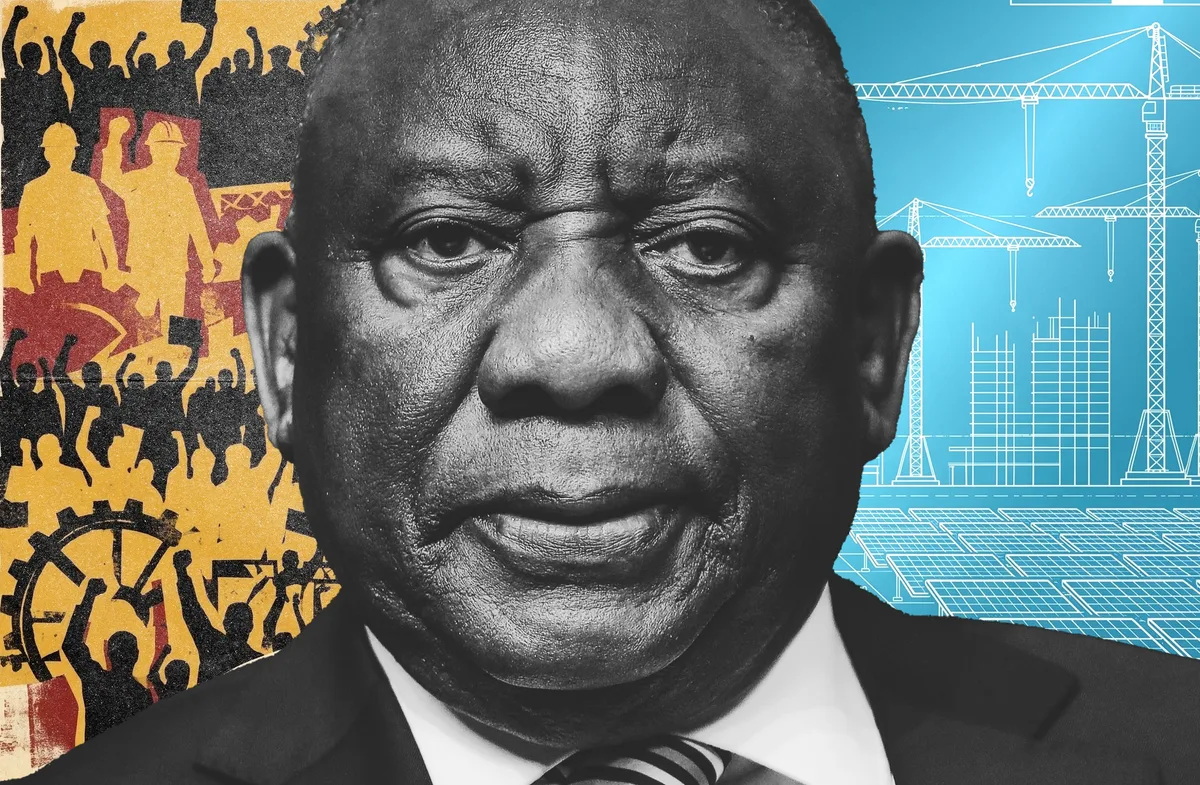
For many years, our politics could have been understood as a contest between the left and the right, with different interests playing out within this prism. There can now be no more argument: the left has lost and the right has won.
He noted that when Telkom had a fixed-line telecommunications monopoly, a telephone connection “was expensive, access was limited and millions of South Africans, particularly in poorer and rural communities, were effectively excluded”.
He continued: “The opening of the telecommunications sector to new operators fundamentally changed this picture. Competition brought massive new investment …the cost of communicating fell dramatically.”
His core message was clear: state monopolies restrict progress, whereas private-sector competition drives it.
It may well be the strongest gesture of support for a free market economy from any president and ANC leader since 1994.
As has been noted several times, the great trend of the period since at least 2019 has been to open up to the private sector areas previously controlled by the government.
The most obvious examples are Eskom and Transnet, where the private sector has greatly improved services.
It could be argued that the real “reform” carried out by Ramaphosa’s government has been to bring in the private sector at the expense of the government.
No doubt critics of this process will point to Operation Vulindlela and suggest the real intent is to strengthen the role of the private sector while weakening the state.
Intentional or not, the outcome is clear: the government’s grip on the economy has loosened as the private sector’s influence grows.
The private sector now wields more influence over vital public infrastructure – like electricity, ports and railways – than at any time since the colonial era. Certainly, the apartheid state built up industry through the state, controlling logistics, electricity and even iron and steel manufacturing.
What makes this massive shift so striking is the sheer lack of organised pushback. Parliamentary opposition has come solely from the EFF and MK. However, MK has yet to mount a substantive policy response to anything, while the EFF has not launched a campaign on the issue.
In the past, the real opposition, which would have prevented this process from gaining any momentum, would have come from within the ANC.
However, the ANC does not appear to be conducting any substantive policy discussions. It is embroiled in bitter internal battles over candidates for positions in metros and councils, to the point where it cannot even announce its official lists.
5News aggregated this summary from the outlet’s public feed. The full article, with all the context, is on www.dailymaverick.co.za — the content belongs to Daily Maverick.