RUWAYDA REDFEARN | Auditing still needs humans — particularly the female kind
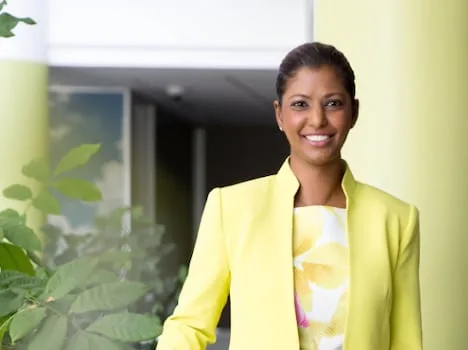
At 29, I walked into my first audit committee meeting as a partner. I was the only person of colour, the only woman and the youngest in the room. The person closest in age was in his 50s. Nothing in the room reflected me. The faces around the table seemed to ask: what are you doing here?
I had overprepared, staying up until 2am, anticipating every possible question. I wanted to demonstrate that I deserved to be in my position. My senior partner insisted that I present, so I explained a complex accounting treatment related to embedded derivatives and encouraged questions. The chair leaned forward and asked: “What is an embedded derivative?”
This moment reminded me that confidence doesn’t always precede action; sometimes it emerges afterwards. My guiding principle has always been; take action, speak up, and try even when your knees are shaking — especially when they are shaking.
That is why I say to every young woman considering auditing: feeling that you do not belong is not evidence that you do not. Auditing is one of the most powerful places to understand business, develop your voice and become a leader whose integrity is beyond reproach. It requires judgment, curiosity, courage, emotional intelligence and a deep sense of responsibility to society.
I did not grow up dreaming of auditing. My parents had little formal education, but together they built a clothing factory. As a girl, I thought learning business meant sitting in its small administrative office. But my father said I had to start on the factory floor. By about 13, I could sew on every machine and understood production. Only then did he teach me payroll, bank reconciliations and the forces affecting the business. That early exposure taught me that truly understanding a business means seeing it from every angle, not just from behind a desk.
Auditing offered that same view of how organisations work across settings. As a trainee, I moved between industries, smaller businesses, and multinationals, as well as listed and unlisted entities. I learnt how processes, systems and value drivers connect, and I made a point of engaging with CEOs and finance leaders early in my career. At 25, I travelled to New York for an audit secondment, applying the same global methodology in a new place and culture.
My generation did not merely open the door; we kicked it off its hinges
The profession gives young people responsibility quickly. A first-year trainee begins with simpler tasks; by the third year, she may lead a team. Soon she can be an assistant manager or manager, working with clients, partners and specialists while learning to manage people and a practice. Each year adds a skill — at least, it should.
My journey to partnership was deliberate. Most people become partners after 30, often in their late 30s. I set myself a different deadline: partnership before 30. To do that, I believed I had to gain 10 years of experience in half the time. That meant working twice as hard, learning faster and putting my hand up for complicated assignments, including leading a complex audit while still relatively young for that responsibility.
5News aggregated this summary from the outlet’s public feed. The full article, with all the context, is on www.businesslive.co.za — the content belongs to Business Day.