Home Affairs blocks 300,000 IDs amid fraud crackdown
South Africa has blocked about 300,000 identity documents linked to suspected fraud, home affairs minister Dr Leon Schreiber has revealed, as the department steps up efforts to tackle identity theft and replace vulnerable green ID books with more secure smart ID cards.
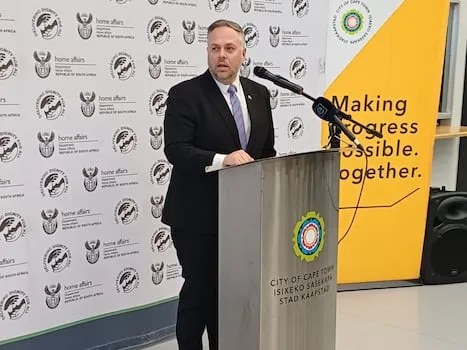
Schreiber spoke to the Sunday Times on Monday after opening the new home affairs office at the Cape Town Civic Centre.
The issue of identity fraud has come under renewed scrutiny following the case of former Miss South Africa finalist Chidimma Adetshina, whose citizenship and immigration status have become the subject of a contentious legal battle.
Adetshina, 25, was born in Soweto to a Nigerian father and Mozambican mother. Home affairs has alleged that her birth registration was processed using an identity document issued in the name of Sara Moyo.
Her case has put a spotlight on identity fraud, while ordinary South Africans continue to report stolen identities and discrepancies in their home affairs records.
Schreiber said the vast majority of identity theft cases involved the old green ID book.
There are currently about 16-million green ID book holders in South Africa, he said.
“I think we have about 300,000 blocked IDs that we are still working through where there is a court order. This is where we have picked up duplicate IDs, or we pick up someone who might be illegal in the country and are then able to put a block on it,” he said.
Schreiber said the transition from green ID books to smart ID cards was critical to addressing identity fraud because of the security weaknesses associated with the older documents.
“The green ID book is not secure. It’s a manual document, and it has a manual photograph. If someone steals it and they swap the photograph, you start going down this road of identity theft,” he said.
“That is why we are focused on expanding access to the smart ID card, which is much more secure and has a lot of advanced security features.”
He said the department was also moving away from relying on paper-based systems because physical documents could be manipulated.
“We live in the age of fraud and scams, which is why we have rolled out the electronic travel authorisation recently,” he said.
Meanwhile, Adetshina appeared in the Cape Town regional court last week, where proceedings were postponed to February next year.
5News aggregated this summary from the outlet’s public feed. The full article, with all the context, is on www.timeslive.co.za — the content belongs to TimesLIVE.