BUILDING BACK: When the rain would not stop, Hoedspruit rallied to rescue and rebuild
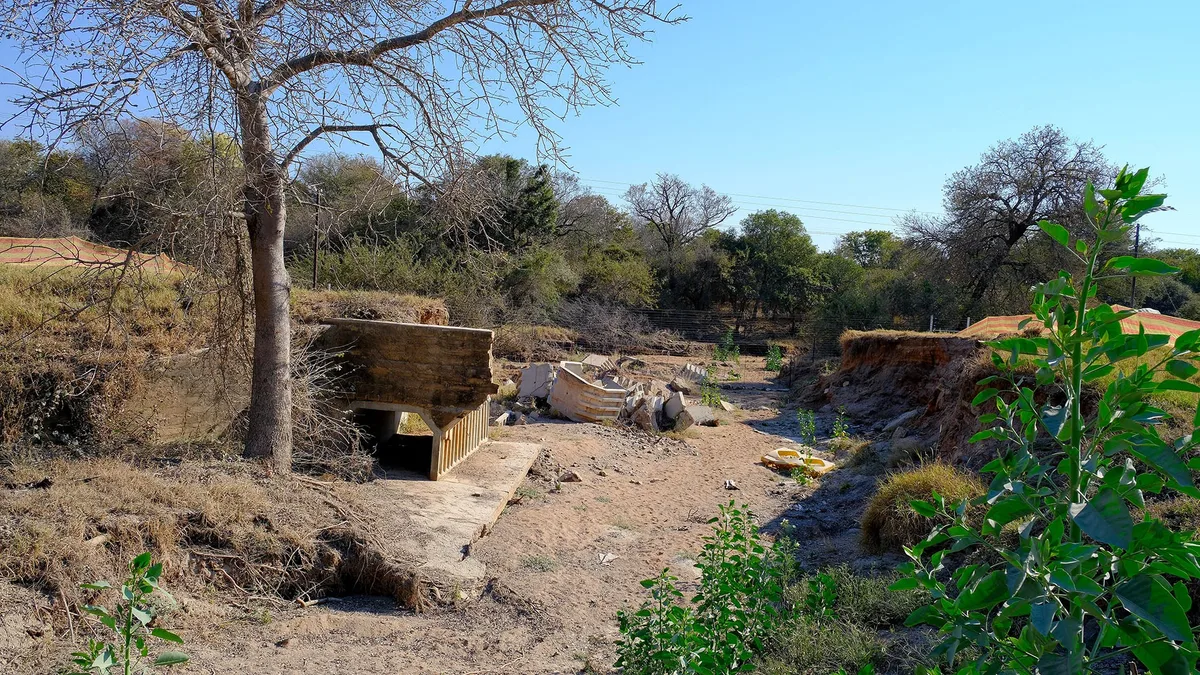
On Kruger National Park’s western border, Hoedspruit met January’s floods with helicopters, tractors and a remarkable show of neighbourliness. The emergency passed, the work of making the region whole again has not.
The first sign was a number Terry Baker had never seen before. Baker, who helps run Hoedspruit Farm Watch, subscribes to the daily weather alerts. He watched the warning climb from level one to level two, then level three. Suddenly it was at level 10.
“I’ve never, ever seen a level 10 alert before,” he recalls. “That’s when we realised: okay, something big is going to happen.”
Then the rain arrived. It began on a Thursday, strengthened the next day and grew heavier again on the third. Over four days, Baker says, 956mm fell where he was staying. This was not the familiar tropical downpour that pounds the Lowveld for 20 or 30 minutes before easing. It went on and on.
“That rain just never stopped,” he says. “It was relentless. For me, that rain was scary – actually very scary.”
Hoedspruit sits along the western edge of Kruger National Park, in a landscape knitted together by rivers, wildlife estates, farms, lodges and a small number of critical roads. As the park’s own restoration teams began assessing damaged roads, bridges and tourism infrastructure, the town beyond its boundary was confronting the same water on a more intimate scale: homes, livelihoods, power lines and supply routes were all exposed.
Farm Watch had checked its satellite communications and radios and was as ready as a volunteer organisation could be. But a disaster plan cannot anticipate every crossing, stranded guest or fallen line. Many volunteers were also protecting their own families and properties.
At the same time, the Blyde River was climbing towards the underside of a bridge that serves as one of Hoedspruit’s lifelines. Soon it was over the road and, Baker says, roughly two metres above it, pouring across the balustrade.
The bridge carries the route through the tunnel into town, a key corridor for food, fuel and other supplies. Farm Watch helped barricade the approach. Elsewhere, roads towards Phalaborwa were severed or damaged and rivers cut off estates and reserves. People might be able to reach a gate on foot, but their vehicles could not cross. Plans were made to leave vehicles on the accessible side so residents could collect supplies.
Not everyone turned back in time. On one flooded detour, two vehicles and a caravan were swept about 1.5km downstream. The occupants were recovered, but the vehicles had to be abandoned in deep mud until conditions improved.
At the Olifants River, the water rose to within about a metre of the main bridge deck. Two lower bridges nearby were already under .
The response was improvised, but not chaotic. Farm Watch worked alongside the authorities, used private vehicles and winches, and commissioned helicopters to evacuate people stranded in the bush and deliver food and water to lodges whose guests could not leave.
5News aggregated this summary from the outlet’s public feed. The full article, with all the context, is on www.dailymaverick.co.za — the content belongs to Daily Maverick.