Is China really a champion of the Global South?
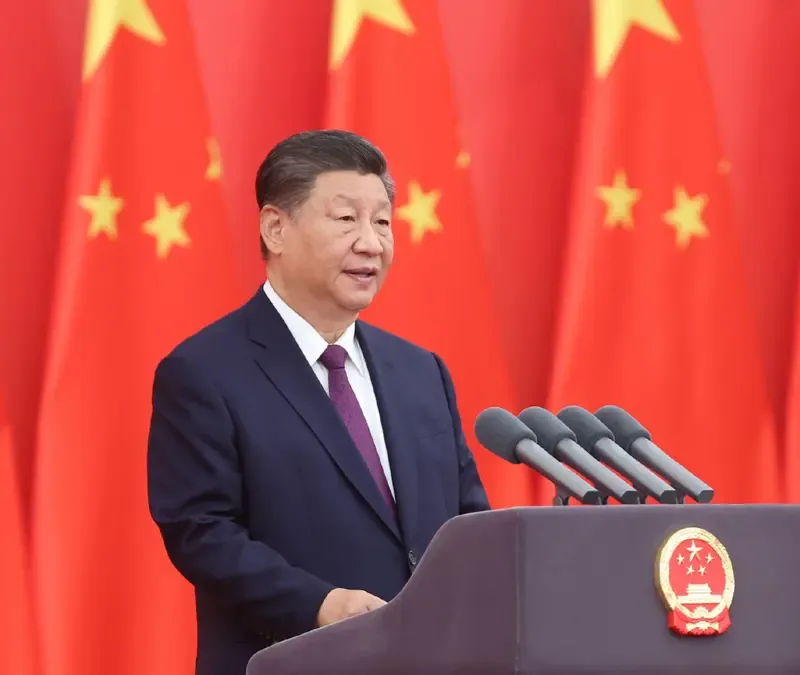
China often leans into its “developing country” status, portraying itself as a defender of the Global South’s interests and cultivating a close alliance with the Group of 77, which includes 134 countries from Africa, Asia, Latin America and the Caribbean. But some have questioned whether China’s efforts to lead the Global South are less about shattering the status quo and more about consolidating its power as the United States disengages from the international system it built.
Determining China’s motivations requires a deeper understanding of its rivalry with the US.
In 1820, Qing-dynasty China was the world’s largest economy, accounting for nearly a third of world GDP in purchasing-power-parity terms, while the US economy was a 10th the size of the British Empire’s. But then came China’s “century of humiliation”.
While large parts of China were occupied by Western powers and Japan, the US economy grew at an extraordinary rate, becoming the world’s largest by 1903. In the wake of World War II, the US consolidated its economic hegemony by playing a central role in establishing the United Nations, the Bretton Woods institutions and the General Agreement on Tariffs and Trade, the precursor to the World Trade Organisation (WTO).
In 1978, Deng Xiaoping sought to reclaim China’s lost glory through his visionary economic reforms. By 2010, China’s economy had become the world’s second-largest (after the US) and, as of 2024, its share of global manufacturing had risen to more than 30%, while America’s had declined to 15%, down from more than 50% in 1945.
This reversal of fortunes set the stage for the two countries’ ongoing trade war, which began when the US imposed tariffs on select Chinese goods in 2018 and left the WTO’s Appellate Body inquorate and unable to resolve disputes.
As a result, China’s trade surplus with the US fell from a peak of $400 billion in 2018 to around $200bn in 2025, though many Chinese exports reach America through third countries like Mexico and Canada. China has since accelerated its pivot to self-sufficiency, which includes developing resilient supply chains for critical technologies like semiconductors and weaponised its dominance in rare earths.
The general consensus in Chinese leadership circles is that “the East is rising and the West is declining”, as Chinese President Xi Jinping famously declared in 2021, and that the US, suffering from “hegemonic anxiety”, is lashing out against its main rival.
But America’s decline should not be overstated. Despite its huge national debt, which recently surpassed $40 trillion, and despite representing only 4% of the global population, the US, with a nominal GDP of roughly $32 trillion, remains the world’s largest economy. And the dollar has retained its dominance, accounting for about half of international payments.
The US is an overextended hegemon and its decline will continue slowly, as other powers like China assume more global responsibilities. But America retains its hard and soft power. Around 165 000 US military personnel are deployed in 178 countries. The US is home to 35 of the world’s top-ranked 100 universities and remains the top destination for immigrants.
5News aggregated this summary from the outlet’s public feed. The full article, with all the context, is on mg.co.za — the content belongs to Mail & Guardian.