The evolution of papal health transparency: From Vatican secrecy to public bulletins
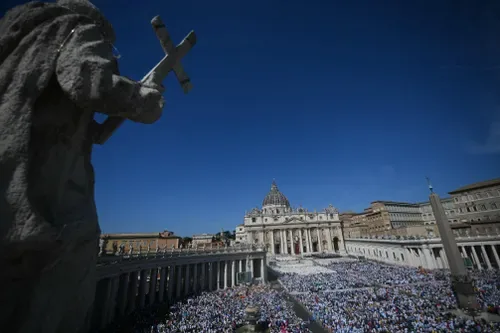
The faithful gather for Mass in St Peter's Square at the Vatican in this file picture.
Vatican City - From the silence surrounding John XXIII's cancer to the detailed medical bulletins issued during Francis's hospitalisations, Vatican communication about popes' health has gradually opened up over the past half-century.
Elected at 76, the Italian Angelo Giuseppe Roncalli suffered from stomach cancer, which was not diagnosed until several months before his death on June 3, 1963.
During the Second Vatican Council, which John XXIII had convened, the Vatican remained vague on his diagnosis, not revealing his illness until after he had died.
Giovanni Battista Montini suffered from arthritis and various age-related medical problems that gradually reduced his mobility over the course of the 1970s.
He died of a heart attack aged 80 on August 6, 1978, at the papal residence of Castel Gandolfo, near Rome.
During his pontificate, the Vatican released only infrequent and succinct information about his health.
Elected on August 26, 1978, John Paul I died just 33 days later at the age of 65, to worldwide surprise.
The Vatican said he had died of a heart attack and there was no autopsy.
Contradictory versions in the first official accounts of the circumstances of his death fuelled speculation and conspiracy theories.
After the assassination attempt against him in St Peter's Square on May 13, 1981, the Vatican provided regular updates on his condition, followed hour by hour by the media.
Photographs of the Polish pope lying in his hospital bed, his hands and arms covered in bandages and hooked up to drips, circulated around the world.
He subsequently underwent several operations, including a procedure in 1992 for a benign colon tumour.
The Vatican was more open about his hospital stays than it had been about other popes' medical treatment, but the signs of Parkinson's disease, visible from the 1990s onward, were only confirmed much later.
5News aggregated this summary from the outlet’s public feed. The full article, with all the context, is on iol.co.za — the content belongs to IOL.