NEWS ANALYSIS | Deadly Secunda plant puts Sasol at crossroads
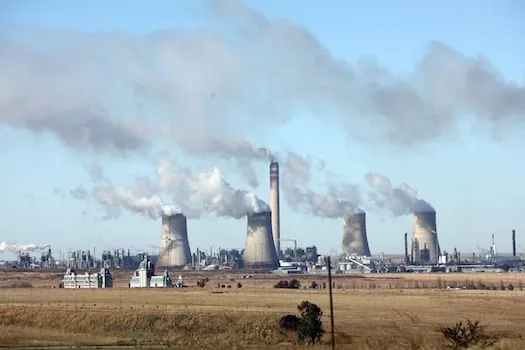
Sasol, which the Centre for Research on Energy and Clean Air (CREA) estimates costs 1,000 deaths a year through pollution emanating from its key Secunda plant, stands at a defining moment in its corporate and national role.
This is according to the latest research by Trade and Industrial Policy Strategies (TIPS), which warns that it faces deep structural challenges that raise critical questions about its future over the next decade.
Sasol is not simply another industrial stalwart in South Africa’s industrialisation; its two primary operating hubs — Secunda in Mpumalanga and Sasolburg in the Free State — underpin the country’s fuel, chemicals, and plastics value chains.
However, as South Africa’s biggest emitter, second only to Eskom , the company is under pressure to decarbonise its operations, particularly Secunda, which accounts for 83.7% of the group’s Scope 1 and 2 emissions, followed by Sasolburg with 8.4%.
TIPS noted that Sasol’s decarbonisation commitments, a 30% reduction in greenhouse gas emissions by 2030 and net zero by 2050, are under pressure. “The path to achieving these reductions remains ambiguous, requiring the inclusion of carbon offsets and renewable energy purchases rather than deep process transformation,” the TIPS report says.
“In recent years, Sasol’s coal production volumes have steadily declined as several of its nearby mines approach the end of life, forcing the company to source coal from more distant, non-Sasol-owned operations. The added logistical challenges and transport requirements associated with this external supply have significantly increased unit costs and placed further strain on production efficiency.”
Secunda’s and Sasolburg’s economies depend on Sasol, but at what cost?
Beyond being historically the country’s largest corporate taxpayer, Sasol’s operations support about 500,000 jobs throughout the value chain anchored by its operations. This economic impact is more pronounced in the towns of Sasoburg and Secunda.
The two towns are built around Sasol’s activities, with data showing that more than 70% of Secunda’s residents are directly or indirectly dependent on Sasol for employment or economic activity.
However, according to the research, this has come at a high cost. CREA will next week reveal its research on the health impact of Secunda. The summary of the report, shared with the Business Times, will show that Secunda’s emissions are linked to 820 low-birthweight births and 1,100 preterm births over the 2024/2025 financial year.
The report will further indicate that emissions from the plant are also linked to 2,000 asthma emergency-room visits, including 930 visits among children aged 0 to 17 in the period.
“ Sasol Secunda’s emissions are exceptionally high in part because the facility has been granted alternative SO₂ emission limits that are less stringent than South Africa’s minimum emission standards (MES), which were established to limit harmful industrial emissions and protect public health,” the CREA said.
“These alternative limits allow Sasol Secunda to emit substantially more SO₂ than the standard limits would permit.
5News aggregated this summary from the outlet’s public feed. The full article, with all the context, is on www.businesslive.co.za — the content belongs to Business Day.