Russia surged high-speed jet-powered Shahed attacks by 5 times in a single month, Ukraine's air force said
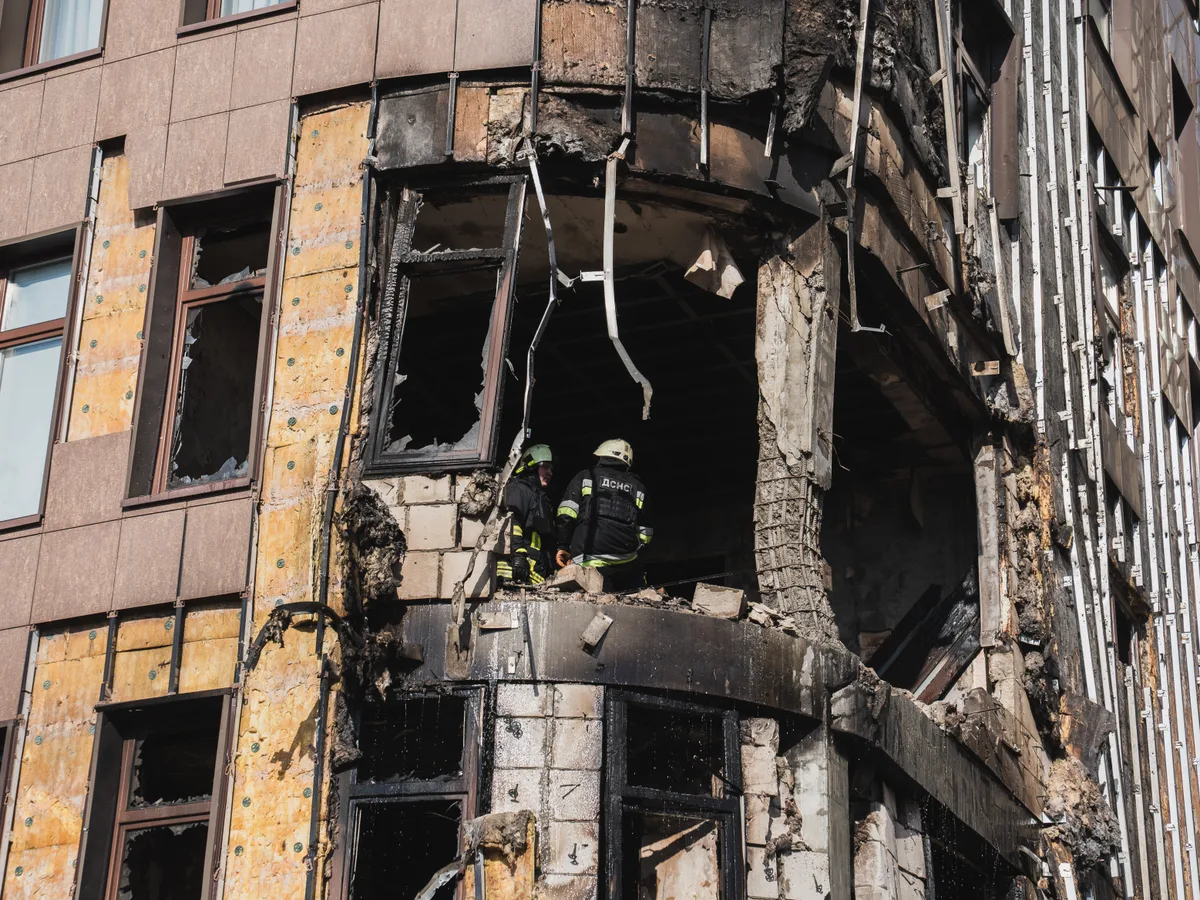
Russia has been surging its use of Geran-3 and Geran-4 jet-powered drones.
Miia Kliushnykova/Gwara Media/Global Images Ukraine via Getty Images Ukraine says Russia increased jet-powered Shahed attacks by five times from June to July.
The new drones pose a major problem for Ukraine since they fly much faster and higher.
A major drone expert says Russia launched 1,500 of these drones in July, and over 2,500 in August.
Russia attacked Ukraine in July with five times as many jet-powered Shahed loitering munitions as it did in June, according to Ukraine's air force.
The monthly surge points to how Moscow has sharply increased mass production of the advanced attack drones, which fly much higher and faster than their propeller-only predecessors.
Yuriy Ignat, a spokesperson for the Ukrainian air force, cited the fivefold increase while speaking on local television on Monday.
"Understanding that Ukraine's defense forces are already highly effective at shooting down Shaheds, the enemy has increased its use of a more complex and faster weapon, which accordingly requires ground- and air-based air-defense assets, including aircraft," he said.
Ignat added that statistics from August would likely show a continued increase in the number of jet-powered drones.
Russian Shaheds, called Gerans, are local versions of Iranian attack drones that the Kremlin has tweaked and built domestically for the war.
Until recently, the Kremlin most commonly deployed the Geran-2, a delta-wing drone that used a propeller to reach speeds of around 115 mph.
Launched in hundreds-strong waves, they began overwhelming Ukrainian missile-based air defenses in 2025, prompting Kyiv's troops to design cheap quadcopters capable of intercepting the Geran-2.
By early 2026, Ukraine reported destroying roughly 90% of Russian drones.
But newer drones, namely the Geran-3s and Geran-4s, use turbojets that allow them to fly at typical speeds of 200 mph or higher, making them incredibly difficult for most Ukrainian interceptor drones to catch.
5News aggregated this summary from the outlet’s public feed. The full article, with all the context, is on www.businessinsider.com — the content belongs to Business Insider.