CoreWeave investor explains how the loss-making AI ‘neocloud’ provider plans to claw its way out of debt
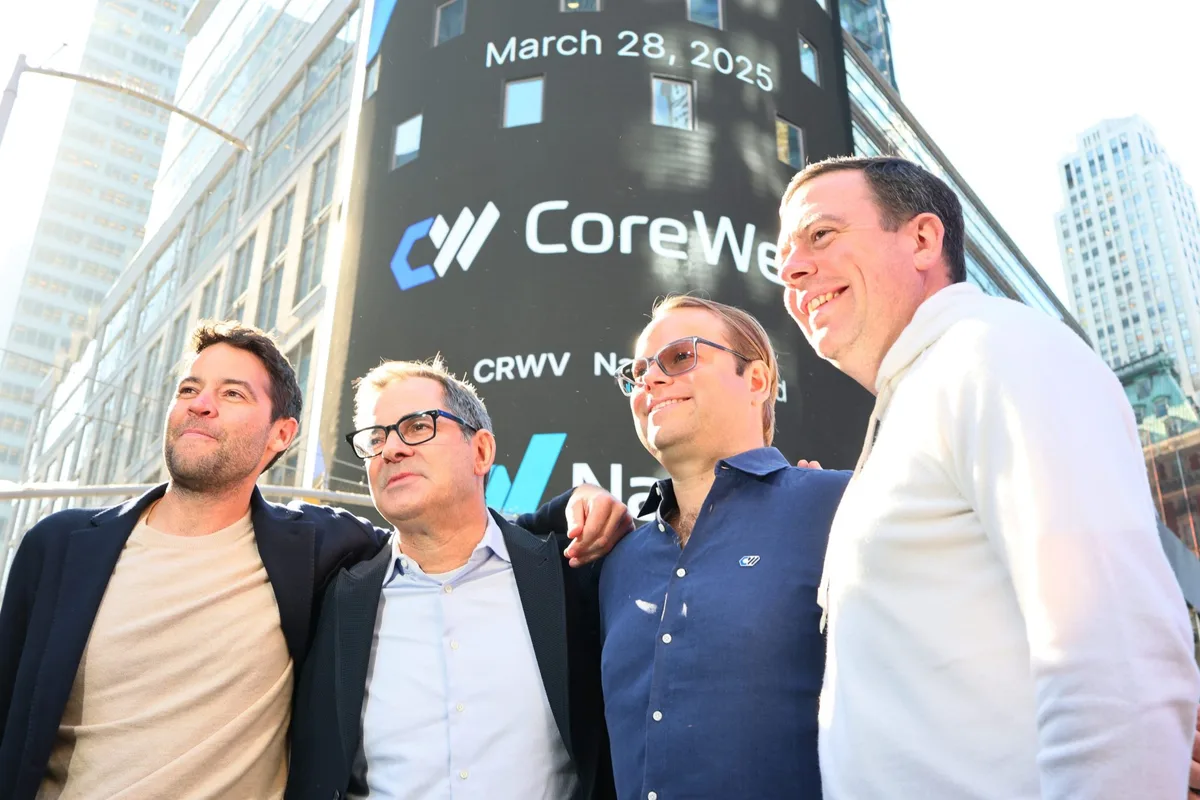
Shares in the AI “neocloud” provider CoreWeave fell 15.46% on Wednesday, and were down a further 5.62% in post-market trading, after venture capitalist Chamath Palihapitiya posted on X a chart showing the yield on CoreWeave’s bonds touching 15%.
That’s an indicator that investors were demanding a steep premium for holding its debt.
“Is the AI buildout creating a private credit bubble?” Palihapitiya asked.
At the same time, The Financial Times published an interview with CoreWeave co-founder and finance lead Brannin McBee in which he said he wanted to borrow even more money—from insurance companies.
The insurance sector’s access to capital “is unlimited,” he told the paper.
“Like, that’s all the money in the world that sits in the insurance tranche.” CoreWeave’s vast debt pile has been the subject of controversy in the past.
In 2025, a Fortune analysis of its financials concluded that the company had the potential to be “ ground-zero for a future AI financial meltdown .” Debt owed by AI service companies also made headlines recently when Oracle issued a “force majeure” citation to Blue Owl , the developer of a massive data center in New Mexico, over worries that the site won’t be finished when it is scheduled to come online in 2028—an indicator that customers might have the legal ability to walk away from their commitments if the weather changes against them.
And Gartner estimates that 80% of neocloud providers will cease independent operations by 2030 because their revenues won’t cover their outgoings.
But the critics are wrong, according to Evan Schlossman, principal at Neostellar Capital Corp., a publicly traded VC fund that gives retail investors exposure to pre-IPO startup equity. (Neostellar bought a $25 million stake in CoreWeave in 2024 and sold 40% of it for a gain of $15 million in Q2 2025 .) CoreWeave has certainly taken on a lot of debt and lease commitments.
According to its Q2 earnings release , it had operating lease liabilities of $16.3 billion and total debt of $35.6 billion.
The company only made $4.6 billion in revenue that quarter, and its operating expenses exceeded its sales, leaving it with a net loss of $1.4 billion on the bottom line.
To put it simply, how will a company that makes no money pay back $52 billion in combined debt and lease commitments? “Take or pay” Evan Schlossman, principal at Neostellar Capital Corp.
The short answer is that the company has $103.7 billion of “remaining performance obligations” (RPOs), 41% of which is scheduled to be paid to CoreWeave through 2028, its Q2 disclosure states.
That means CoreWeave is good for the money, Schlossman told Fortune .
5News aggregated this summary from the outlet’s public feed. The full article, with all the context, is on fortune.com — the content belongs to Fortune.