How to keep your smart home running even if the internet goes down

Nanoleaf Add Engadget on Google: Preferred Source Google Discover With Apple finally developing new smart home products , now's a great time to remind everyone that though the technology can improve your home's look and convenience, there are also a few hazards involved. If you're overly ambitious with your routines, for example, smart bulbs might switch off when people need them. Once, while we installed a smart thermostat, the heat ran dangerously out of control until we fixed an obscure flaw.
For many of you, the biggest issue is going to be offline resilience. When internet access goes down, some smart home accessories can go "dumb," either maintaining their last state or failing to work at all. Usually, this is just an inconvenience. If you're counting on an accessory for health or security, however, this can become a legitimate crisis.
Thankfully, there are ways of building a smart home around offline automation without investing in the custom systems you find in mansions. It's just a matter of anchoring your gear around the right peripherals and protocols. And if you caught the pun just now, you're one step ahead.
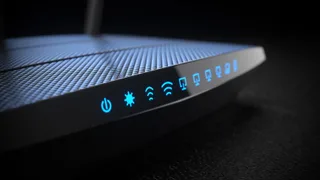
Barry Paterson/Shutterstock The reason so many accessories turn dumb is that they connect directly to Wi-Fi to fetch instructions from a cloud server. Wi-Fi accessories are often the easiest to set up — if the internet goes down, however, or if your Wi-Fi router encounters hiccups, they may have no way of storing and triggering automations on their own. They may not even switch on or off at scheduled times, which you'd think would be dead simple.
Whenever possible, then, it's best to turn to accessories that route everything through a local hub. These hubs still connect to the internet, but they can store and process many automations locally as long as everything still has power. The only major exceptions are automations that depend on live data, like current weather conditions, or involve sharing data remotely. If you're going to install a smart security system and internet outages are a regular issue, cellular backup is a must.
These hubs can take many forms. If you're using Apple Home, for example, HomePods and Apple TVs can act as home hubs, enabling both remote access and local automations. Some security cameras can record to local hub storage, even if they have to go online to trigger alerts or perform advanced functions. Matter-enabled smart speakers and displays are capable of executing offline commands, though in practice, companies like Amazon and Google don't really exploit this. We discovered this the hard way.
The most bulletproof hubs tend to be those that link local hardware not through Wi-Fi, but through Thread, Zigbee or Z-Wave radios. All three are low-power, low-bandwidth mesh standards. A hub can often connect many compatible accessories simultaneously, and the mesh aspect means that accessories farther away from the hub won't drop off. Thread is preferable, since some Wi-Fi accessories can act as Thread "border routers," but we've had great experiences with Zigbee-based hubs like the Philips Hue Bridge.
5News aggregated this summary from the outlet’s public feed. The full article, with all the context, is on www.engadget.com — the content belongs to Engadget.