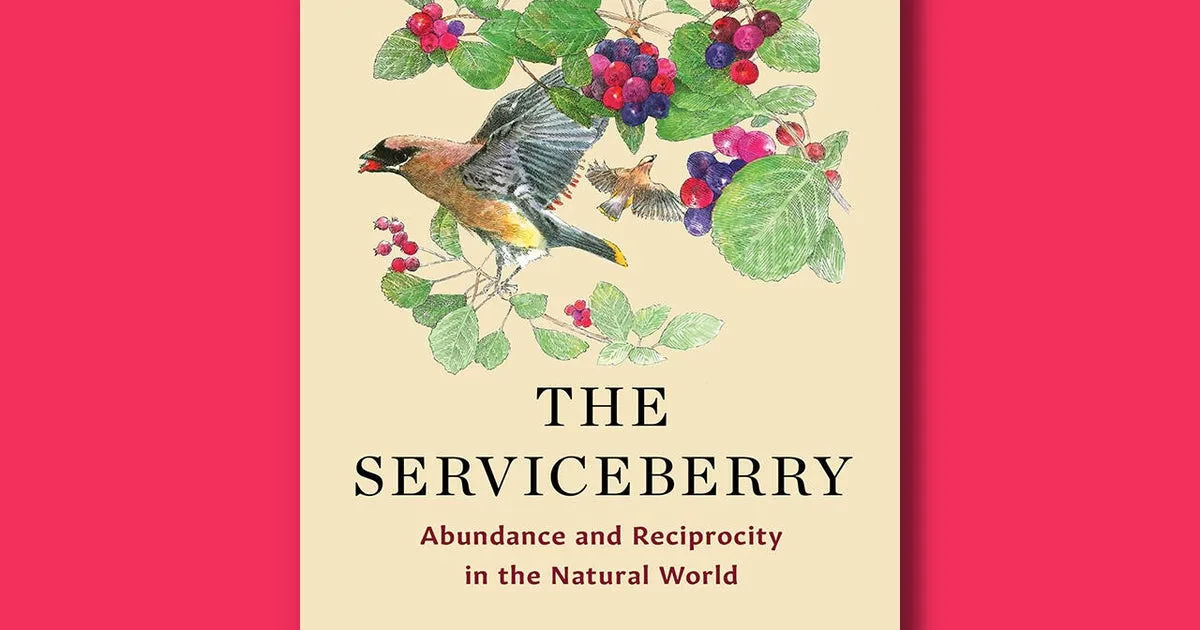
Book excerpt: "The Serviceberry" by Robin Wall Kimmerer
We may receive an affiliate commission from anything you buy from this article.
Robin Wall Kimmerer, an Indigenous botanist, became a #1 New York Times bestselling author with her 2013 book "Braiding Sweetgrass," about the value of complementing our understanding of Western science with Indigenous knowledge about nature and humanity.
In her most recent book, "The Serviceberry" (Scribner), Kimmerer writes about embracing gratitude and reciprocity in our dealings with nature, and the importance of recognizing and sharing the many gifts the world gives us.
Read an excerpt below, and don't miss Martha Teichner's conversation with Robin Wall Kimmerer on "CBS Sunday Morning" August 23!
Prefer to listen? Audible has a 30-day free trial available right now.
I have no claim to these berries, and yet here they are in my bucket, a gift.
This pail of Juneberries represents hundreds of gift exchanges that led up to my blue-stained fingers: the Maples who gave their leaves to the soil, the countless invertebrates and microbes who exchanged nutrients and energy to build the humus in which a Serviceberry seed could take root, the Cedar Waxwing who dropped the seed, the sun, the rain, the early spring flies who pollinated the flowers, the farmer who wielded the shovel to tenderly settle the seedlings. They are all parts of the gift exchange by which everyone gets what they need.
Many Indigenous Peoples, including my Anishinaabe relatives and my Haudenosaunee neighbors, inherit what is known as "a culture of gratitude," where lifeways are organized around recognition and responsibility for earthly gifts, both ceremonial and pragmatic. Our oldest teaching stories remind us that failure to show gratitude dishonors the gift and brings serious consequences. If you dishonor the Beavers by taking too many they will leave. If you waste the Corn, you'll go hungry.
Enumerating the gifts you've received creates a sense of abundance, the knowing that you already have what you need. Recognizing "enoughness" is a radical act in an economy that is always urging us to consume more. Data tell the story that there are "enough" food calories on the planet for all 8 billion of us to be nourished. And yet people are starving. Imagine the outcome if we each took only enough, rather than far more than our share. The wealth and security we seem to crave could be met by sharing what we have. Ecopsychologists have shown that the practice of gratitude puts brakes on hyper-consumption. The relationships nurtured by gift thinking diminish our sense of scarcity and want. In that climate of sufficiency, our hunger for more abates and we take only what we need, in respect for the generosity of the giver. Climate catastrophe and biodiversity loss are the consequences of unrestrained taking by humans. Might cultivation of gratitude be part of the solution?
Paulie is surprised, too, that I know these berries since they are new to most people around here. As a forager, I'm accustomed to following the voices of Cedar Waxwings, only to find a disappointing handful that they have left me. Never have I seen so many as here, planted by my friend.
5News aggregated this summary from the outlet’s public feed. The full article, with all the context, is on www.cbsnews.com — the content belongs to CBS News.