Scientists trace 7 stages of a meteorite's life, from hurtling space rock to Earth's surface
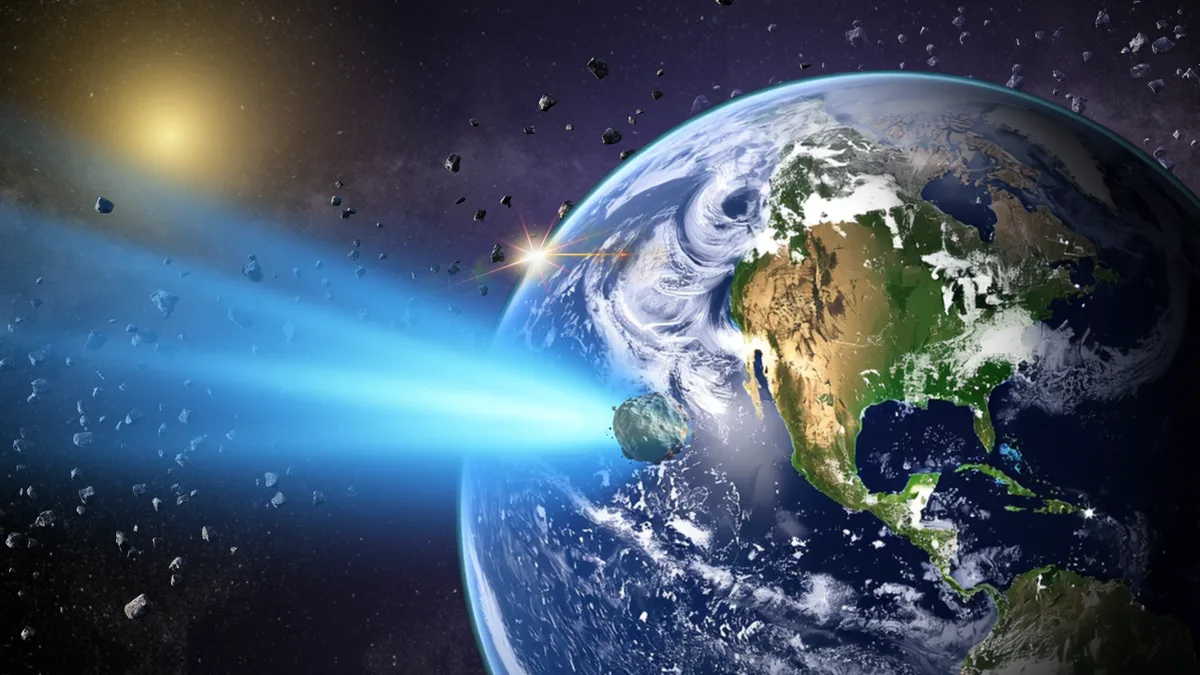
Studying 75 meteorites falling to Earth, scientists have identified the seven stages a space rock goes through as it crashes through our atmosphere, each of which is determined by different physical processes.
The research found that there are more factors than mere evaporation that determine how fragments of asteroids and comets lose mass and speed passing through the atmosphere before slamming into the ground as meteorites.
As well as just "burning up" in the atmosphere, space rocks also go through periods of melting and fragmentation that occur at different altitudes.
Aside from shining light on the life cycles of meteorites, the team's research could help us better understand what would happen if a large, potentially hazardous asteroid were to enter Earth's atmosphere.
"We used to think that solid rocks would evaporate from the enormous heat and brilliant light generated in the air collision," team leader Peter Jenniskens of the SETI Institute and NASA Ames Research Center said in a statement .
"We found instead that first melting and then fragmentation control how a rock loses mass." Seven stages to Earthfall The first stage, phase 1, identified by the team, begins high in Earth's atmosphere .
The falling space rock creates a shock wave in front of it that heats it and the gas surrounding it.
This turns the falling space rock into a " shooting star " streaking across the sky.
Phase 2 begins when the fragment reaches denser air, and the meteor begins to brighten.
At this stage, astronomers can determine how the rock is spinning based upon changes in brightness.
This brightening continues until phase 3, at which point the space rock becomes a fireball .
The team found that it is at this stage that the falling rock loses the most mass via melting.
This happens as air flows rapidly around the rock and pulls away melted matter, leaving a trail of droplets that continue to evaporate.
An illustration of a fireball streaking across the sky. (Image credit: Shutterstock) At around 40 miles (60 kilometers) over the surface of Earth phase 4 begins, which sees the fireball reaching a melting equilibrium.
5News aggregated this summary from the outlet’s public feed. The full article, with all the context, is on www.space.com — the content belongs to Space.com.