The TV vs projector value debate isn't close — here's why
If you want the largest image for the least amount of money, a projector is the only choice.
Steve Dent for Engadget Do you want a big-screen experience but are torn between a projector or television? The decision has never been tougher. TVs over 75 inches keep getting cheaper, with some priced at around the cost of a budget 65-inch model only several years ago. At the same time, projectors are brighter and sharper than ever thanks to new laser light engines and high-resolution 4K image chips.
Both have factors in their favor, but if you want the largest image for the least amount of money, there's only one choice: a projector. They can easily display images 120 inches or bigger, a size that puts TVs into a wholly different price category. Other key advantages include better color fidelity and a more discreet presence. Yes, TVs are brighter and better in ambient light, but as I discovered, high-nit displays also have drawbacks you may not have considered.
As The Odyssey IMAX experience has taught us, people love the immersion of a big screen. You can't have a 59 by 79 foot screen at home, of course, so how big can you go? For consumer TVs, the maximum size is around 98 to 115 inches.
That sounds pretty big, but you'll need to open your wallet and reserve some space in your home. TCL's 115-inch QM7K QLED Mini LED 4K TV costs $13,998, though HiSense's 100-inch Mini LED model runs a much more reasonable $1,750.
If you scale your expectations down to 85 inches, you can find Mini LED models under $1,000 or even less if you're not as concerned about image quality. 75-inch Mini LED TVs are available for around $800, and you can also find regular 75-inch LED sets under $500.
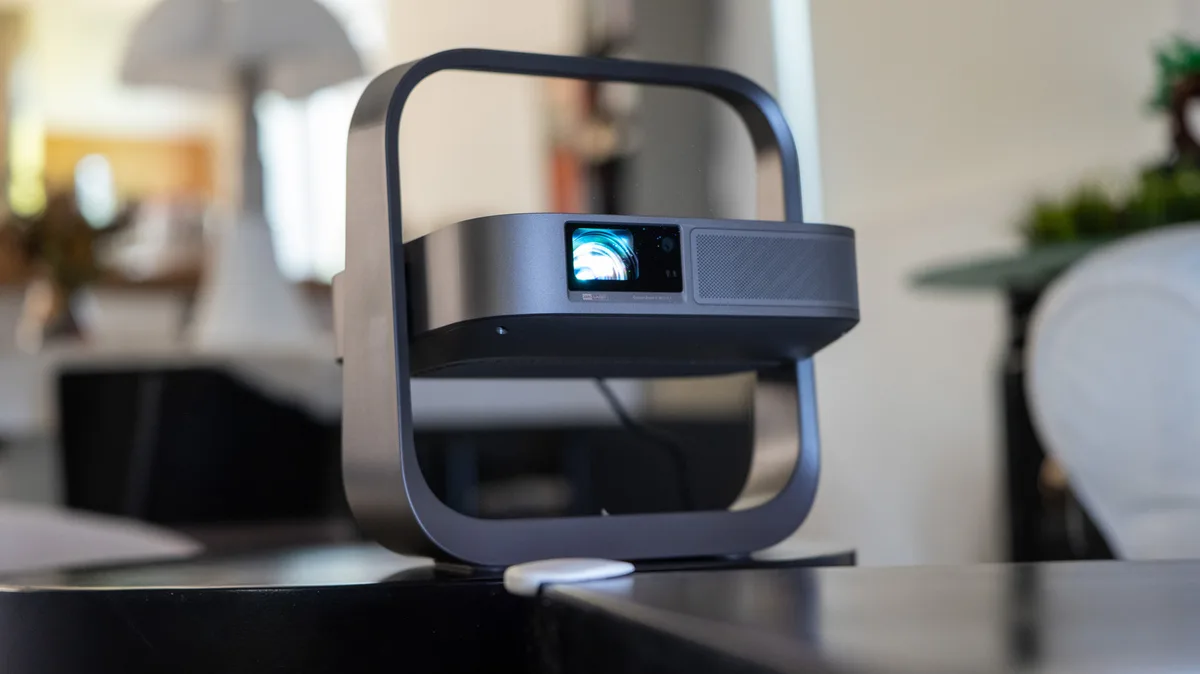
With projectors, size is only limited by the type of projector, along with focal distance and length. For example, I recently tested the Anker Nebula X1 triple-laser projector which can beam a 4K image up to 300 inches. Another more budget-friendly model, the Valerion VisionMaster Pro 4K laser projector, can also beam a 300-inch image.
Even mid-priced projectors that cost about the same as a good 75-inch TV can beam an image up to 200 inches, or nearly 17 feet diagonally. If you can't fit such a screen indoors, you can bring your projector outside at night for movie viewing parties and project straight onto a wall or bed sheet. That's much easier than lugging a huge TV outside and you'll have a bigger, better viewing experience.
TCL You can't deny simple physics. Television have their own source of illumination, so they're very bright and provide consistent light intensity. Meanwhile, projectors are bouncing light off of a screen and since light intensity drops proportionally to distance, the image dims when it gets bigger.
As I recently detailed in a Micro RGB explainer , modern TVs use two basic systems. Many employ very bright LEDs, often arranged in so-called dimming zones, that blast light through either an RGB filter layer or a quantum dot color conversion layer. Those TVs can be incredibly bright, with some models hitting up to 4,000 nits on a 10 percent portion of the screen.
5News aggregated this summary from the outlet’s public feed. The full article, with all the context, is on www.engadget.com — the content belongs to Engadget.