Tiger Woods pleads no-contest to a reckless driving charge and loses his driver’s license for five years
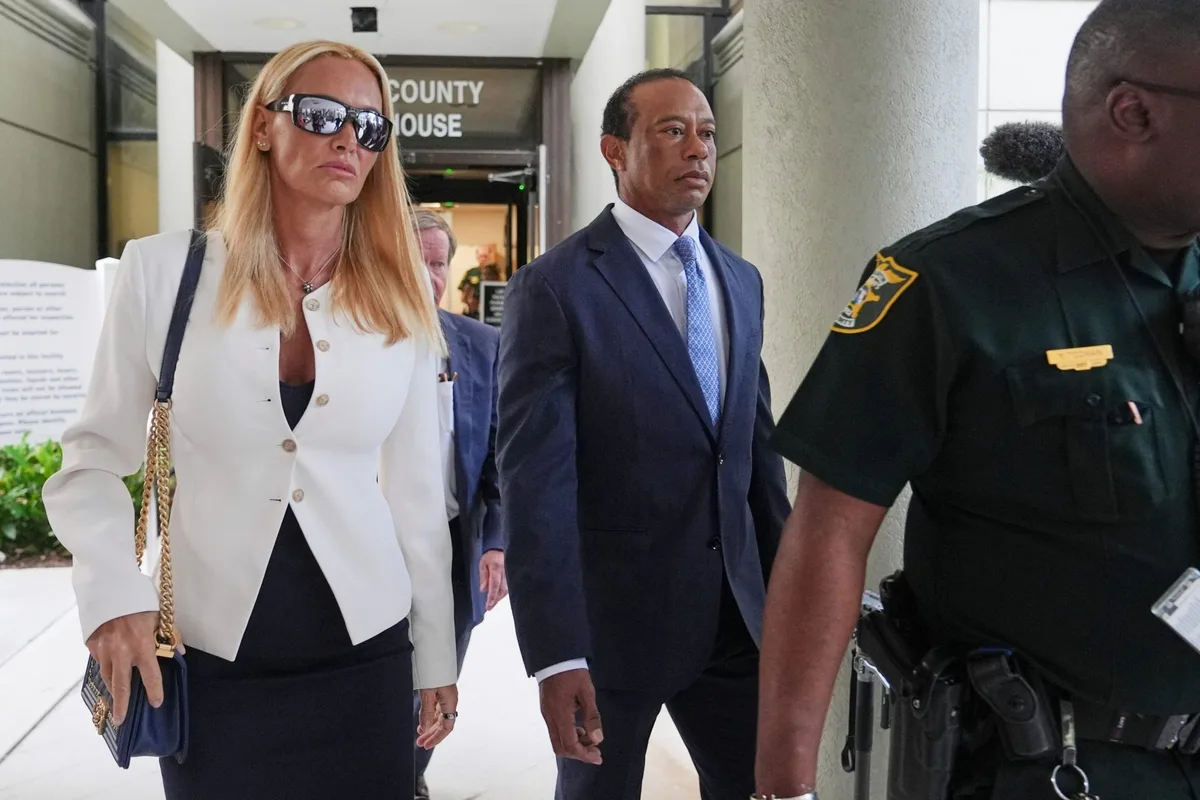
Tiger Woods pleaded no contest to a reckless driving charge and his driver’s license was suspended for five years Wednesday following a March rollover crash in Florida, where he initially was accused of driving under the influence.
Woods, still one of golf’s most influential figures and as recognizable as any athlete in the world, has had a remarkable fall since winning the 2019 Masters for his 15th major.
The first person of Black heritage to win the Masters in 1997, his career has been derailed by multiple back and knee surgeries, car crashes and dependence on pain medication .
He was arrested in March after his SUV clipped a truck and rolled over on its side on a beachside residential road near his home on Jupiter Island.
A sheriff’s report said deputies found two pain pills in his pocket and he showed signs of impairment.
He did a Breathalyzer test, which came out negative, but refused to take a urine test.
He pleaded not guilty to the original DUI charge.
Before the hearing in Florida’s Marin County on Wednesday, Woods, 50, sat at the defense table looking back at the mostly empty courtroom gallery.
He said little as he agreed to the reduced charge and left the courthouse without addressing reporters.
He had arrived with his girlfriend, Vanessa Trump, President Donald Trump’s former daughter-in-law.
She sat behind him during the proceedings.
“Tiger is not absolved of accountability and he surrendered his license for the next five years,” Mark Steinberg, his longtime manager at Excel Sports told the AP.
“He is continuing his treatment and prioritizing all aspects of his health.” Prosecutor says Tiger Woods has a tolerance to pain medicine The prosecutor in the case said two toxicologists found there was insufficient proof of his impairment and determined Woods had built up a “pharmacological” tolerance after years of using pain pills.
Thomas Bakkedahl, a state attorney, defended his decision to accept the plea, saying, “I did what I think is right.” Prosecutors obtained the golfer’s pharmacy records that showed he had a lawful prescription, Bakkedahl said.
5News aggregated this summary from the outlet’s public feed. The full article, with all the context, is on fortune.com — the content belongs to Fortune.