NASA readies to launch its next-generation space telescope
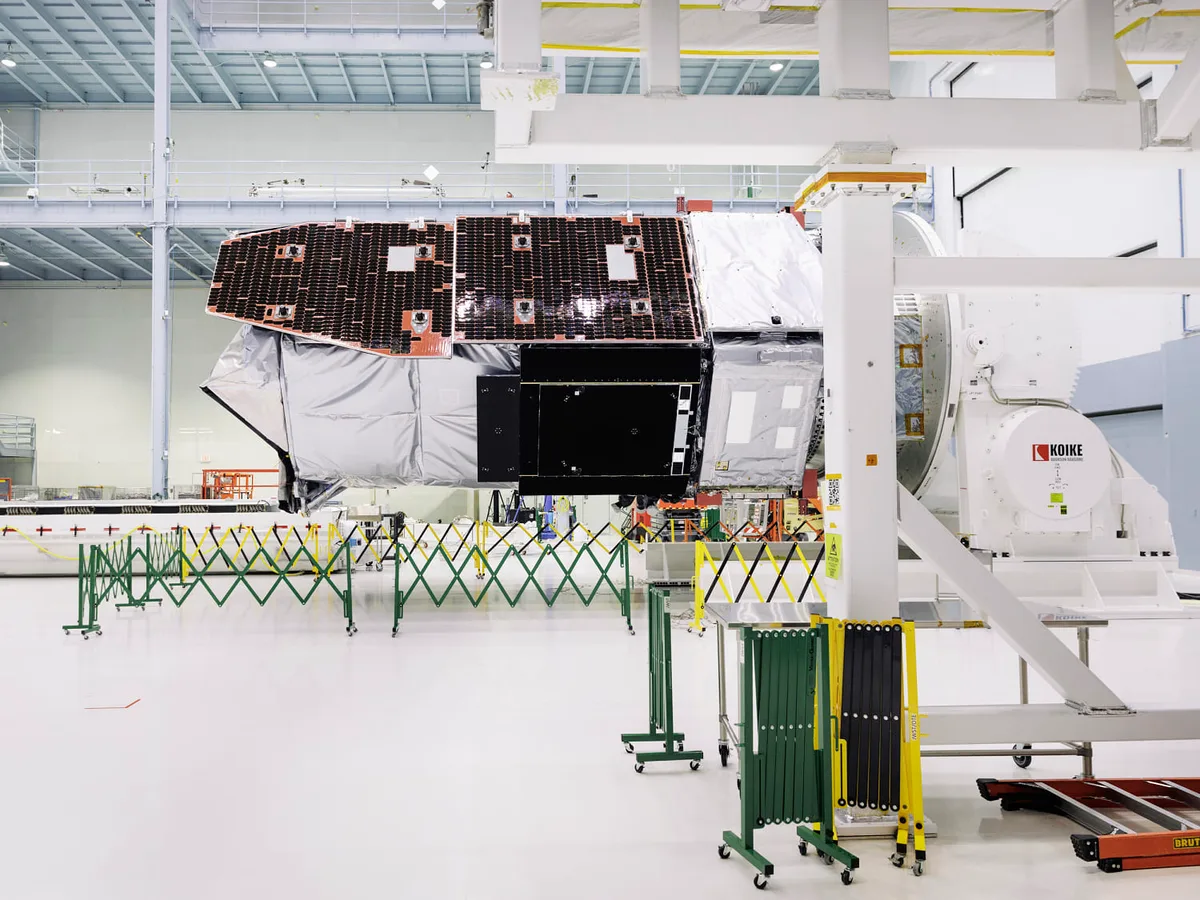
NASA on Sunday is set to launch a next-generation telescope into space that’s expected to survey hundreds of millions of stars and billions of galaxies. Its findings could also unlock clues about dark energy and dark matter, and some of the universe’s biggest enigmas.
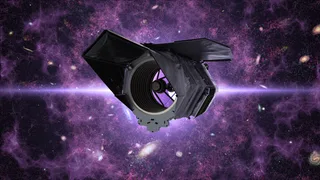
The Nancy Grace Roman Space Telescope is slated to lift off Sunday at 7:26 a.m. ET from NASA’s Kennedy Space Center in Florida. The observatory will launch atop a SpaceX Falcon Heavy rocket.
NASA will broadcast live coverage of the launch on its website and other platforms beginning at 6:20 a.m. ET.
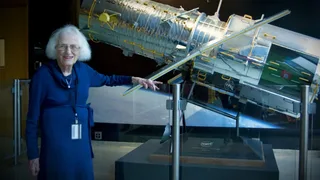
Often compared to the iconic Hubble Space Telescope, the Roman observatory is expected to revolutionize humanity’s understanding of the universe — and our place in it.
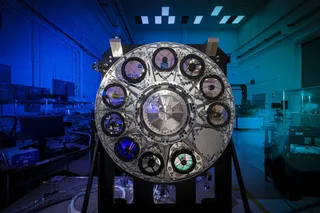
The telescope is designed to survey more of the sky than any space telescope before it. Over the course of its five-year mission, it is expected to capture panoramic views of the cosmos, study little-explored parts of the Milky Way and uncover more than 100,000 planets around other stars. Its study of dark matter and dark energy could also give scientists new insights into two of the most confounding puzzles in astronomy.
“Some of our longest-standing mysteries in modern astrophysics are: What is the nature of dark matter and the nature of dark energy?” said astrophysicist Neil deGrasse Tyson, director of the Rose Center for Earth and Space at the American Museum of Natural History in New York City. “We have ideas, but we don’t know what they are. This telescope is going to try to give us the best data available to address those questions.”
The $4.3 billion mission has been under development for nearly two decades and is set to launch nine months ahead of schedule.
That would be a major feat for any of NASA’s flagship missions, but it’s especially the case given that teams had to navigate the Covid pandemic and government shutdowns this year and last — two of the longest in U.S. history.
After the Roman telescope launches, it’s set to spend more than three months journeying to its final destination, located roughly 1 million miles from Earth. The telescope is designed to live at a location in space known as L2, which is a Lagrange point, where the gravitational acceleration from the sun and Earth balance out, allowing the telescope to stay in a stable orbit. At L2, Roman should join another of NASA’s workhorse observatories, the James Webb Space Telescope , which launched in 2021.
Though the Roman telescope is often compared to Hubble, which launched in 1990 and has captured some of the most dramatic and memorable views of the cosmos, Roman’s capabilities far outpace its predecessor’s: Roman is able to survey the sky 1,000 times faster than Hubble, with each image capturing a patch of sky at least 100 times larger than one of Hubble’s.
Three primary surveys are planned over the course of the Roman telescope’s mission.
5News aggregated this summary from the outlet’s public feed. The full article, with all the context, is on www.nbcnews.com — the content belongs to NBC News.