I Teach at Yale. There Are Gen Z Catholics All Around Me. I Know What Must Be Done.
Sign up for the Slatest to get the most insightful analysis, criticism, and advice out there, delivered to your inbox daily.
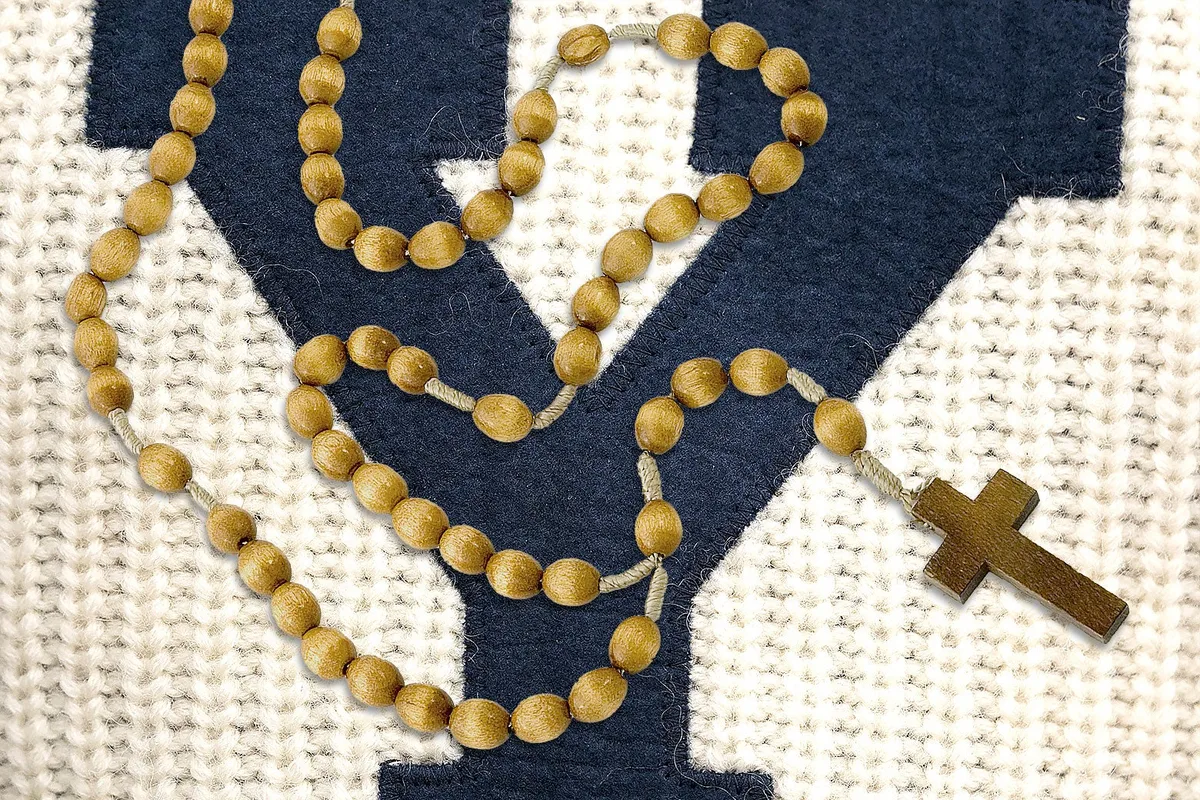
Around the United States, as you’ve probably heard, Gen Z Catholics are heading to the pews in eye-popping numbers . They meet up in pizzerias and follow one another on social media . They flock to Catholic student organizations, which are booming . And at Yale University, where I teach Latin American and global history, they attend classes and public lectures to learn about their faith.
The trend has surprised many in my department. Last spring, the most popular history course at Yale was “The Catholic Intellectual Tradition,” a survey of Catholic thinking and writing from the first century to the present. It beat out classes on such popular, evergreen subjects as “The Birth of Europe” and “The Roman Empire.” I was asked to assist with this 85-student course as a teaching fellow. Each week, after scrolling past calls to defund the humanities and to automate the many jobs that make a liberal arts education possible, I found myself surrounded by eager students ready to engage with fourth-century Christology, medieval mysticism, World War II–era debates over “just war” theory, and much more.
I, too, was surprised by these developments. I was an undergraduate at Yale from 2014 to 2018. My freshman year, only 13 people took “The Catholic Intellectual Tradition.” Instead, my peers and I spent those formative years reading postcolonial theory, taking classes on gender and ethnic studies, and railing against the Western or “Eurocentric” canon. When I entered graduate school, my research on Latin American anti-poverty debates alerted me to Catholic intellectuals’ rich tradition of studying poverty, violence, suffering, and disease. Even so, I struggled to see how I could make these texts relevant to my students’ lives.
Faculty at leading universities have, in recent years, avoided religious history on the premise that such topics as the Reformation and Puritanism are unexciting and stale. Hiring for scholars of religious life has also been minimal in the past decade. By and large, however, scholars at the nation’s top schools have ceded important cultural ground to blindly patriotic religious education movements, such as the ones now funneling students from K–12 schools to a growing number of “ trad” Catholic colleges , and beyond. That’s depriving many bright young minds of the opportunity to encounter faith as an object of serious academic inquiry. Universities need to do more to connect with religious and, given the recent trends, Catholic students, exposing them to the complexity and diversity of Catholic thought. Such schooling would help students see their faith as a living and relevant part of the world, rather than as a siloed-off identity or ideology.
Today, the U.S.-born pope roots for the White Sox , defends migrants , and speaks about artificial intelligence . Meanwhile, leading American politicians and commentators debate the applicability of “just war” theory to the war in Iran .
5News aggregated this summary from the outlet’s public feed. The full article, with all the context, is on slate.com — the content belongs to Slate.