We killed off California's grizzly bears over a century ago. Can we resurrect them?
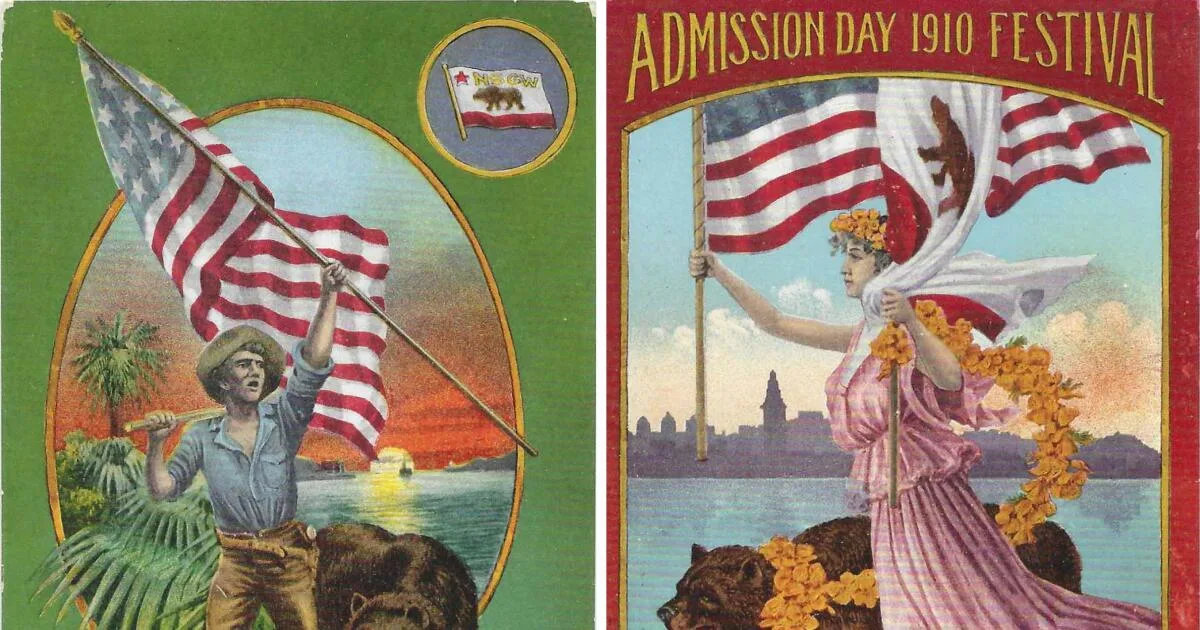
You really do see him everywhere. He’s there on your California driver’s license, on every state flag and on your UC Berkeley merch.
You find him on the official state seal, and if you get nabbed speeding on the freeway, there he is, embroidered on the CHP officer’s uniform patch.
He’s the California grizzly bear, and you see him pretty much everywhere, except alive and thriving in California.
In the span of a single human lifetime — between the Gold Rush and Prohibition — we killed them all. Killed them? More like we exterminated them. Shot them for fun and for fur. Poisoned them for carrying off a farmer’s pigs or calves, or because they might try to do it. Trapped them to chain them up in an arena and gore them to death by a bull, to provide an afternoon’s entertainment.
We have a lot to atone for. And maybe that’s one reason that there’s talk of bringing the iconic bear back to the Golden State. More on that later.
Los Angeles is a complex place. Luckily, there's someone who can provide context, history and culture.
The California grizzly is so important to our self-image that 180 years ago, we put one on the flag that evolved into the state flag. The original 1846 “bear flag” banner was a thrown-together affair, a handmade one, perhaps a bit drunkenly assembled.
It was banded on the bottom in red — maybe from a red petticoat or long johns, per the man who says he designed the flag, one William Todd, nephew by marriage of a young Illinois congressional candidate named Abe Lincoln. The single star was painted in berry juice, as was the bear, which looked so porcine that Mexicans who were struggling to protect California from Yankee rogues mocked it as more pig than bear. The words “California Republic” were painted in black ink with the chewed end of a twig.
The California Republic lasted 25 days. The original flag lasted 60 years, until it burned up in the San Francisco earthquake and fire.
An Inglewood Democrat, state Sen. Laura Richardson, has proposed a measure to study the possibility of restoring the iconic bear — not a date certain for putting claws on the ground, mind you, just an unfunded bill for a “roadmap” study by the state fish and wildlife department to evaluate “whether, and under what conditions, reintroduction of the grizzly bear is feasible and advisable.”
I left a message for the state senator’s office, wanting to know more about what must be a fascinating backstory to this urban legislator’s measure, but like the population of California grizzlies, I scored zero.
A grizzly revival study is an easier matter for science than for politics, with hunters and ranchers already against and environmentalists and some native American tribes for.
For a long time, the California grizzly was regarded as its own distinct sub-species, Ursus arctos californicus, but now science is not so sure.
5News aggregated this summary from the outlet’s public feed. The full article, with all the context, is on www.latimes.com — the content belongs to Los Angeles Times.