AI giants lean into health care to stall public backlash

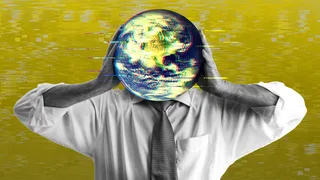
AI has an image problem .
And one way to fix it is for top companies to dive headlong into health care.
Why it matters: Saving the world with AI-designed cures is better than being blamed for ruining the environment or driving up Americans' utility bills.
But even the most advanced AI models can't produce miracle treatments at the moment — and could create serious security risks if they try.
That could set up a fraught debate over the next two or three years about the allocation of resources and whether the benefits of throwing vast amounts of computing capacity into medical research outweigh the costs.
Driving the news: The Wall Street Journal reported this month that Anthropic was trying to shore up investor confidence ahead of its massive initial public offering with talk of pushing harder into health care and biology.
CEO Dario Amodei wrote on X that Anthropic is moving quickly in biology and medicine "and we hope to have incredible results in the coming years and some early glimmers in the coming months." Anthropic isn't alone: Nvidia and Eli Lilly are building a $1 billion drug discovery lab in San Francisco that will team up life science researchers with AI model builders and engineers.
Isomorphic Labs, the AI drug discovery spinoff from Google, recently raised $2.1 billion to hire more AI and clinical talent and has ongoing research collaborations with Novartis, Lilly and Johnson & Johnson.
Yes, but: Breakthroughs may still be years away.
That's hardly reassuring to an increasingly anxious U.S. public that's gone NIMBY against data centers, with moratoriums, threatened lawsuits and fears of AI models taking more jobs.
The technology is dramatically speeding up drug development and helping clinicians analyze medical scans and diagnose conditions.
But it's also making health care more expensive , with software and scribes that more thoroughly document the care that's delivered.
There also are concerns that AI-enabled research tools could be used for nefarious purposes, including potentially making a biological weapon.
Anthropic implemented strict safeguards on its next-generation Claude Fable 5 model after concluding it could provide "significant uplift" to a bad actor.
5News aggregated this summary from the outlet’s public feed. The full article, with all the context, is on www.axios.com — the content belongs to Axios.