Chinese automaker Chery buys Nissan plant as EV production shifts to new markets
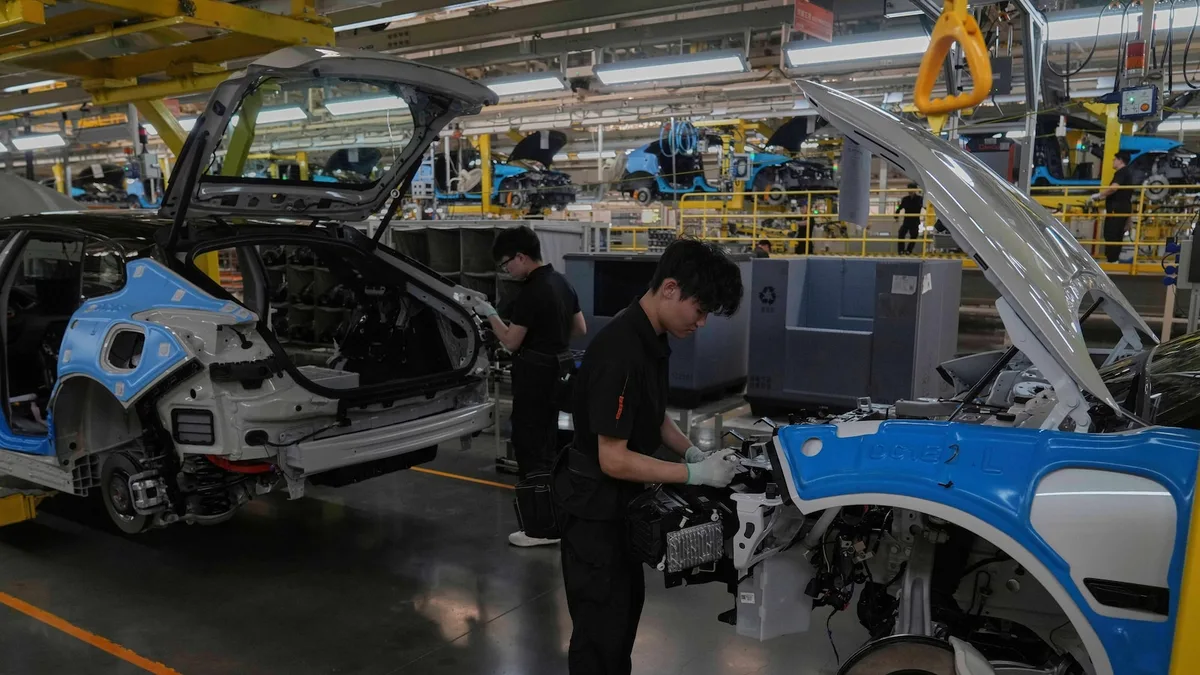
Chinese automakers are increasingly shifting from exporting vehicles to Africa to assembling them there as they target the continent’s fast growing population, rising middle class and expanding demand for affordable electric vehicles
NAIROBI, Kenya -- Chinese automakers are increasingly shifting from exporting vehicles to building them in Africa, betting that rapid urbanization, a growing middle class and supportive government policies will make the continent one of the industry’s last major growth markets.
It’s part of a strategy for coping with slowing demand at home and rising trade barriers in Europe and North America. Analysts say the shift could reshape Africa’s automotive industry by creating jobs, developing local supply chains and accelerating adoption of electric vehicles, although weak infrastructure and policy uncertainty remain significant obstacles.
In July, Chery, China’s largest auto exporter, acquired Nissan’s former Rosslyn plant near Pretoria, South Africa, where it plans to make plug-in hybrids, battery-electric vehicles and models under its Jetour brand.
The move reflects a broader strategy by Chinese automakers to manufacture closer to African consumers rather than rely solely on imports, though the trend is just getting started.
Beijing Automotive Group (BAIC) has an automotive manufacturing and assembly facility in Gqeberha (Port Elizabeth), South Africa, and China's Great Wall Motor has some localized assembly and component distribution capacity.
“Africa has become known as the next frontier for the automotive market,” said Hiten Parmar, executive director of The Electric Mission, a South African nonprofit promoting sustainable mobility.
Analysts say South Africa, Morocco, Kenya, Ethiopia and Ghana are among the countries best positioned to attract Chinese EV investment because of their industrial capacity, supportive policies or growing electricity infrastructure. Morocco also benefits from proximity to European export markets, while Zimbabwe’s large lithium reserves could support battery supply chains.
Local manufacturing could eventually lower vehicle prices by avoiding import duties while stimulating investment in charging infrastructure, component manufacturing and battery production. Africa’s first large-scale battery gigafactory is already planned in Morocco.
Rapid urbanization, rising incomes and the relative affordability of Chinese brands are enabling Chinese automakers to capture markets historically dominated by European, Japanese and American giants.
“Whilst African consumers have been thriving on used cars, the affordability of Asian brands is providing a wider accessibility reach for new vehicles,” Parmar said.
Nick Hedley, an energy transition research analyst at Zero Carbon Analytics, said Africa’s fast-growing population and expanding middle class create a natural market for affordable electric vehicles while helping governments reduce dependence on imported fuel.
“Africa is also a net importer of refined fuels, which drains foreign reserves and weighs on local currencies and budgets,” Hedley said.
5News aggregated this summary from the outlet’s public feed. The full article, with all the context, is on abcnews.go.com — the content belongs to ABC News Technology.