AI Is Helping Bring Back the Dodo
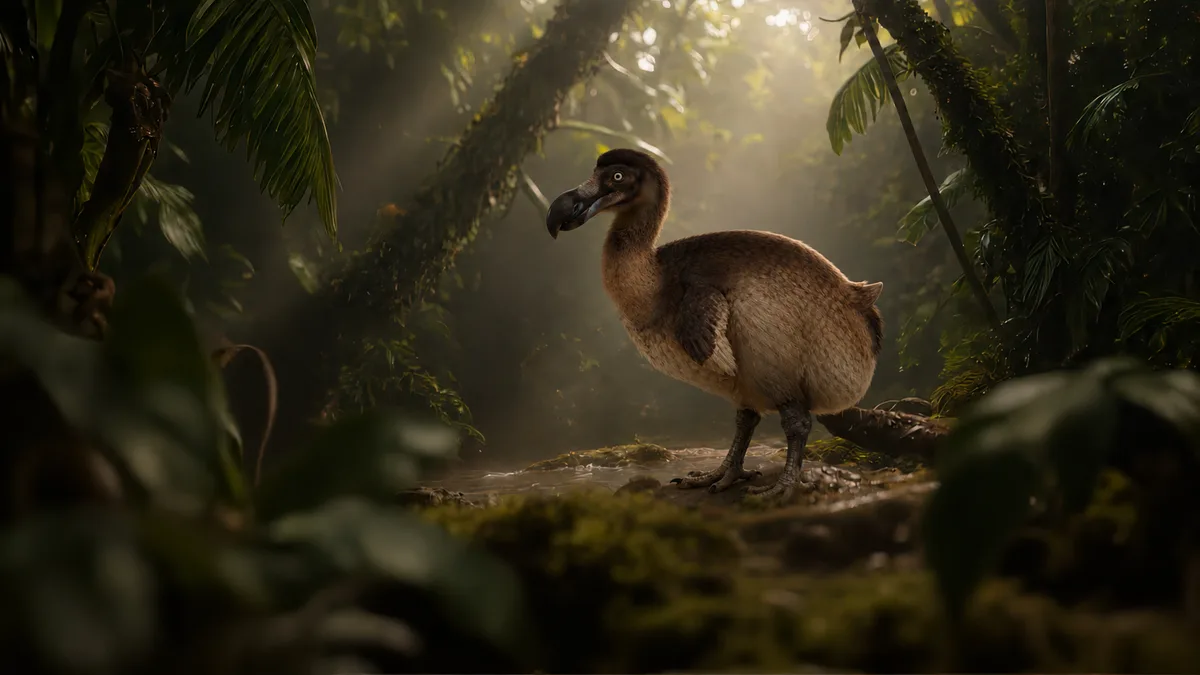
An artist's rendering of the extinct dodo. —Colossal Biosciences There are a whole lot of reasons to have a whole lot of concerns about the harm artificial intelligence can cause, which explains why the technology has so many detractors.
But even the harshest critics might smile at the news coming out of Dallas-based Colossal Biosciences .
There, researchers have just announced that AI may help hasten the return of the extinct dodo, with the flightless bird, which vanished from the world more than 350 years ago, likely walking among us again sometime in the early 2030s.
With so few ancient samples of dodo DNA surviving—and that which does exist having degraded over the centuries—the analytic and number-crunching power of AI is just what’s needed to fill in the genetic blanks.
“De-extinction is as much a data problem as a biology problem,” said Colossal CEO and co-founder Ben Lamm in a statement.
“[AI] learns how regulatory DNA shapes living birds, then identifies the genetic switches that may have contributed to the dodo’s distinctive anatomy.” Colossal established its de-extinction bona fides in 2025, when it announced that it had sequenced ancient DNA from the long-extinct dire wolf, used that to rewrite the genome of the extant gray wolf, and brought the Ice Age dire wolf back to life, more than 10,000 years after it vanished.
Animals that are also on the company’s de-extinction to-do list include the woolly mammoth , the Tasmanian tiger, the ostrich-like moa , and the antelope-like quagga.
The dodo, with its waddling gait, its stubby wings, its goggly eyes, and its preposterous beak, has none of the power, grace, or charisma of those other animals—but that’s part of its charm.
“The dodo never had a chance,” wrote New York Herald Tribune writer Will Cuppy , in his 1941 book How to Become Extinct .
“He seems to have been invented for the sole purpose of becoming extinct and that was all he was good for.
I’m not blaming the dodo, but he was just a mess.
The Portuguese called the birds doudos , or fools, because they would associate with the Portuguese on friendly terms and allow themselves to be hit on the head with clubs.” But what inspires mockery inspires love too—and it will take plenty of that to bring the dodo back.
De-extincting a placental mammal like a dire wolf is a comparatively straightforward process.
Colossal researchers first harvested cells from a living gray wolf and made 20 edits to 14 genes, coding for the dire wolf’s white coat, larger size, more powerful jaws, cold weather metabolism, and more.
5News aggregated this summary from the outlet’s public feed. The full article, with all the context, is on time.com — the content belongs to TIME.