Meet the CEO whose century-old company never laid off employees through the Great Depression, the recession, or Covid
Beverage and syrup company Torani hasn’t laid off a single employee since the Great Depression.
Not in 2008, not during globalization or the automation wave that gutted American manufacturing towns, and not during the pandemic that shut the cafes that buy most of its flavored syrups.
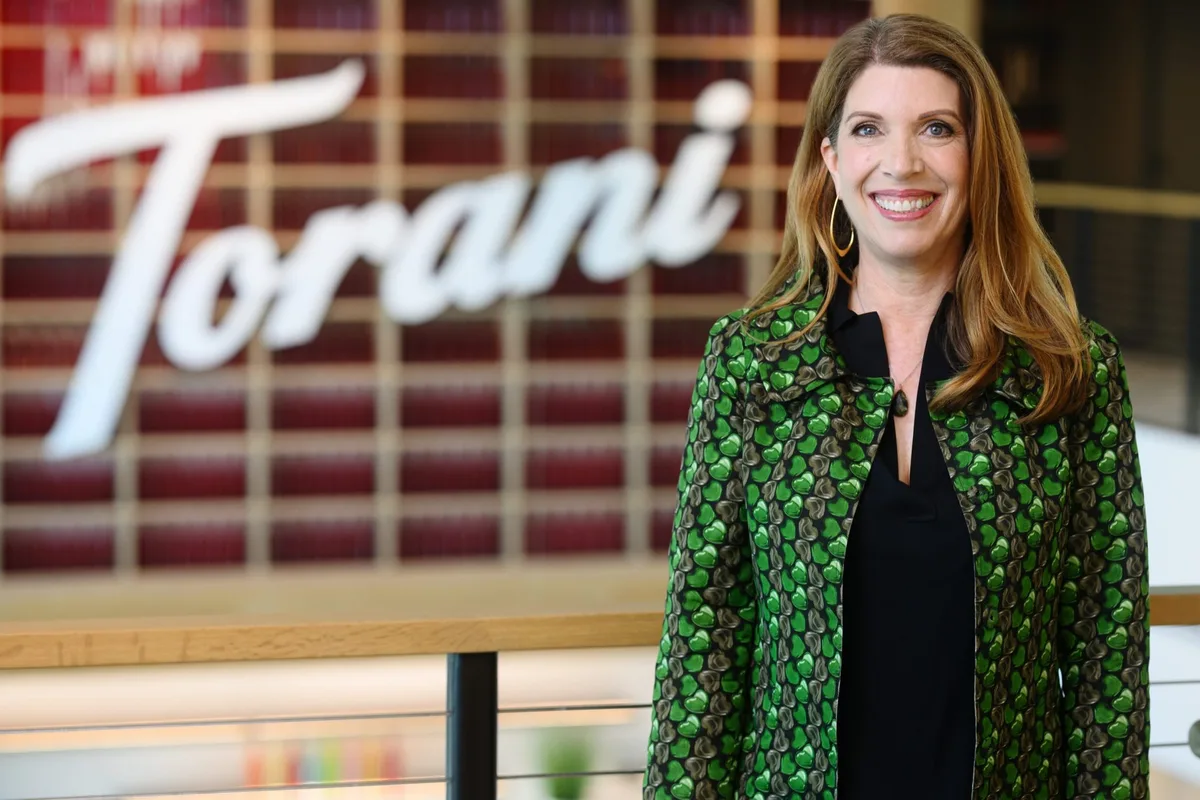
Now, as generative and agentic AI reshape entry-level work in corporate America, Melanie Dulbecco—who has run the 101-year-old, San Leandro, California-based syrup maker for 35 years—is wrestling with the same question facing executives everywhere: How can she adopt technology that could theoretically replace employees’ work? But Dulbecco has an extra consideration, and that’s navigating the AI age without breaking Torani’s no-layoffs streak.
“It is going to dramatically change things, and we’re all going to live through this together, but our approach is going to be the same as it has been,” Dulbecco told Fortune .
“How do we create great jobs through this for everyone?” After a friend got her connected with the family that owns Torani, Dulbecco joined the company in 1991, when she said it was a nine-employee operation generating about $700,000 a year.
Started by Italian immigrants who sold hand-crafted syrups to flavor drinks in 1925 in San Francisco, the company pivoted to producing liqueurs after Prohibition ended in 1933.
Its coffee-flavoring business, the syrups the company is best known for today, didn’t arrive until decades later, in 1982.
In that time, Torani grew from five syrups to over 150 that can be added into coffee, cocktails and sodas, and Dulbecco even claimed the company “invented the flavored latte” with its vanilla syrup.
This year, the company is expected to bring in more than $800 million with just 500 employees, averaging 20% annual revenue growth over 35 years, the CEO said.
“Most companies focus on their financials, and then people are the tools,” said Dulbecco.
“We look at it the other way around, and it works really well for us.” Keeping the company local A year into Dulbecco’s tenure, the then-small Seattle chain Starbucks approached Torani to become its private-label syrup manufacturer.
Torani already supplied syrups to the company, but the decision split Dulbecco’s team so much that they brought in students from Stanford Business School, her alma mater, to sort it out.
The students said Torani could succeed either way, but private labeling meant becoming a low-cost producer, and skimping on what made Torani special, like swapping high-fructose corn syrup for cane sugar.
“It made the decision easy because then all of us who were here could say, what’s the business we want to build?” Dulbecco recalled.
5News aggregated this summary from the outlet’s public feed. The full article, with all the context, is on fortune.com — the content belongs to Fortune.