Monday, August 31, 2026 SourcesAbout🌓
🇺🇸 US ▾
BREAKING
Dominion still has pending lawsuits against election deniers such as Rudy Giuliani and Sidney Powell Russia is 'going backwards' in equipment and deploying post WWII-era tanks, according to Western officials Podcast: One country musician is calling for other artists to oppose assault rifles Bidets save you money and reduce waste — we tested the best options out there 50+ products to make your life easier and our planet cleaner Mother's Day is around the corner. Here are 50+ thoughtful gifts she'll love A head-to-toe guide of how men should dress this spring, and where they should shop 42 of the most useful travel products you can buy on Amazon The 7 best high-yield savings accounts of April 2023 Taxes are due tomorrow. Here's how to file for an extension Dominion still has pending lawsuits against election deniers such as Rudy Giuliani and Sidney Powell Russia is 'going backwards' in equipment and deploying post WWII-era tanks, according to Western officials Podcast: One country musician is calling for other artists to oppose assault rifles Bidets save you money and reduce waste — we tested the best options out there 50+ products to make your life easier and our planet cleaner Mother's Day is around the corner. Here are 50+ thoughtful gifts she'll love A head-to-toe guide of how men should dress this spring, and where they should shop 42 of the most useful travel products you can buy on Amazon The 7 best high-yield savings accounts of April 2023 Taxes are due tomorrow. Here's how to file for an extension
Science

A beginner’s guide to observing the night sky with a manual telescope
Space.com ·
A beginner’s guide to observing the night sky with a manual telescope

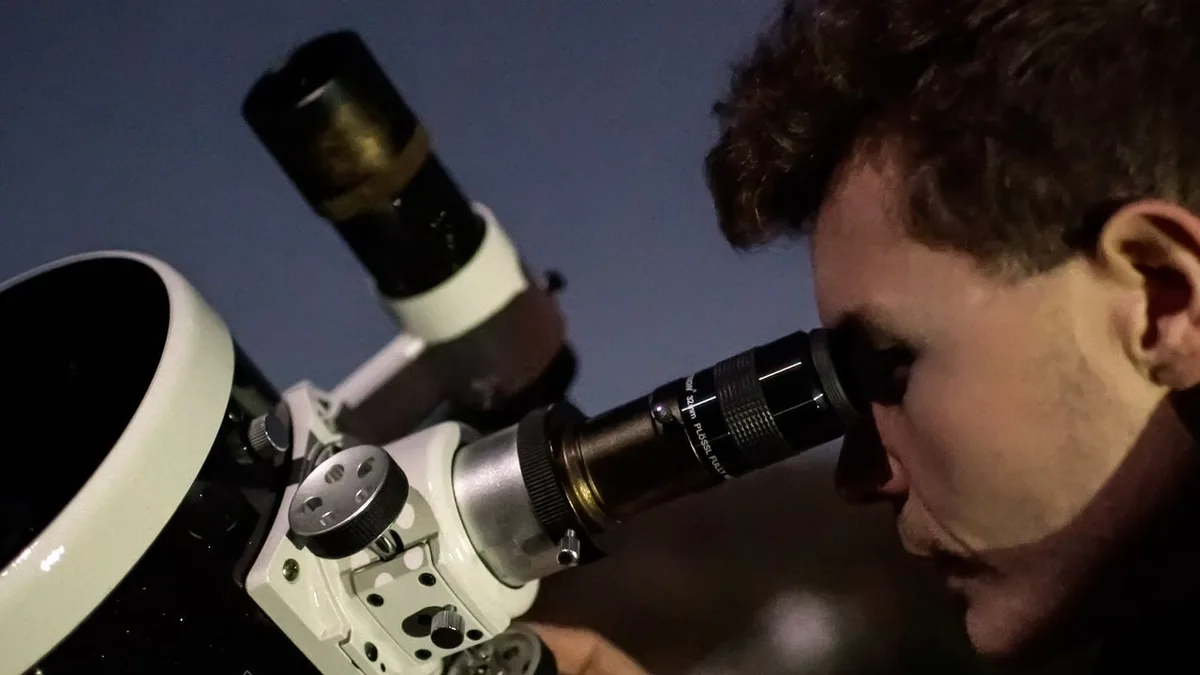
The night sky is not an impenetrable “blanket of stars.” There is depth and detail that can be navigated and known, probed and plundered for rewards — and the best way to do all of that is with a manual telescope.

Sure, you can get a motorized computerized “go-to” telescope and even one of the best smart telescopes that self-align and do all the work for you.

Arguably, they also take much of the reward and leave you none the wiser.

Can users of smart telescopes find Polaris, the North Star? Probably not.

Do they know where the fabulous images of nebulae they produce actually come from? It’s doubtful.

Manual telescopes don’t find celestial objects for you — you find them yourself.

However, it’s the only way to build sky literacy.

Observing manually connects you to a long tradition of stargazers who learned the patterns of the sky by heart.

The learning curve can be steep, even with one of the best beginner telescopes .

Knowing where to point a manual telescope is a challenge for beginners.

With narrow fields of view, it’s easy to miss even bright targets unless you understand where objects are, how to navigate the sky and how to move your telescope.

All telescopes use lenses and/or mirrors to collect and focus light.

There are several types of telescope — the main two being refractors and reflectors — as well as Dobsonians and catadioptrics (Schmidt-Cassegrains and Maksutov-Cassegrains).

Let’s assume you already have one of the best telescopes .

Read the full article on Space.com ›

5News aggregated this summary from the outlet’s public feed. The full article, with all the context, is on www.space.com — the content belongs to Space.com.
More from Space.com

See all ›

More in Science

See all ›