Ticks that cause Lyme and other diseases have migrated south. Are doctors ready?
Add NBC News to Google New CDC data reveals ticks have migrated south, possibly creating more risks for Lyme disease 02:22 Get more news on Share Add NBC News to Google Aug. 13, 2026, 3:06 PM EDT By Erika Edwards Angela Newman of Biltmore Forest, North Carolina, remembers the “bizarre” symptoms she began experiencing almost a decade ago. Blurry vision, a stiff neck, hypersensitive skin, numbness and weakness that would come and go.
She saw a variety of medical specialists, undergoing an MRI, CT scan and psychiatric assessments. The doctors often dismissed her symptoms as anxiety or depression, Newman, 57, said.
Finally, at a college reunion she mentioned her illness to a friend who recognized the mysterious symptoms as a possible case of Lyme disease.
When she called her primary doctor for a Lyme disease test, he told her, “I don’t think you have Lyme. We don’t really have that around here,” Newman said. “I said, ‘I don’t care what you think. I want you to test me.’”
The results were positive, a diagnosis that took five years to make. Within days of receiving antibiotics, her symptoms started to abate. It took nearly a year to feel like her usual, energetic self.
“I knew I wasn’t crazy,” she said. “It’s frustrating to have people basically say, ‘I think you need antidepressants.’”
Newman never found a tick but had noticed a welt on her leg that looked a little bit like a spider bite.
At the time Newman was infected in North Carolina with Lyme, the disease was believed to be largely limited to the Northeast. New research published Thursday by the Centers for Disease Control and Prevention underscores how the bugs have gained a foothold in unexpected places farther south.
“It was always thought that Rocky Mountain spotted fever, which is caused by different bacteria, was our major tick-borne disease,” said University of North Carolina School of Medicine’s Dr. Ross Boyce, the CDC study’s author and a researcher who specializes in tick-borne diseases.
The new research “is the slam dunk,” he said, proving that Lyme disease should be considered a major threat to areas farther south than previously thought.
Boyce and his colleagues focused the research on Biltmore Forest, a small mountain town nestled along the scenic Blue Ridge Parkway. From November 2024 through August 2025, they canvassed 22 household lawns, collecting 373 ticks.
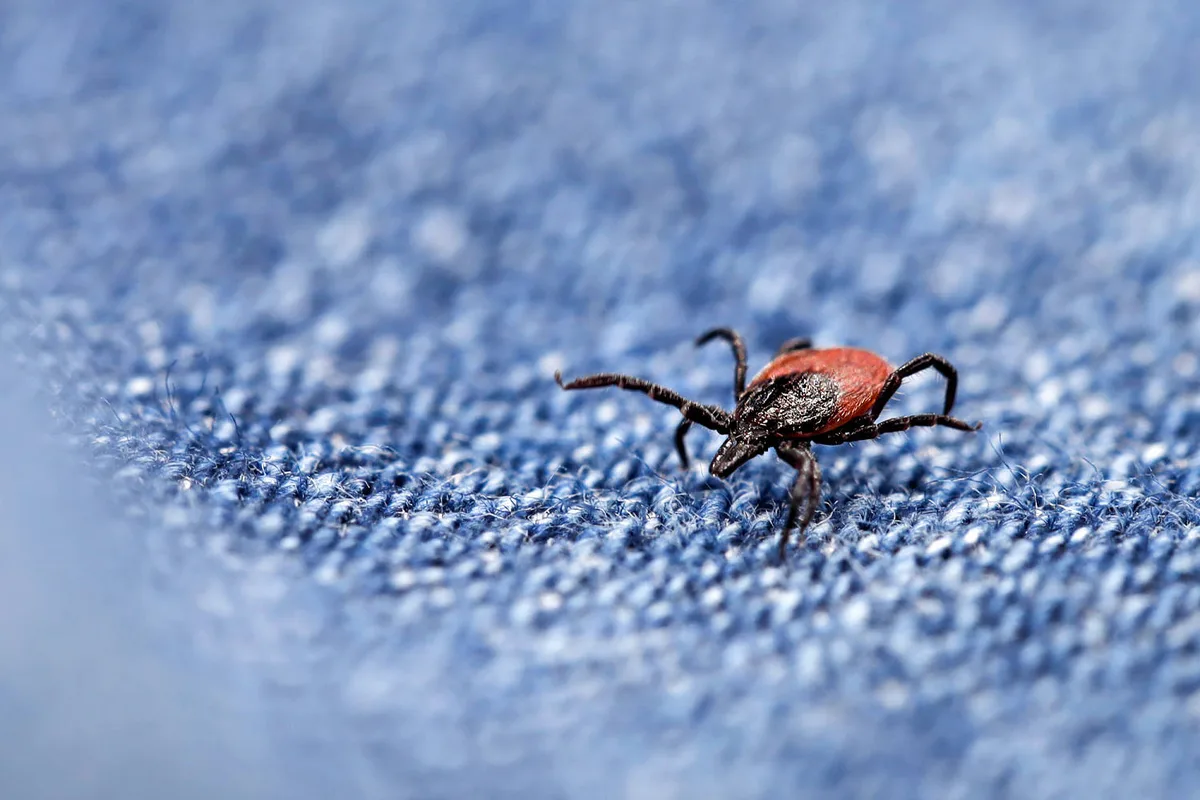
The majority, 76.9%, were blacklegged, or deer, ticks. Those are the ones known to carry bacteria called Borrelia burgdorferi, which causes Lyme disease in humans.
More than a third, 39.6%, of the adult blacklegged ticks tested positive for the bacteria. “That is a number that you might see in places like Pennsylvania, New York, New England states where Lyme is common,” Boyce said.
The research also found, for the first time, North Carolina ticks with other types of disease-causing bacteria.
5News aggregated this summary from the outlet’s public feed. The full article, with all the context, is on www.nbcnews.com — the content belongs to NBC News.