Judge Blocks Trump Mail-Ballot Order, Calls Out DOJ’s “Cynical” Attempt to Misread Supreme Court Ruling
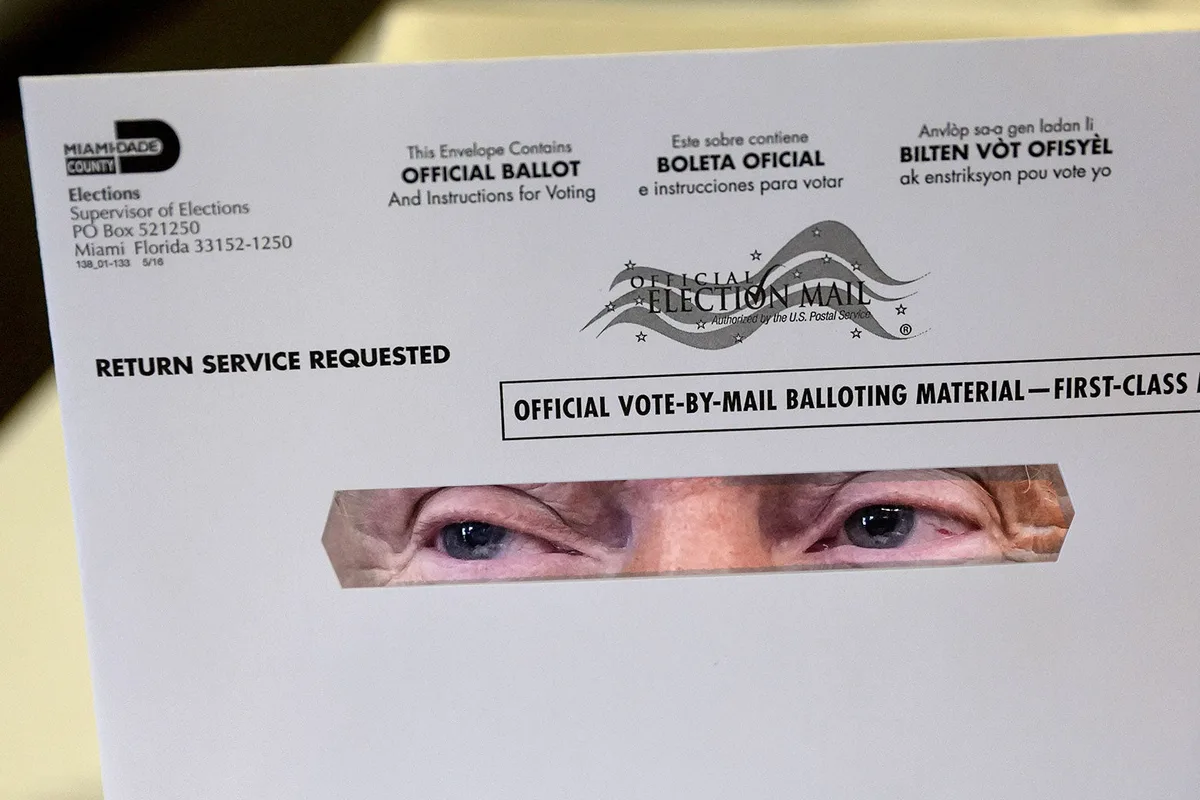
The Trump administration won a victory at the Supreme Court last Monday in its campaign to overhaul mail voting before the midterms. By Thursday, though, much of the plan was blocked again. The speed of that reversal makes it tempting to see the latest ruling as a district judge thumbing her nose at the high court. But Judge Indira Talwani took the justices at their word.
The legal dispute began with President Donald Trump’s March executive order mandating the U.S. Postal Service to impose new requirements on mail ballots in federal elections. Among other things, Trump instructed the agency to develop rules requiring specially designed ballot envelopes with unique barcodes and state-specific lists identifying voters participating by mail, and to refuse to transmit ballots for voters absent from those lists. Twenty-three states and the District of Columbia sued, arguing that the president had seized authority the Constitution assigns to the states and Congress. Talwani agreed and issued an injunction, a court order barring the administration from implementing key provisions of Trump’s directive for the 2026 elections.
On Aug. 24, the Supreme Court put that injunction on hold, allowing the administration to move forward while the case continued. The six-justice majority left the legality of Trump’s plan for another day, concluding instead that the states had sued too soon. At the time they filed their complaint, USPS had yet to complete its rulemaking. A final regulation would come only after the agency proposed a rule, received public comments, considered them, and settled on a final policy. Until then, the court reasoned, the states’ claimed injuries depended on speculation about what USPS might eventually do.
The court was careful about the limits of its ruling, though. Its decision, it said, did not mean that whatever the government eventually did to implement Trump’s order “will necessarily be lawful.”
Having finalized its rule the Friday before SCOTUS offered its opinion, USPS ultimately turned what the court had viewed as a still-developing policy into concrete requirements for the states. According to the new rule, if election officials fail to meet certain requirements, USPS can refuse to mail their ballots. And the states were expected to put all of this in place with the November election barely two months away. So the states returned to court, this time with a new lawsuit challenging the finished product. Voting-rights groups supplemented a parallel suit to challenge the rule as well.
On Thursday, Talwani blocked key provisions of the new USPS rule for 14 days. The problem the Supreme Court had identified just three days earlier had now disappeared. USPS had issued a final rule, and the states were challenging the policy actually in front of them. “Now that the USPS has published the Final Rule,” she wrote, “plaintiffs’ challenges are ripe.” For support, she cited the decision that had overturned her three days earlier: Trump v. California .
With jurisdiction established, Talwani reached the issue SCOTUS had avoided.
5News aggregated this summary from the outlet’s public feed. The full article, with all the context, is on slate.com — the content belongs to Slate.