Lachy Groom backs Indian startup aiming to keep aircraft aloft for a year
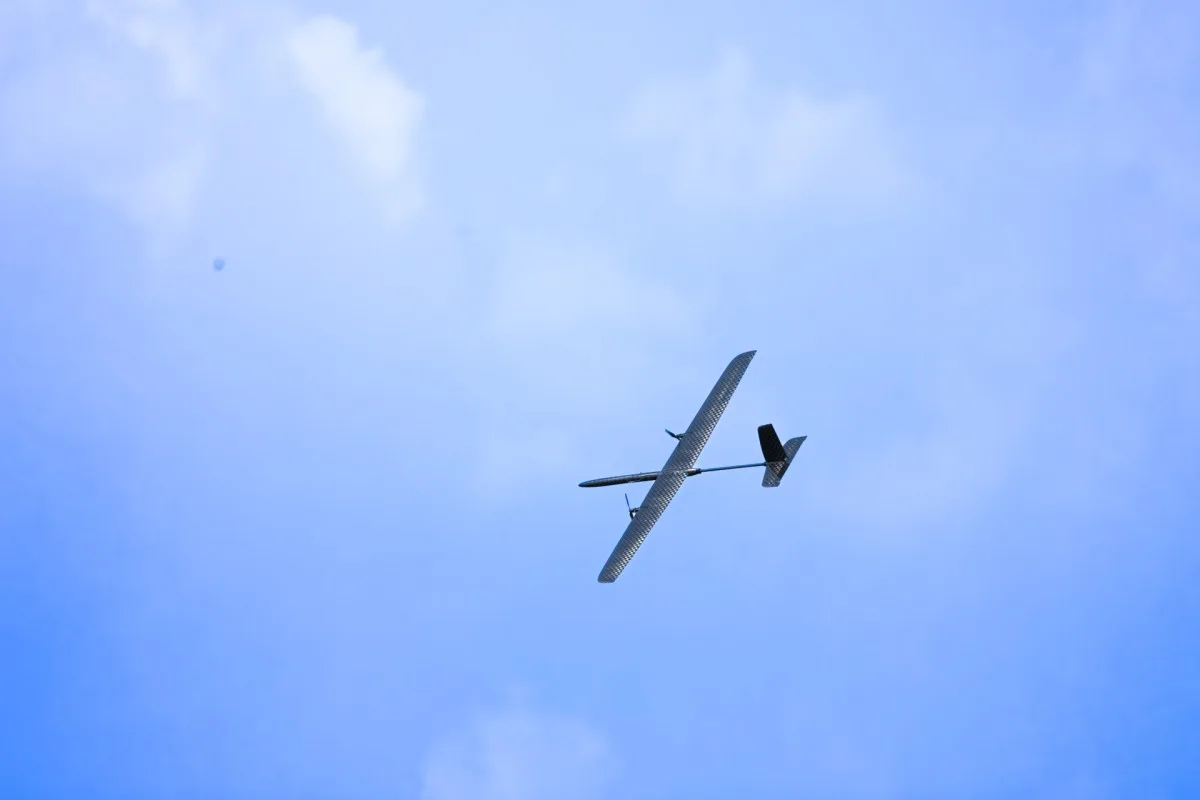
Prominent solo investor Lachy Groom has backed a Bengaluru startup attempting an ambitious feat: keeping an aircraft in the sky for more than a year by harvesting energy from ocean winds.
Alteon , founded by 20-year-old Samay Sanghvi, announced Tuesday that it raised $2.5 million in a pre-seed round led by Groom, with participation from Together Fund, to develop autonomous aircraft inspired by dynamic soaring, a technique albatrosses use to extract energy from the wind. Groom decided he wanted to invest within the first 30 minutes of their first meeting, Sanghvi told TechCrunch.
Conventional aircraft need to carry the fuel or battery power required for a flight. Alteon is trying to break that limitation by designing its small, fixed-wing autonomous aircraft that can extract energy from wind shear above the ocean through dynamic soaring — a maneuver in which an aircraft repeatedly moves between layers of air traveling at different speeds.
“Once you build airplanes that can stay in the air for more than a year, there are millions of things you can do with them,” Sanghvi told TechCrunch. Alteon plans to initially use the aircraft for maritime surveillance, giving governments real-time visibility into activity in their waters.
The initial plan is to build an aircraft with around a three-meter-wingspan that will fly close to the ocean’s surface, climb, and turn through faster-moving air, and repeat the cycle to gain energy from the wind. Eventually, Alteon plans to use its propellers as turbines to convert some of that energy into electricity and recharge its onboard batteries, Sanghvi said.
However, the startup has not yet demonstrated that its aircraft can actually sustain flight using energy harvested through dynamic soaring. It did complete a recent of its test of its autonomous flight system over the Bay of Bengal in which the aircraft autonomously completed seven O-shaped cycles at more than 62 miles per hour, flying within one meter of the water’s surface.
Alteon’s next major milestone will be what Sanghvi calls “energy-neutral dynamic soaring.” This would allow the aircraft to fly continuously with its propulsion switched off, extracting enough energy from the wind to remain aloft.
Dr. Gabriel Bousquet, a Silicon Valley-based aerospace and robotics engineer who researched dynamic soaring during his PhD at MIT, called Alteon’s low-altitude flight over water a “promising first result.” But he noted that the harder challenge will be proving that the aircraft can reliably extract enough energy from real-world winds to sustain flight for extended periods.
Flying low enough to harvest that energy safely is particularly difficult, Bousquet told TechCrunch, as the aircraft would have to contend with turbulence, waves, spray, rain, and changing light conditions while continuously sensing and reacting to a moving ocean surface.
Dr. Bharath Swaminathan, who earned his PhD from IIT Madras studying the stability of dynamic soaring, said the underlying physics is well established and called Alteon’s effort commendable.
5News aggregated this summary from the outlet’s public feed. The full article, with all the context, is on techcrunch.com — the content belongs to TechCrunch.