The Memory Shortage Comes for Schools
For today’s high schoolers, a typical school day from a decade ago must seem like something from the Dark Ages.
These days, students are issued digital textbooks instead of physical ones, they learn how to conduct chemistry experiments through apps that simulate a science lab, and they take standardized tests on a Chromebook.
All of this is the result of many years of frenzied investment in ed tech, capped by a pandemic that forced virtual learning.
The overwhelming majority of schools nationwide provide each student with their own laptop or tablet.
All of these screens have changed the dynamic of the classroom.
When a student is supposed to be using their school-issued iPad to diligently take notes during math class, they might instead be messaging a friend.
Across the country, some parents and teachers are mounting a backlash against screens in the classroom .
In April, the Los Angeles school board voted to stop giving devices to its youngest students and implemented screen-time limits for all grades.
But other schools are pulling back on ed tech for an entirely different reason.
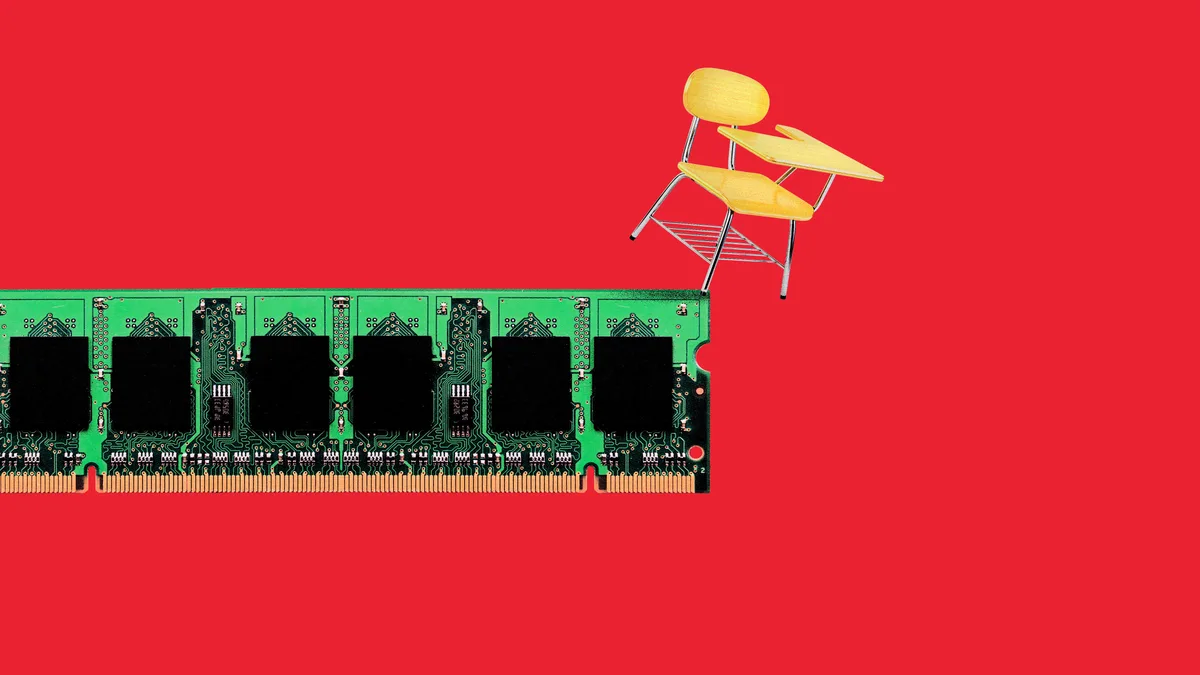
Chromebooks, like essentially all other consumer electronics, need RAM, or random-access memory.
So do the data centers that power every conversation with a chatbot.
The AI industry is using so many memory chips that it’s led to a global shortage, making gadgets much more expensive.
For an individual consumer, the memory crunch— RAMaggedon , if you will—means having to spend a few hundred dollars more on a new computer.
But school districts, many of which are already cash-strapped, buy hundreds or thousands of computers every year.
5News aggregated this summary from the outlet’s public feed. The full article, with all the context, is on www.theatlantic.com — the content belongs to The Atlantic.