Nuclear power push ramps up uranium mill — and tribal health concerns
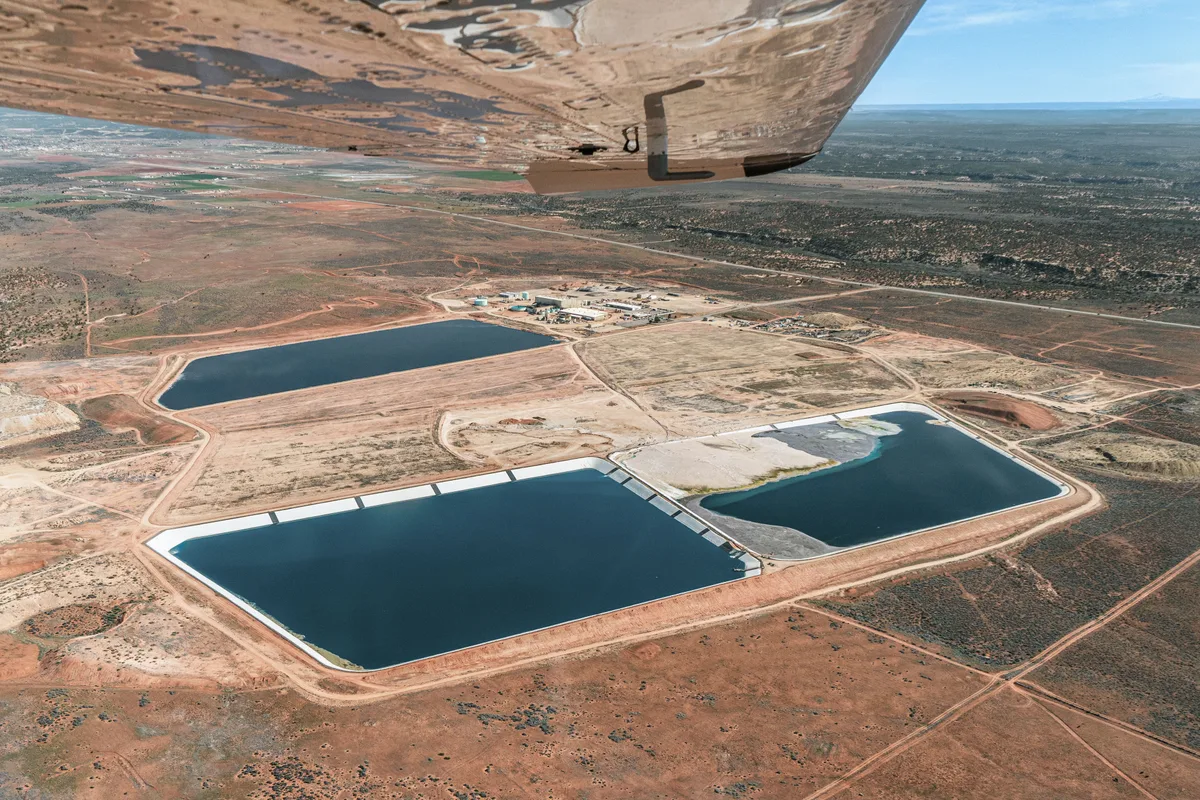
The White Mesa Mill's radioactive waste is stored in five tailings cells, which occupy 284 acres of land in Blanding, Utah, as shown overhead from a plane on March 22. EcoFlight hide caption
WHITE MESA, Utah — On a hot April day, Malcolm Lehi maneuvered his Jeep Wrangler over a rough dirt road. He drove past junipers and sagebrush in search of Entrance Spring on land long connected to his tribe, the Ute Mountain Ute.
The cool, mossy spring lies just across the highway from White Mesa Mill, the nation's only remaining conventional uranium mill , which produces yellowcake for nuclear power fuel.
For decades, the mill has sparked debate over whether radioactive contamination threatens human health by getting into the water and the air. Concerns run especially deep in the White Mesa Ute Community, where Lehi and about 200 members of his tribe live some 5 miles south of the facility.
State regulators and the company that owns the mill contend that any pollution associated with it is contained. That's little consolation to nearby tribal members, who — aware of uranium's deadly legacy across the Colorado Plateau — have raised questions about the potential spread of toxic waste. Many won't drink the local water, relying on bottled water instead.
Now the tribe's concerns have taken on new urgency as the U.S. pushes to revive domestic uranium production. A federal law, passed in 2024, bans imports of Russian uranium by 2028, increasing pressure to develop domestic fuel supplies. President Trump set a goal to quadruple U.S. nuclear energy capacity by 2050. He issued orders to prioritize mining on federal lands and fast-track approval of mining projects. The Velvet-Wood uranium mine in Utah, for instance, zipped through federal environmental review in 11 days, to the dismay of local tribes who were given one week to offer input.
Trump's goal of quadrupling nuclear power capacity will be hard to meet, because it would require constructing more reactors — which are difficult to build and often meet local opposition, said David Hart , a senior fellow for climate and energy at the Council on Foreign Relations. But data centers and rising electricity demand have intensified interest in nuclear power as a low-carbon energy source, he said. And more states are opening the door to it.
The White Mesa Mill, built in 1980 near what is now the Bears Ears National Monument in southeastern Utah, is a focal point of this latest uranium boom — and the tensions between local tribal concerns and national economic interests.
Increased demand draws a steady flow of trucks carrying uranium ore to the mill from regional mines, including one near the Grand Canyon where the Havasupai Tribe lives. That ore is trucked through the Navajo Nation. And the mill plans to expand its waste storage, as well.
A former tribal councilmember, Lehi is part of a growing opposition that includes members of the Havasupai and Navajo (Diné) tribes, who are now linked by the uranium trucking routes passing through their lands.
5News aggregated this summary from the outlet’s public feed. The full article, with all the context, is on www.npr.org — the content belongs to NPR Health.