The Terrible Movie That Chinese Audiences Can’t Stop Watching
One of the only compliments I can offer the new Chinese animated film Niu Lai is that it certainly qualifies as a film.
There is sound.
The pictures move.
But beyond the basics of what makes a movie a movie, Niu Lai , which translates to “The Ox Comes,” contains little artistic merit.
The plot, about a calf coming of age with the help of a leopard, a bird, and his mother, is thin, and the characters have been so nightmarishly rendered on a rudimentary computer program that they might as well be sleep-paralysis demons.
Yet Niu Lai has become a bona fide box-office hit in China.
Since a small distributor unceremoniously dumped it in theaters in early August, the film has become one of the most lucrative movies in Chinese history, making more than $7 million off a reported budget of no more than $500 and outperforming recent blockbusters such as The Odyssey and Spider-Man: Brand New Day .
Much of its success is thanks to Chinese social media, where clips of it first went viral: Some users have embraced Niu Lai as a meme, purchasing tickets so they could ridicule the baffling work with an audience.
Others have championed the project as anti-AI art, arguing that it deserves to be appreciated as a purely human creation.
As flawed as Niu Lai may be, to the fans, it’s at least better than AI slop.
I’m not so sure about that.
Watching a bootleg version of Niu Lai felt painful but apt: What better way was there to see a jankily made film than in potato quality on my computer at home? Instead, what’s distinctly human about Niu Lai comes from everything around it: how it was made, how it became a sensation, and how it has inspired further creativity in turn.
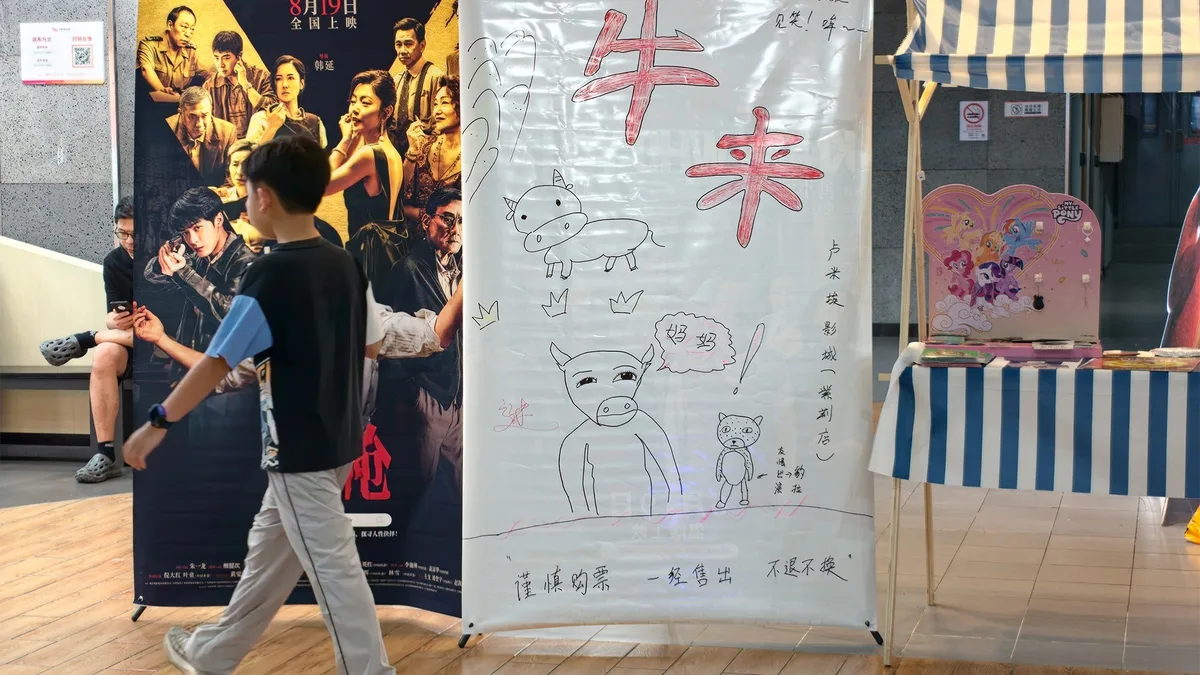
Theater workers have drawn posters by hand to help advertise the movie.
Businesses have made plush toys of the bovine hero.
5News aggregated this summary from the outlet’s public feed. The full article, with all the context, is on www.theatlantic.com — the content belongs to The Atlantic.