Sidewalk sleepers: They have nowhere else to stay while a loved one is in the hospital
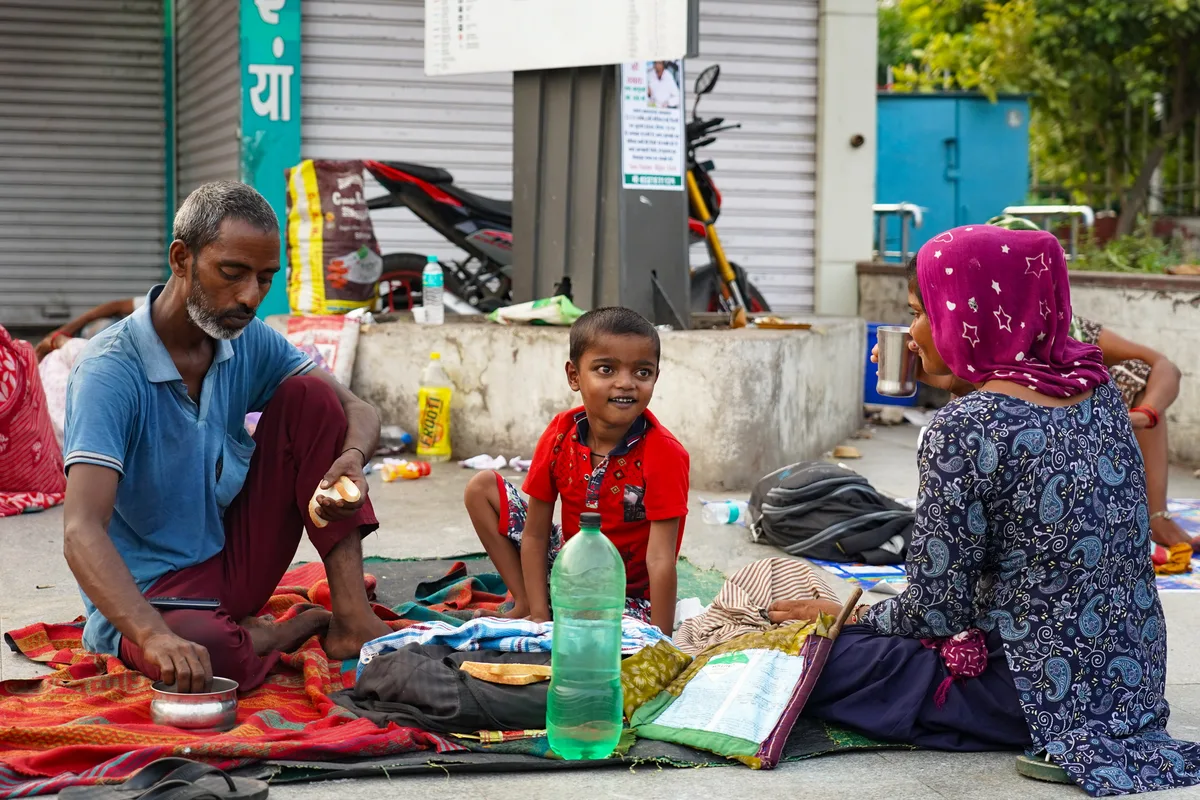
Balraam Singh, 35, eats breakfast with his wife, Nusaa Davii, and their 7-year-old son, Munna, on the pavement outside Safdarjung Hospital in New Delhi, India. The child is receiving treatment for a heart condition, and the family has been sleeping on the pavement outside the hospital for the past 20 days. Sajad Hameed for NPR hide caption
DELHI, India — At 2 a.m. on the sidewalk outside one of Delhi's best-known public hospitals, Shabana Kumar gently wakes her husband. They sleep in shifts of about an hour at a time because their 6-year-old son is a patient in the oncology ward, being treated for leukemia, a cancer of the blood and bone marrow. They are afraid that if they are both asleep, an urgent call could come about their son's condition and they might miss it.
The Kumar family lives more than 600 miles from Delhi in the state of Bihar. Arun, 32, works as a farmer. Shabana, 30, is a homemaker caring for their only son.
They made the trip to Delhi because they could not afford the cost of their child's cancer treatment in Bihar. The All India Institute of Medical Sciences, or AIIMS, subsidizes expenses for families in need.
But for many families, there is one challenge they must bear on their own — finding a place to live in Delhi during the days, weeks, even months of treatment. Like the Kumars, families who can't afford to rent lodging often set up a temporary dwelling on the sidewalk.
On a night in August, dozens of families were sleeping on blankets or sheets spread directly on the sidewalk. Some tie mosquito nets to railings to protect themselves and their kids. They keep their bags and other belongings beside them as they sleep.
Families who have loved ones being treated at the All India Institute of Medical Sciences in New Delhi try to get some rest. Thousands of patients and their families travel from across India, sometimes thousands of kilometers, to seek treatment at the hospital. Many who can't afford accommodations sleep on pavement, in subways and in other public spaces near the hospital while waiting for appointments or treatment. Sajad Hameed for NPR hide caption
During the day, families move between the sidewalk and the hospital for appointments, tests, medicines and consultations. They carry their most important belongings with them while leaving less valuable items at their sleeping spot. One family member often stays behind to keep an eye on their things.
Like the family from Bihar, people who've accompanied a patient may sleep outside while the patient is housed in the hospital. In other cases, the person receiving care is seen during the day but does not have a bed, so they sleep on the sidewalk as well.
At night, the sidewalk dwellers return to the pavement, where a small ecosystem has grown around the families. Women cook rice over makeshift brick stoves. Volunteers distribute food. Nearby shops sell medicines and other necessities.
5News aggregated this summary from the outlet’s public feed. The full article, with all the context, is on www.npr.org — the content belongs to NPR.