Try not to be hypnotized by the 'Eye of Africa' | Space photo of the day for Aug. 20, 2026
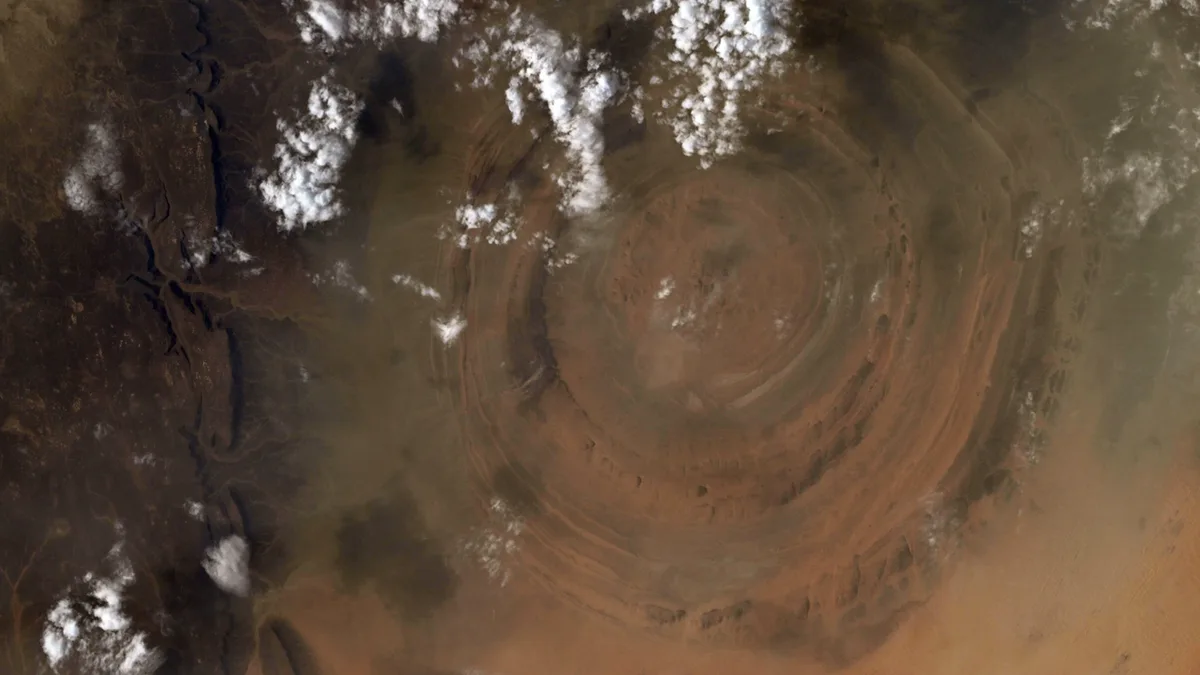
The Richat Structure (also known as the "Eye of Africa" in Mauritania in Africa as photographed by NASA astronaut Jessica Meir from aboard the International Space Station. (Image credit: Jessica Meir/NASA) The "Eye of Africa" swirls across Mauritania in a hypnotizing snapshot captured from space.
What is it? A 25-mile-wide (40 kilometer-wide) circular structure made up of concentric ridged rings sticks up from the Earth in Mauritania, a country on the coast of northwestern Africa.
While it might look like an elaborate, hand-carved piece of artwork, it's actually a natural geologic feature.
Formally known as the Richat Structure and nicknamed the "Eye of Africa," this geologic formation can be seen clearly from space.
The first time this feature was seen from space was in 1965 when NASA astronauts Ed White and James McDivitt photographed it during the Gemini IV mission.
61 years later, NASA astronaut Jessica Meir has photographed the feature from aboard the International Space Station where she is working as part of Expedition 75.
Why is it incredible? Meir shared the photo of the structure on social media along with other photographs from that region.
"The Richat Structure (or Eye of Africa) in Mauritania is photographed from above by many astronauts, but something about the lighting and coloring on this day captured my artistic eye.
This palette and textures of this region of Africa scream pure Earth Art, at least in my brain!" Meir said in the post where she shared her photos.
Amazingly, because of its massive size, this geologic feature is perhaps most clearly seen from space.
While astronauts aboard the ISS are orbiting our planet from hundreds of miles away, theit vantage point actually allows them to see the full, expansive circles that make up the "Eye of Africa." And while we've been seeing it from space since 1965, the view really never gets old.
5News aggregated this summary from the outlet’s public feed. The full article, with all the context, is on www.space.com — the content belongs to Space.com.