How Pearl Jam Made ‘Ten’: ‘Eddie Was in Search of Perfection’
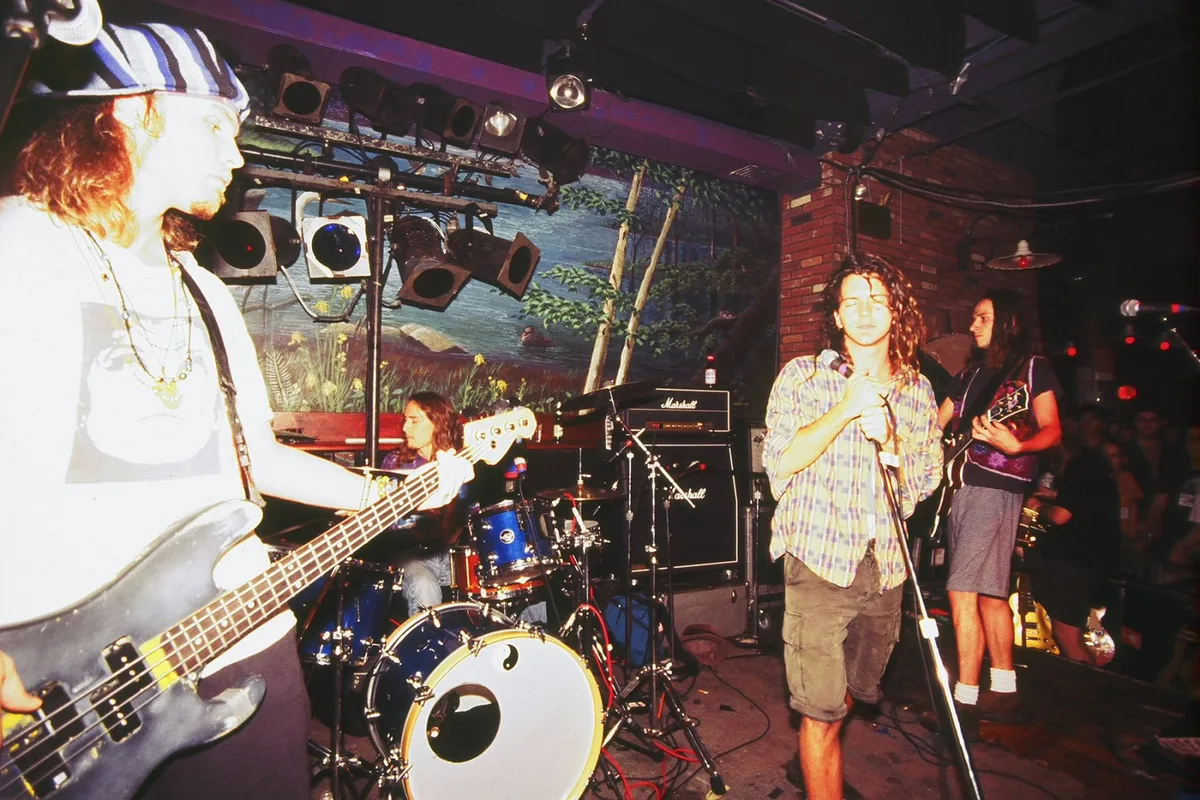
Stone Gossard was 24 years old, and not ready to give up. In March 1990, Andrew Wood, the singer of Gossard’s band, Mother Love Bone, died of an overdose, just weeks before they were supposed to release their major-label debut. That summer, Gossard and his bandmates, including bassist Jeff Ament , were left mourning and adrift. Mother Love Bone had experienced the kind of instant success that made other local bands furious, signing a record deal after playing fewer than 10 shows. What were the odds of winning that lottery twice? “I didn’t know what was going to happen,” Gossard said. “But I knew I wanted to make more demos and make more songs. I felt like I could do it again.”
He was, of course, correct. Within a few months of Wood’s death, Gossard composed an album’s worth of extraordinary songs, or at least the bones of them, minus vocal melodies and lyrics. “I’m pretty persistent,” said Gossard, who maintained a calm, prescient certainty that he would find another worthy band, another great singer. He was encouraged by the surge of Seattle rock around him, from Mudhoney, fronted by Gossard and Ament’s former Green River bandmate Mark Arm, to Soundgarden, whose next album would be Badmotorfinger . “I knew there was more out there,” said Gossard. “Andy was special, but I knew that there were other artists and other people out there that had a completely different thing.”
Gossard developed his new guitar riffs and arrangements in the attic of his parents’ house, alongside another guitarist he started hanging out with that year. Mike McCready was a metal kid turned Stevie Ray Vaughan acolyte with a gift for the kind of fluid solos that could make him “another singer in the band,” as Gossard saw it. At first, though, McCready wasn’t quite sure what they were supposed to be doing. “Stone asked me to play with him,” he recalled, “and after a week, we were in his parents’ attic, with his dog Hillie at his feet. And I said, ‘Dude, do you wanna play in a band together? What’s going on here?’ ‘Cause Stone keeps everything close to the chest, still does. And he said, ‘Yeah,’ so I was like, ‘OK,’ and I broke up the other band I was playing in, like, the next day.” Editor’s picks The 250 Greatest Albums of the 21st Century So Far The 100 Best TV Episodes of All Time The 500 Greatest Albums of All Time 100 Best Movies of the 21st Century
The music they were making was moody, turbulent and dramatic; it’s not hard to hear Gossard’s grief and confusion in it. But much of it also had an obvious swagger and drive, sometimes with grooves that hinted at funk, or at least a Jane’s Addiction-like approximation of it. “I like propulsion, I like rhythm,” Gossard said. “I wanted people jumping up and down. It can be kind of like ‘Achilles Last Stand,’ or anything moving toward that heavy, funky, grooving, chaotic thing.”
Ament and Gossard had slipped apart for a few months. “He told me he was writing some songs,” said Ament, who considered going back to art school. “At that point, I just needed to not play music for a while.
5News aggregated this summary from the outlet’s public feed. The full article, with all the context, is on www.rollingstone.com — the content belongs to Rolling Stone.