Do We Really Need Another Charles Manson Documentary?
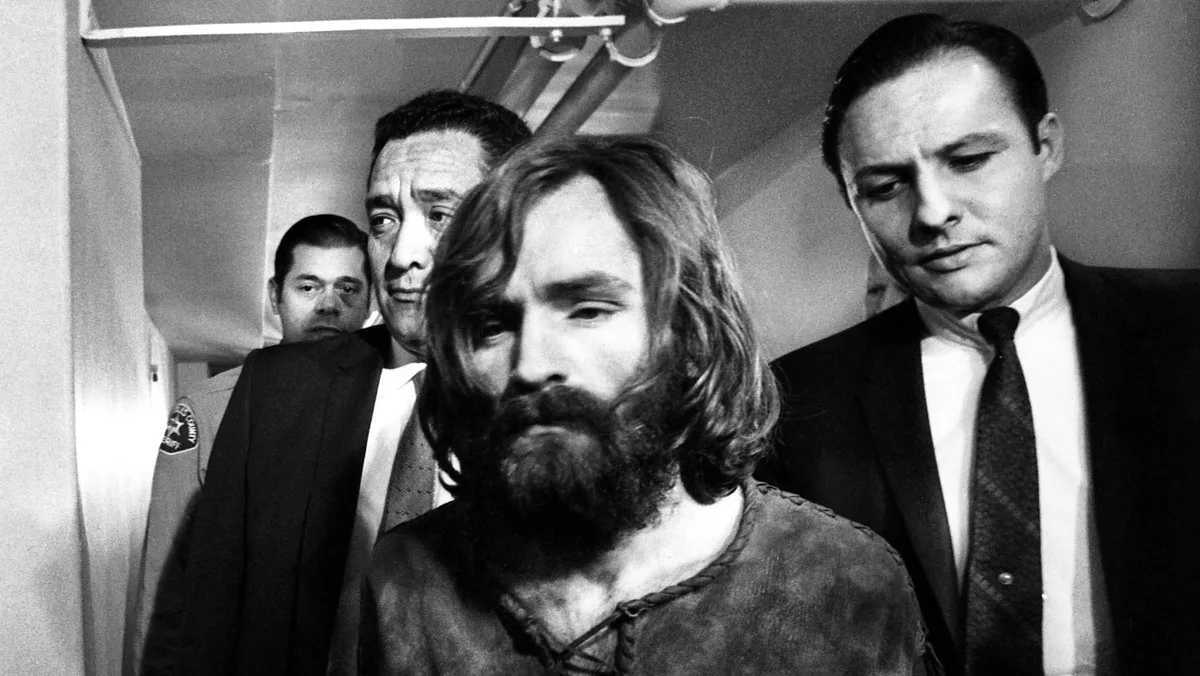
“Manson is the big bang of true crime,” Joe Berlinger tells me over Zoom from New York on a muggy summer afternoon. When we talk, it’s been 57 years and two days since Los Angeles woke up to news that Sharon Tate, the pregnant wife of one of Hollywood’s hottest young auteurs and a budding movie star in her own right, was stabbed to death in her home in Benedict Canyon, brutally murdered alongside four other people. Leno and Rosemary LaBianca, a middle-aged couple who owned a local chain of grocery stores, would be found dead in their Los Feliz home the following night. Since those murders, hundreds of books, documentaries, podcasts, specials, operas, made-for-TV-movies, and Hollywood blockbusters have been made about the case — a case which, for many people, is well closed.
Yet Berlinger is here to discuss his new three-part documentary , Conversations With a Killer: The Charles Manson Tapes , which premiered on Netflix this week. In it, Berlinger interviews numerous members of the Manson Family, including Bobby Beausoleil, who’s serving a life sentence in California, as well as Dianne Lake, Catherine Share, and Stephanie Schram, who knew Manson intimately but didn’t participate in the crimes. He talks with Jeff Guinn, author of the seminal 2013 biography Manson: The Life and Times of Charles Manson ; Stephen Kay, part of the team who prosecuted Manson; and Linda Deutsch, who was a cub reporter covering the trial. (She died before the film came out; Berlinger dedicated it to her.) For those familiar with the case, Conversations won’t offer any new information. But for anyone curious about what really happened in the years and months leading up to the murders, and the media frenzy that accompanied the trial, it’s a thorough primer. And that, Berlinger says, is the point.
“There are many, many, many, many, many, many, many, many Charles Manson documentaries over the years,” he admits. His mission with this series is not to add something novel to the pantheon of theories explaining how a diminutive ex-con convinced a cadre of hippies and outcasts to commit some of the most horrendous crimes in modern memory, but to set the record straight. As targeted YouTube videos, angled documentaries, and AI-generated fare take over viewers’ screens, he sought to pull back the curtain. “Some [of the existing documentaries] are straightforward, but some explore crazy theories,” he says. “And I just didn’t want to be that guy.” Editor’s picks The 250 Greatest Albums of the 21st Century So Far The 100 Best TV Episodes of All Time The 500 Greatest Albums of All Time 100 Best Movies of the 21st Century
To be fair, Berlinger didn’t want to be a true-crime guy in the first place. “I hate the phrase true crime [when it’s] associated with my work,” he says. “It suggests you’re wallowing in the misery of others for entertainment purposes, and [there’s] no larger reason to tell the story. I always like to think there’s a larger reason to tell the story.”
Since the 1990s, Berlinger’s work has been on wrongful convictions — most famously with his 1996 documentary Paradise Lost: The Child Murders at Robin Hood Hills , which covered the case of the West Memphis Three.
5News aggregated this summary from the outlet’s public feed. The full article, with all the context, is on www.rollingstone.com — the content belongs to Rolling Stone.