Ray Dalio was so broke early in his career he had to borrow $4,000 from his dad—and learned 2 lessons that set him on the road to billionaire status
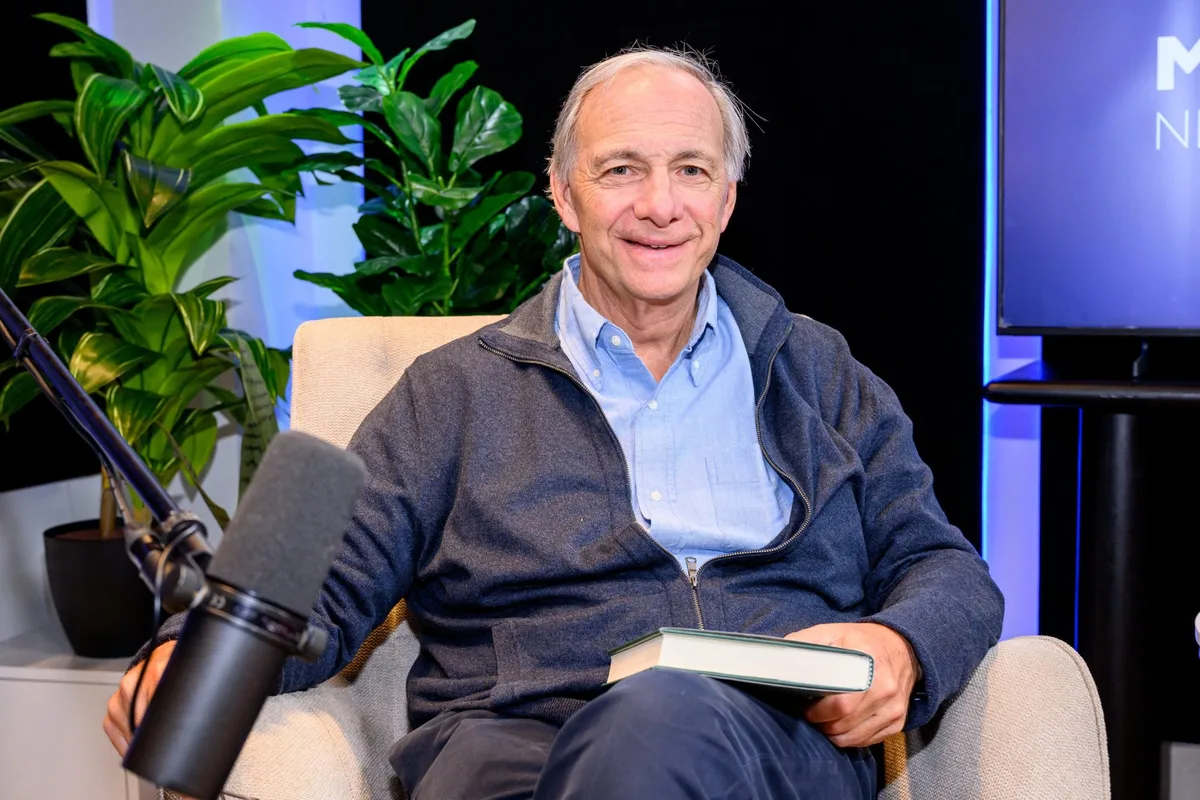
Before becoming the founder of Bridgewater Associates, not to mention a celebrated author, Ray Dalio faced a moment of financial distress that reshaped his entire approach to investing and life.
After being fired early in his career, Dalio founded what would become the world’s largest hedge fund as an independent operation, run out of his two-bedroom apartment in New York City.
Within a few years, he found himself “so broke” he had to borrow $4,000 from his father just to cover family bills.
“This was painful,” Dalio told a fellow billionaire, Carlyle Group cofounder David Rubenstein, in a conversation at New York’s 92nd Street Y in July 2025.
But it also had a deep impact, he continued.
“That changed my approach to everything,” Dalio said, adding he learned two key lessons from this episode.
After striking out on his own to found Bridgewater in 1975, Dalio said he hit his lowest point around 1980 to ’81, when he calculated the U.S. had lent more money to countries than it could ever repay and predicted a major debt crisis.
When Mexico defaulted on its debt in 1982, Dalio believed his position would pay off, even in the face of the severe economic crisis that he anticipated.
However, he “couldn’t have been more wrong.” Instead of a downturn, the stock market went up, and monetary policy was eased, costing him dearly.
This miscalculation left him financially devastated, forcing him to borrow $4,000 from his father to meet family expenses.
“Nobody does everything perfectly, not even Warren Buffett,” Dalio told Rubenstein, but this episode gave him the “humility” to go along with his “audacity,” he said, along with a very simple lesson in “the power of diversification.” Dalio’s lessons This humbling episode fundamentally changed Dalio’s perspective, he said, leading to two transformative insights: • Lesson 1: Cultivating humility and questioning one’s own certainty.
The experience made Dalio reflect deeply on how he could truly know if he was right.
This new approach led him to a practice he began roughly 35 to 40 years ago: pausing to reflect and write down the specific criteria he would use to make a decision.
This act of documentation forced deeper thought, and he later realized these criteria could be coded and back-tested to evaluate their effectiveness over time.
5News aggregated this summary from the outlet’s public feed. The full article, with all the context, is on fortune.com — the content belongs to Fortune.