Frank Marshall and Nigel Sinclair Reveal and Discuss Their New Doc ‘Pete Townshend: Behind Blue Eyes’ (Exclusive)
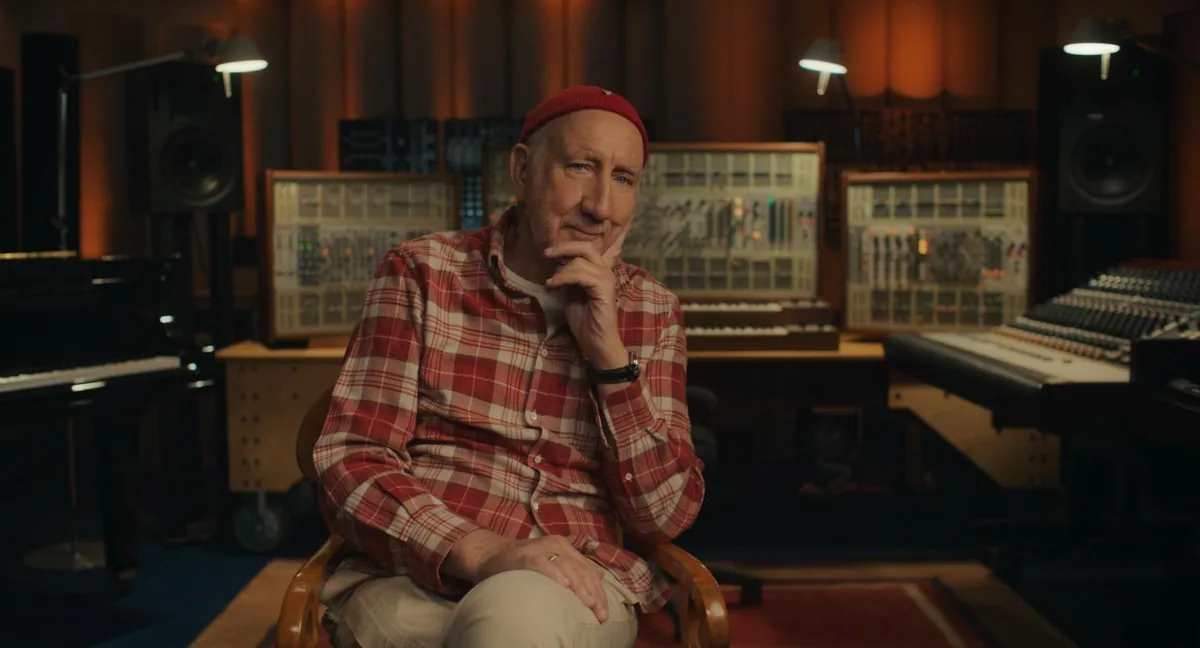
The legendary singer/songwriter Pete Townshend of The Who has cooperated with a documentary feature about his colorful life and career, and specifically about a time that almost destroyed him and his band: when, shortly after the release of the album Tommy , Townshend and The Who tried to make a science fiction rock opera called Lighthouse .
Behind Blue Eyes , which was co-directed by Frank Marshall and Nigel Sinclair, is headed to multiple fall film festivals as a sales title. The film’s backers — it was produced by Kennedy Marshall Documentaries, White Horse Pictures and VICE Studios, and is presented by Sobey Road Entertainment in association with Spirit Music Group, Polygram Entertainment and Trinifold Management — hope it will land a buyer and a spot in this season’s awards race. Related Stories Movies Legendary Producer Larry Gordon, at 90, Delivers the Oscar Speech He Never Got to Give Music Pete Townshend Enters Name, Image and Likeness Partnership with Primary Wave
Marshall and Sinclair exclusively discussed the film with The Hollywood Reporter .
What was it about Pete Townshend’s story — and specifically the story of Lifehouse — that made you feel this was a film that needed to be made now?
FRANK MARSHALL It’s a fascinating story and very compelling as a film now because the world has finally caught up with it. In 1971, no one could understand what Pete was talking about and he thought Lifehouse had failed. The irony is, 55 years later, we’re living inside his story.
NIGEL SINCLAIR And the other part of this is that Pete’s reached a point in his career and life where he is prepared to take a very intense look back at his creative process, with all its twists and turns; and that was captivating.
As you dug into this period of Pete’s life, what surprised you most about him or changed your understanding of the man behind the music?
MARSHALL I was surprised by how intellectual Pete is, his art school background and how he was trying to describe the future with technology. His solution wasn’t destroying technology, but human connection. He wanted to connect to the audience and bring them together through music. And out of that apparent failure came “Baba O’Riley,” “Won’t Get Fooled Again,” “Behind Blue Eyes,” “The Song Is Over” and other amazing music originally connected to Lifehouse .
SINCLAIR What surprised me was how self-aware he was from an early stage in his career. Discovering the link between his childhood torment and the character of Tommy was an extraordinary revelation. The other thing was the intense duality of his personality — the introvert and the extrovert, the rock superstar and the internal artist who wanted to be thought of as a writer not a rockstar.
Lifehouse emerged from a deeply personal crisis that nearly tore apart both Pete and The Who. How did you approach telling that story in a way that captures both the enormous musical ambition of the project and the personal stakes for Pete?
SINCLAIR Ironically, the enormous musical ambition of the project resulted in Who’s Next , which is easily the biggest album The Who released, groundbreaking, and often considered one of the top 10 rock albums of all time.
5News aggregated this summary from the outlet’s public feed. The full article, with all the context, is on www.hollywoodreporter.com — the content belongs to The Hollywood Reporter.