The battle over Stars and Stripes
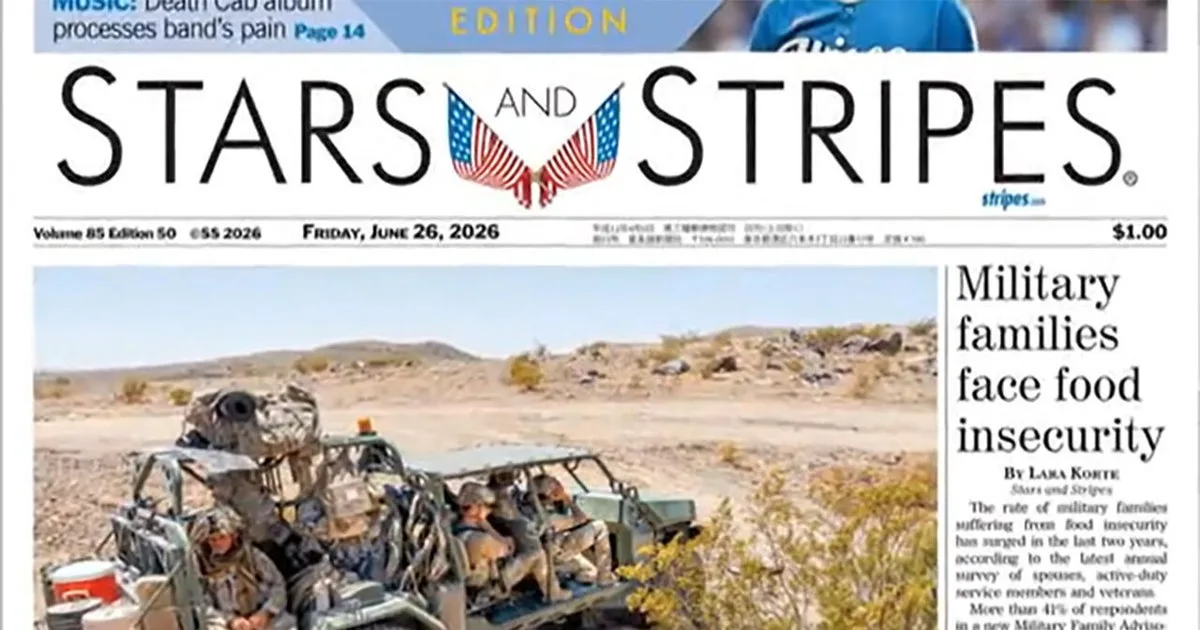
Stars and Stripes has a front page like no other. On a day when the headlines on other newspapers were dominated by earthquakes in Venezuela and Supreme Court decisions on immigration, Erik Slavin, the editor-in-chief of Stars and Stripes, put out a newspaper for the American military, with stories about new tactics involving drones , and service members and families facing food insecurity . "We want to go with something that we know will directly interest our readers right away," Slavin said.
The newspaper is part of the Department of Defense, and its reporters are Pentagon employees. But it has long maintained editorial independence from the top brass. "We're trying to provide independent news for the military community," Slavin said.
An average of 1.4 million people see Stars and Stripes each day – mostly online, although it still puts out a print version overseas, for service members in remote places where access to the internet can be unreliable.
First published during the Civil War, Stars and Stripes was revived in World War I under General John "Black Jack" Pershing, commander of American troops in Europe.
"It was General Pershing who said, we need a paper for American troops overseas, so they know what is going on and have a sense of why they're fighting," said Catherine Giordano. Earlier this year, Giordano, then the archivist of Stars and Stripes, showed us what Pershing had in mind. His message to readers: "The paper, written by the men in the service, should speak the thoughts of the New American Army and American people from whom the Army has been drawn. It is your paper. Good luck to it."
The paper has been published continuously since World War II, heralded as representing "the free thought and free expression of a free people."
But this past January, chief Pentagon spokesman Sean Parnell posted this on X: "We are bringing Stars & Stripes into the 21st century. We will modernize its operations, refocus its content away from woke distractions that syphon morale…"
Asked what he understood "woke distractions" to mean, editor-in-chief Erik Slavin replied, "I really don't know what they were referring to, because they didn't explain it."
In June Star and Stripes published a story about upcoming European concerts by the rapper Bad Bunny , whose Super Bowl halftime show was panned by President Trump as "one of the worst ever." Lara Korte, the reporter who wrote that story, covers the Middle East for Stars and Stripes.
Asked how that story related to the military, Korte (who is based in Germany) said, "We have a lot of people who are newly stationed here overseas. They want to find interesting trips to take. They want to have fun.
"I'm working for Stars and Stripes," she added, "not for the Pentagon, not for any administration, not for any policymaker. I'm here to cover the military community."
At the same time Parnell's social media post appeared, the Pentagon rescinded a federal regulation directing that Stars and Stripes operate "without news management or censorship." Then came a March 2026 memo signed by the deputy secretary of defense.
5News aggregated this summary from the outlet’s public feed. The full article, with all the context, is on www.cbsnews.com — the content belongs to CBS News.