All 16 of Russia's latest satellites for its Starlink rival failed to reach their intended orbit
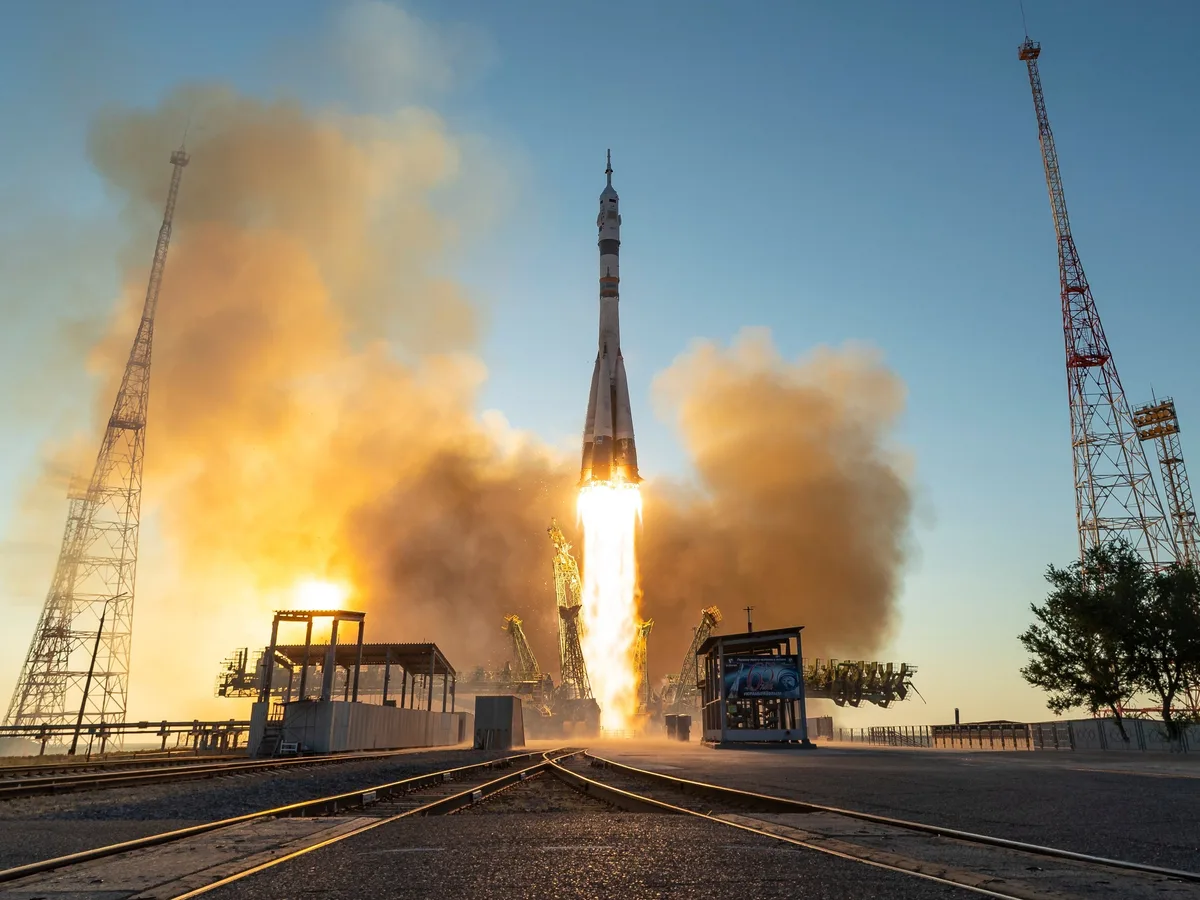
Russia relies on the Soyuz rocket to launch its spacecraft, as seen in this photo from a separate, successful July mission carrying US and Russian crew to the International Space Station.
Bill Ingalls/NASA via AP After being cut off from Starlink, Russia is pushing to build its own version of the service.
But publicly available data shows its latest batch of 16 satellites hasn't reached operational orbit.
That's out of a total of 32 satellites launched so far, for a 37.5% success rate for now.
An entire batch of Russian low Earth orbit satellites, intended to help create Moscow's version of Starlink , has failed to reach or remain at their anticipated altitudes just over a month after launch.
The 16 Rassvet-3 satellites, launched on July 19, were originally supposed to orbit the Earth at an altitude of roughly 500 miles, according to the company developing the constellation, Bureau 1440.
But publicly available US Space Force data shows that, as of Tuesday, the Rassvet-3 satellites are instead orbiting at altitudes of between 190 miles and 250 miles.
Atmospheric drag at that altitude significantly shortens a satellite's operational lifespan.
Without intervention, those conditions gradually pull satellites lower to Earth until they reenter the atmosphere and burn up or break apart.
Losing these 16 satellites — Bureau 1440's second batch of the Rassvet-3 — would be a significant setback for Moscow's ambition to create its own alternative to Starlink, a priority for the Kremlin after SpaceX cut off satellite internet service to Russian forces on February 1.
Rassvet-3 is meant to help fill that gap, but Bureau 1440 has launched only 32 satellites so far, including this latest batch.
Issues with the second satellite batch were first highlighted by journalist Anatoly Zak, who runs the website RussianSpaceWeb and identified two Rassvet-3 satellites in early August that were already headed for re-entry into Earth's atmosphere.
It's unclear what prevented the satellites from reaching higher altitudes.
Positional data indicates that many of them engaged in maneuvers to climb upward, though none of these appear to have come close to helping the satellites reach their operational orbit yet.
5News aggregated this summary from the outlet’s public feed. The full article, with all the context, is on www.businessinsider.com — the content belongs to Business Insider.