'Wildfire smoke is the fastest-growing environmental threat in the US': How a warming world will poison the air we breathe
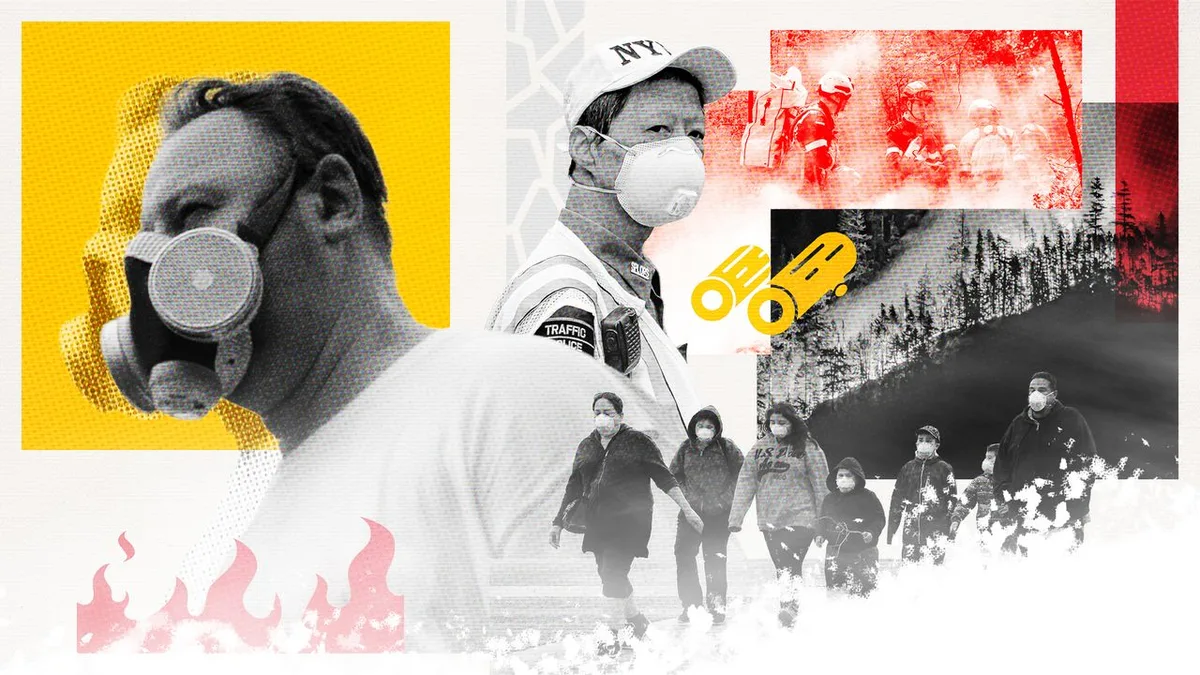
As wildfires raged through Ontario, Canada in mid-July, millions of people in the Midwest and on the East Coast found themselves under a shroud of yellow skies, darkened by smoke from the infernos.
The air quality index in Grand Rapids, Michigan hit 616 on July 16, breaking the previous record for the city of 350; any number over 301 indicates hazardous, emergency conditions.
Smoke events like this are only likely to worsen in the coming decades: Wildfires are one of the most imminent impacts of climate change .
Not only do the flames themselves directly threaten lives, but the smoke can trigger heart attacks, asthma attacks and premature births , as well as worsen heart disease or lung ailments such as chronic obstructive pulmonary disease (COPD).
And those effects can spread as insidiously as smoke travels.
Smoke from wildland fires pours eastward over Canada and the U.S. in an image captured on the afternoon of July 14, 2026, by the VIIRS (Visible Infrared Imaging Radiometer Suite) on the NOAA-21 satellite. (Image credit: NASA Earth Observatory/Lauren Dauphin) A 2025 study found that the record-breaking 2023 Canadian wildfire season may have shortened the lives of 87,000 people exposed to the smoke plumes worldwide.
Another 2025 study found that wildfire smoke contributed to 41,380 excess deaths per year in the U.S. between 2011 and 2020 and that the number will rise to 71,420 excess deaths by 2050 if global temperatures rise 5 to 8.3 degrees Fahrenheit (2.8 to 4.6 degrees Celsius) by the end of the century.
In North America, the health impacts of this extra fire are likely to be significant.
Wildfire season is getting longer and more intense in the West and Southwest, while regions not historically prone to wildfires will need to deal with the impacts of smoke plumes that can travel thousands of miles.
"Wildfire smoke is the fastest-growing environmental threat [to health] in the U.S.," said Marshall Burke , a professor of global environmental policy at Stanford University who was the senior author of the study predicting the grim rise in excess deaths.
"It's just changing so rapidly." Longer fire season, bigger blazes Even a rapid drop in greenhouse gas emissions wouldn't fully mitigate the growing risk of wildfires.
Because these gases persist in the atmosphere for decades, a more fire-friendly future is already locked in.
"No one foresees changes in the near future, at least, that are going to result in decreases in wildfire," said Mary M.
Johnson , a principal research scientist in environmental health at the Harvard T.H.
5News aggregated this summary from the outlet’s public feed. The full article, with all the context, is on www.livescience.com — the content belongs to Live Science.