Hegseth’s Pentagon Lurches Off the Rails
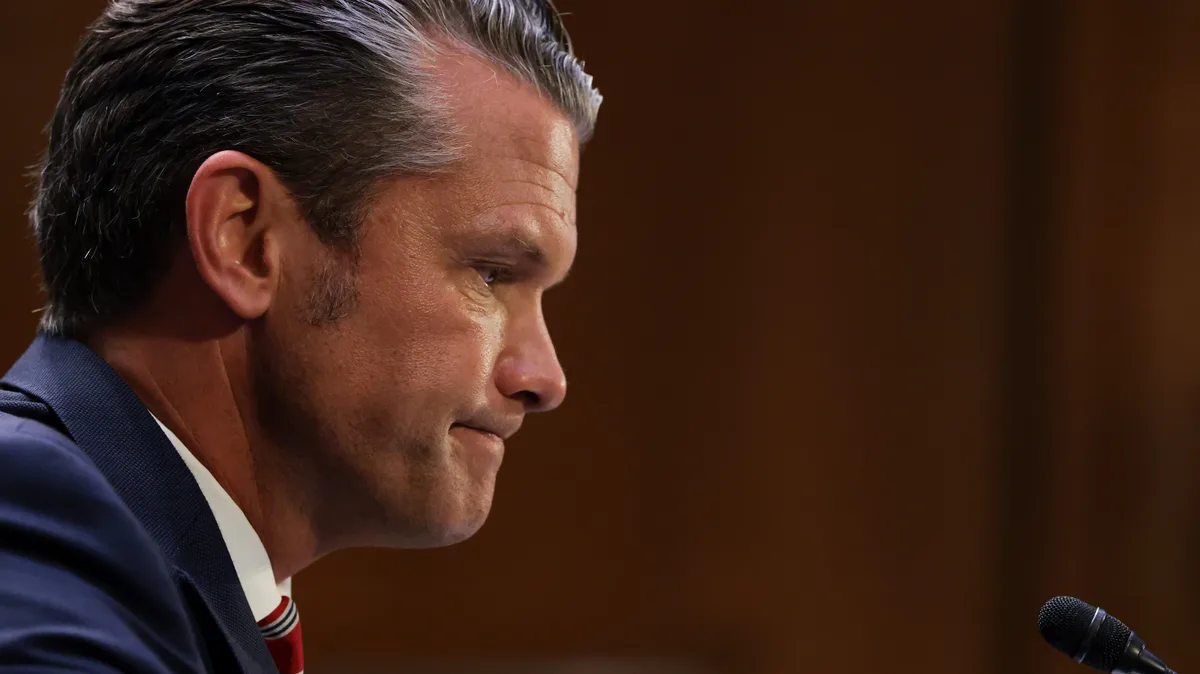
Making Pete Hegseth the secretary of defense was always a huge gamble.
A television host with little background in national security or defense affairs, who topped out as a major in the National Guard, he was nominated based on the same qualification shared by most of Donald Trump’s other appointees: loyalty.
And now the price of that gamble is evident.
The Pentagon is careening off track under a secretary of defense who is firing or forcing the resignations of officers and civilian officials not because they are unqualified, but because he believes they are insufficiently loyal to him, personally.
The latest casualty of Hegseth’s ongoing purge is Army Secretary Dan Driscoll, who resigned today after repeatedly clashing with the secretary of defense.
As my colleagues Nancy Yousseff, Missy Ryan, and Michael Scherer report , a person familiar with Driscoll’s resignation said that he had “brought up concerns with the administration surrounding Army transformation and readiness and Hegseth’s blocking those efforts specifically by firing the Generals who were responsible.” In the careful circumlocutions of Washington-speak, that means that Driscoll went to the White House to complain about Hegseth, and the president sided with Hegseth.
But more issues were in play than “Army transformation.” Hegseth’s tenure has been disastrous on multiple scores.
Instead of giving sound advice to the commander in chief and ensuring that America remains secure while the president fights a deeply unwise war of choice, he has instead been pursuing his political grievances about DEI and other pet peeves against the U.S. military.
Hegseth seems to have a special animus toward the Army, an institution he claims “spit me out.” He fired Army Chief of Staff General Randy George, and he has pushed out other senior Army officers; at this point, the Army has no Senate-confirmed chief of staff or secretary. (George’s replacement, General Christopher LaNeve, so far does not have the necessary votes to be confirmed.) Even in less dangerous times, Hegseth’s irresponsible behavior would be a hazard to American national security.
The Defense Department is a huge bureaucracy; it requires a leader who understands more than the mechanics of teaching trainees how to do push-ups or how to handle a weapon.
Secretaries of defense must grasp the economics of the defense industry, the nature of alliances, congressional politics, the policy process, and dozens of other issues for which Hegseth seems to care little and about which he knows even less.
In a time of war, however, Hegseth’s shortcomings may prove deadly.
Leave aside his early stumbles, including the mishandling of sensitive information .
Leave aside, even, that Hegseth dissembled about the severity of Iranian attacks on U.S.
5News aggregated this summary from the outlet’s public feed. The full article, with all the context, is on www.theatlantic.com — the content belongs to The Atlantic.