How the Catholic Church Is Rethinking War
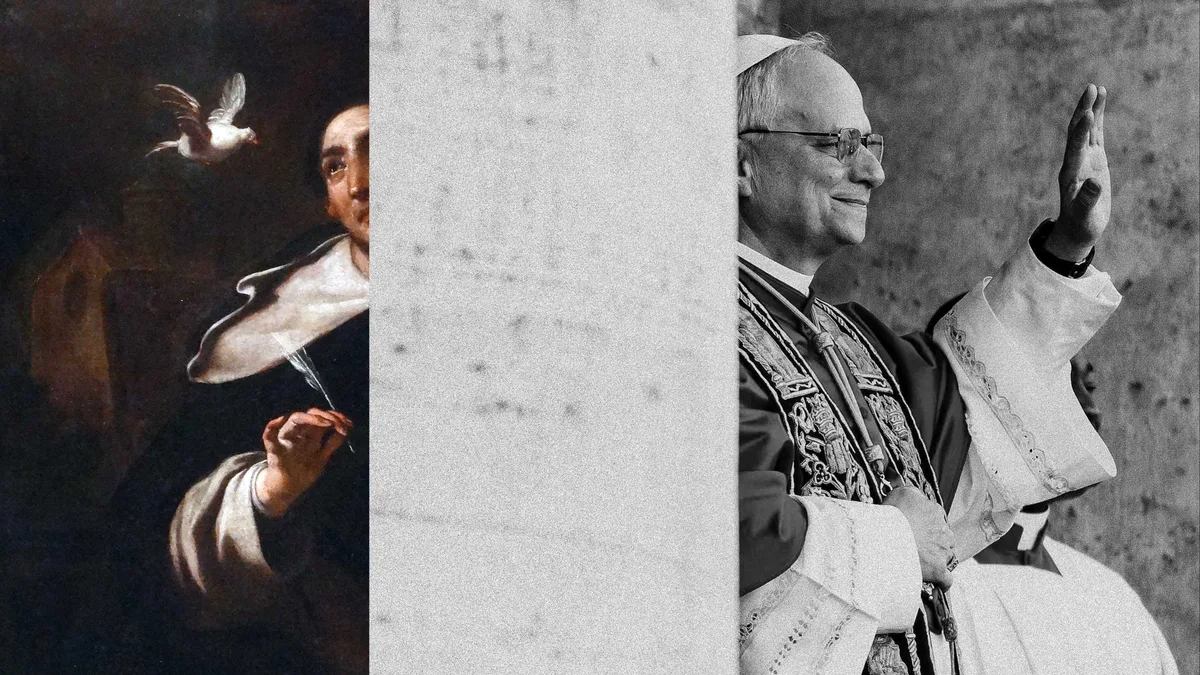
When Pope Leo took heat from Donald Trump and the MAGA movement for denouncing the war in Iran earlier this year, much of his Church stood with him.
Conservative and liberal Catholics alike argued that Leo was right to condemn the fighting, given the administration’s holy-war rhetoric and its inconsistent justifications of the conflict.
This broad agreement among Catholics, however, hid a more fundamental dispute—not about Trump or Iran, but about the principles that guide how the Church thinks about war.
The “just war” theory, which draws from Saint Augustine’s writings during the fall of the Roman empire and was systematized in the Middle Ages by Saint Thomas Aquinas, exists to address a persistent theme in human history: Bad actors regularly commit terrible deeds, and nations must decide when and how to defend themselves, or to intervene on behalf of others.
According to the framework, an armed conflict must have a just cause, such as responding to an unprovoked attack.
It must be pursued as a last resort and have reasonable hope of success.
It must be motivated by good intentions and carried out by a legitimate authority.
It must rely only on just means, such as using proportional force and distinguishing between combatants and civilians.
Its expected good must outweigh its inevitable harm.
Despite its long lineage, just-war theory’s influence in Catholic thought has been dwindling for decades as conflicts have become more complex and weapons more destructive.
To some observers , the clearest sign yet of the framework’s fall from favor came in May, when Pope Leo wrote in his encyclical Magnifica Humanitas that it is “outdated.” A month later, 178 cardinals met at the Vatican to discuss whether the Church should move away from the language of just war.
Still, many Catholics support the theory and dispute the suggestion that it’s passé.
They believe that it was, and remains, the best way the Church has to make sense of war.
At the center of the debate is a deeper question: How can the Church help limit violence in an all-too-violent world, in which nuclear bombs, terrorist attacks, and AI-guided drones are ever-present threats? Just-war theory isn’t just the stuff of papal encyclicals.
5News aggregated this summary from the outlet’s public feed. The full article, with all the context, is on www.theatlantic.com — the content belongs to The Atlantic.