Trump Just Asked the Supreme Court to Back One of His Cruelest Policies
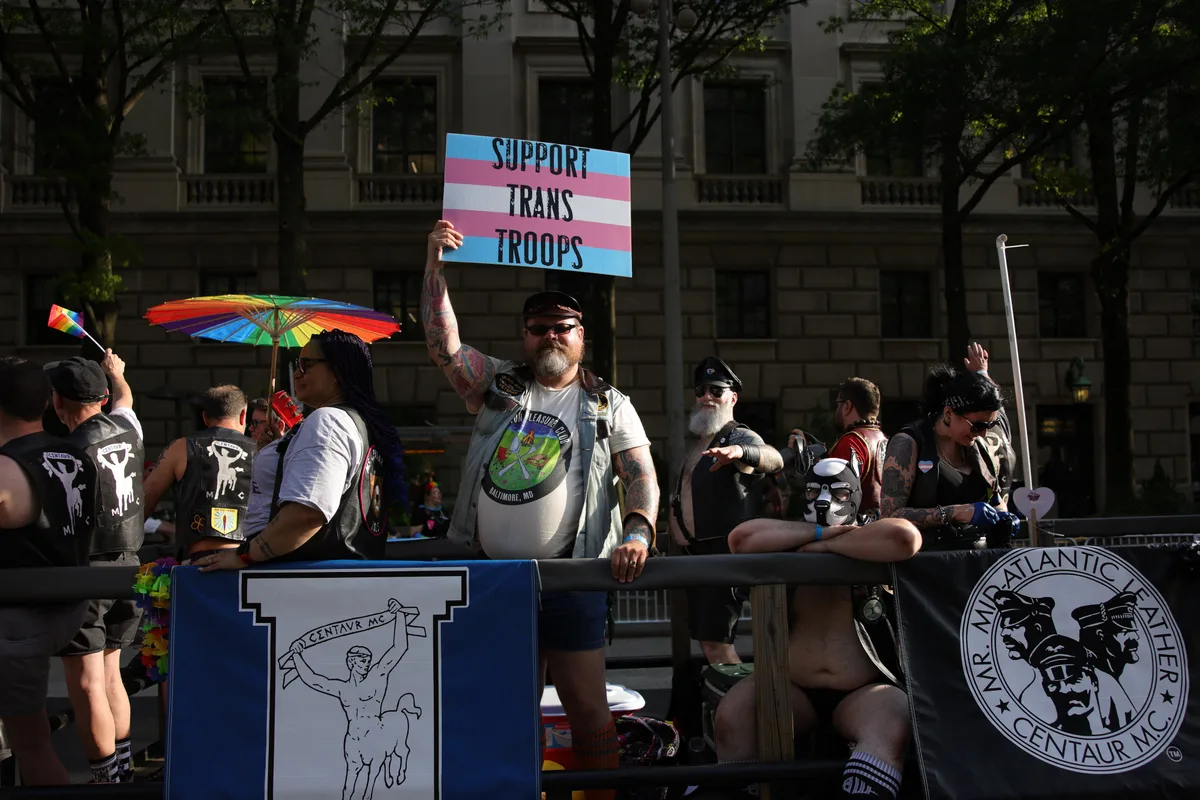
The Trump administration asked the Supreme Court on Friday to take up the constitutionality of its restrictions on transgender people serving in the military, seeking to reverse a lower-court ruling that continues to protect current service members challenging the policy from discharge.
The case, Talbott v. United States , stems from an executive order President Donald Trump issued days after returning to office in January 2025. The order declared that people whose gender identity differs from their sex cannot meet the standards of “honesty,” “humility,” and “integrity” required for military service. Defense Secretary Pete Hegseth followed with a policy that generally disqualifies people with gender dysphoria, a history of the condition, or a history of certain treatments associated with gender transition. Waivers exist, but only under exceedingly narrow conditions.
A group of transgender service members and prospective recruits challenged the policy under the Constitution’s guarantee of equal protection. In March 2025, U.S. District Judge Ana Reyes blocked it nationwide while the case proceeded after finding that the plaintiffs were likely to prevail on the merits. Reyes found the policy “soaked in animus” and its military rationale “dripping with pretext.” The administration invoked readiness, unit cohesion, and military effectiveness to justify excluding people who had already demonstrated their ability to serve. The service-member plaintiffs collectively had more than 130 years of military service and more than 80 commendations.
Former senior Defense Department officials also testified that allowing transgender troops to serve had caused no harm to readiness or unit cohesion. The D.C. Circuit narrowed Reyes’ ruling in June, but the unusual split reflected a disagreement over who should remain protected while the case proceeded, rather than a retreat from the constitutional concerns surrounding the policy. Judges Robert Wilkins and Judith Rogers concluded that the challengers were likely to succeed on their equal protection claim. They also agreed that the policy should remain blocked as to the plaintiffs already serving in the military. Wilkins joined Judge Justin Walker, however, in lifting the injunction for people seeking to join. Rogers would have protected those plaintiffs as well.
The administration now wants the Supreme Court to settle that disagreement. In the government’s petition for writ of certiorari, Solicitor General D. John Sauer argues that the policy classifies people according to a medical condition and related treatments, rather than transgender status, and therefore should receive rational basis review. He also urges the justices to defer heavily to military leaders’ judgments about readiness and deployability.
That framing puts considerable weight on the label the government has chosen for the policy. The D.C. Circuit focused instead on how it operates. Gender dysphoria appears to be the only identifiable medical condition that triggers separation without the ordinary individualized assessment of whether a service member remains capable of serving.
5News aggregated this summary from the outlet’s public feed. The full article, with all the context, is on slate.com — the content belongs to Slate.