Trend Alert: Is Anti-AI Fashion This Season’s Hottest New Look?
Americans are categorically pissed off about the 130,000 automated license plate readers (ALPRs) Flock and its competitors have erected across the nation, seemingly overnight and with little to no public approval. Things have gotten so hostile toward Big Tech leering that a Sullivan County, Tennessee, commissioner was recorded publicly calling for Flock’s CEO to be hanged for treason during a recent planning session. It’s no wonder ALPRs have rocketed up the charts to join another universally loathed and unwelcome presence (data centers) as the most important issues of the upcoming November election.
But even if voters were to cast their ballots for a nationwide deFlocking, the wheels of government bureaucracy move slowly—even more so when the public servants involved have few qualms about operating outside the wishes of their constituents. All this is to say, getting the cameras officially removed, let alone any ne’er-do-well execs up on the gallows, might take months, if not years. And while the demolition work being done by independent vandal vigilantes is noteworthy, their camera-felling efforts are far from a long-term solution. Even with the pendulum clearly swinging in a resolutely anti-panopticon direction, many remain understandably concerned about the data being collected 24/7 in the liminal space where the law catches up to the wants of the people.
One of the byproducts of creating a surveillance state so universally hated is that the nefarious AI and camera companies now have an even larger pool of creative and brilliant minds scheming up clever and even chic stopgap solutions to the problem. While the tried-and-true (and almost always illegal) methods of applying a clear reflective spray to one’s plate or covering it with an obfuscating shield are still the most common remedies offered in the pro-privacy forums, competing against The Man’s ever-updating AI technology is a Sisyphean struggle and most of these prescribed countermeasures ultimately just attract more attention from law enforcement, rendering the juice not worth the squeeze.
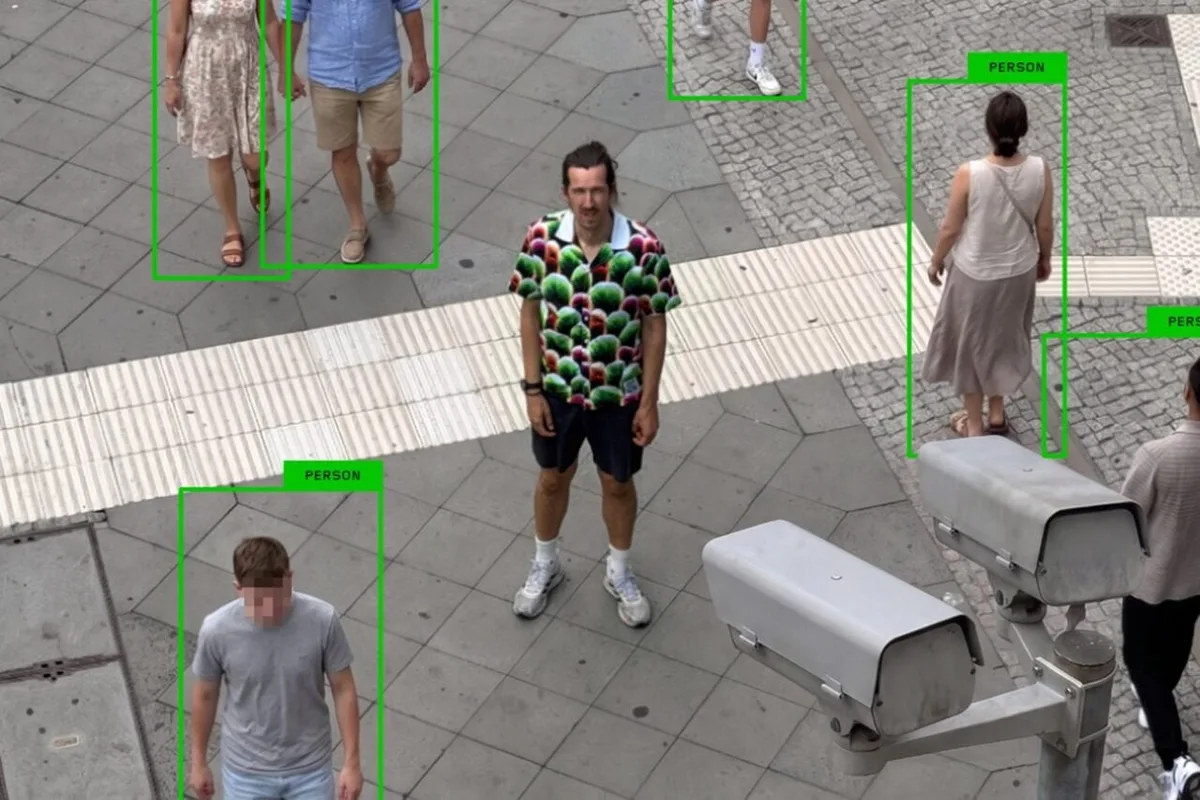
Fortunately, we don’t (yet) have to register our bodies with the government as we do with our vehicles, nor adhere to mandated regulations with regard to our appearances. This freedom has resulted in more progress made on the front to keep AI-powered cameras from clocking pedestrians in 4K. As reported in Dezeen , German designer Simon Weckert has produced a short-sleeve button-up shirt with a garish, colorful pattern straight out of Dan Flashes that confounds AI’s human-detecting algorithms. He’s dubbed it Digital Camouflage, which is likely to earn him some tough SEO competition from the colloquial term for the Universal Camouflage Pattern so ubiquitous and troop-despised throughout George W. Bush’s presidency.
“AI systems are made of multiple layers and never learned what a human is — they learned what humans statistically look like in millions of training images,” Weckert explained to Dezeen.
5News aggregated this summary from the outlet’s public feed. The full article, with all the context, is on gizmodo.com — the content belongs to Gizmodo.