The Supreme Court’s Callais Ruling Has Already Wrought Terrible Damage
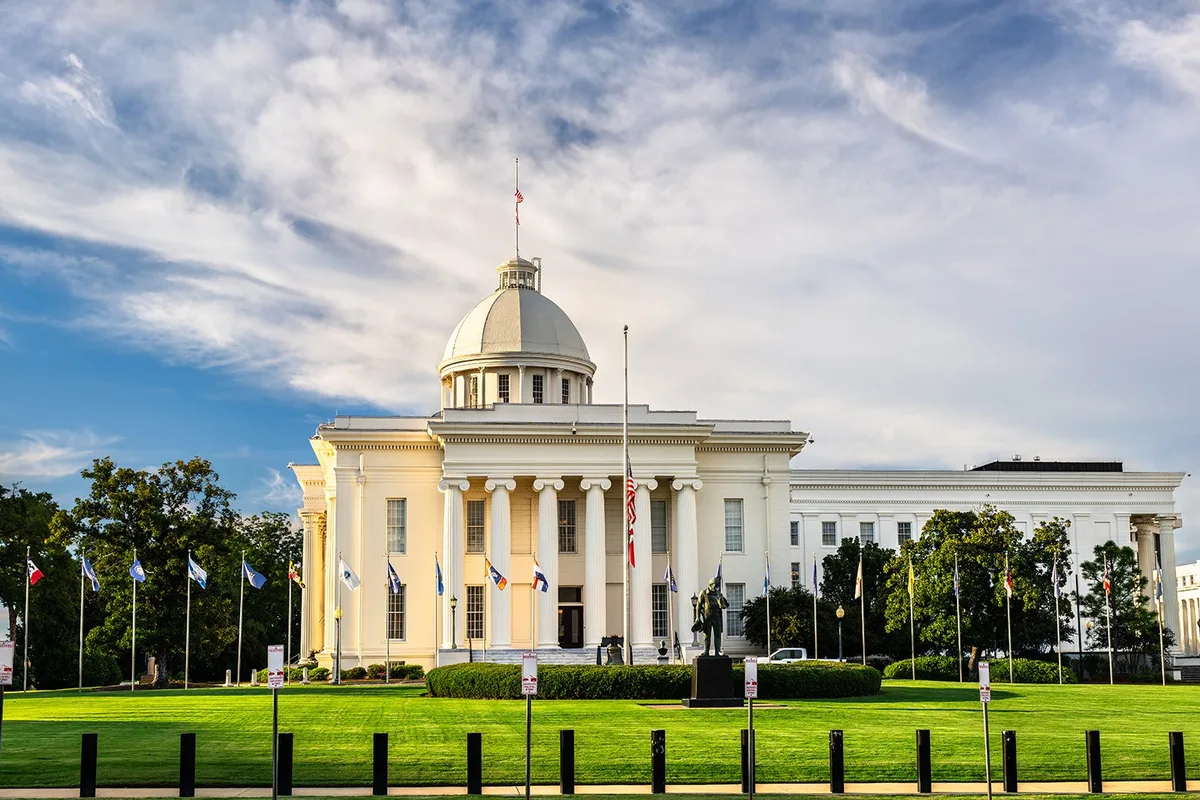
Willie Dixon and Mary Gatson were sitting in the fellowship hall of a Baptist church in Lowndes County, Alabama, this week, waiting for a congressional town hall and trying to determine which voting district they now live in. Dixon thought she knew. She did not. “Create enough chaos,” she told a reporter, “and people will give up and go home.”
She was describing what has happened after Alabama rewrote its congressional map in the middle of an active election, thanks to the Supreme Court. This week, voters in four of Alabama’s seven congressional districts cast ballots in a second primary after the state voided congressional-primary votes already cast in May, including mail ballots, and ordered voters back to the polls under new district lines. The do-over will cost Alabama taxpayers an estimated $4.4 million. It is also a live demonstration of Dixon’s argument: When the rules change midstream, confusion does not merely accompany the process. It changes who participates.
In April, SCOTUS decided Louisiana v. Callais , sharply narrowing the Voting Rights Act’s capacity to protect minority voters from discriminatory maps and making Section 2 vote-dilution claims far harder to prove. Alabama’s Legislature did not wait to see how far that door would open. Less than two weeks before its May primary, with mail voting already underway, lawmakers redrew four of the state’s seven congressional districts and revived a map federal courts had already found intentionally discriminatory toward Black voters.
Lowndes County is not a random place for this to be happening. It sits along the Selma-to-Montgomery route , the ground the 1965 voting rights march crossed on its way to the Capitol. The Voting Rights Act exists because of brutal violence, known as Bloody Sunday, that happened on that road. Sixty-one years after the VRA was signed, the county the march passed through is now the site of a live experiment in how much of that law’s actual protection survives Callais .
What makes this episode unusually clarifying is that nobody on the winning side seems to feel much need to disguise the motive. Rep. Shomari Figures’ district lost Mobile, his hometown, reducing its Black population from about 47 percent to roughly 40 percent. Asked about the district’s new lines, Barbour County Commission President Jerry McGilvray offered this, unprompted : “We don’t have anything in common with Mobile, Alabama. Whoever would have thought? I don’t want to hear about shrimp boats and deep-sea fishing.” The Trump-endorsed front-runner for the seat put it more bluntly still: “The fact that the Republicans have an ability to regain the seat is great. I love it.” He added, accurately, that control of Congress could be riding on it.
That is the argument, delivered in full sentences, on the record, to a reporter, by the people it benefits. It is also, more formally, the state’s own legal position. When Alabama’s new map reached the Supreme Court, the state’s lawyers argued that it was partisan, not racially discriminatory —in short, that Republican legislators had drawn it simply to elect more Republicans.
5News aggregated this summary from the outlet’s public feed. The full article, with all the context, is on slate.com — the content belongs to Slate.