Squishies are everywhere—but what are they made of?
We asked a simple question: What’s in kids’ squishy toys? Finding an answer was surprisingly complicated
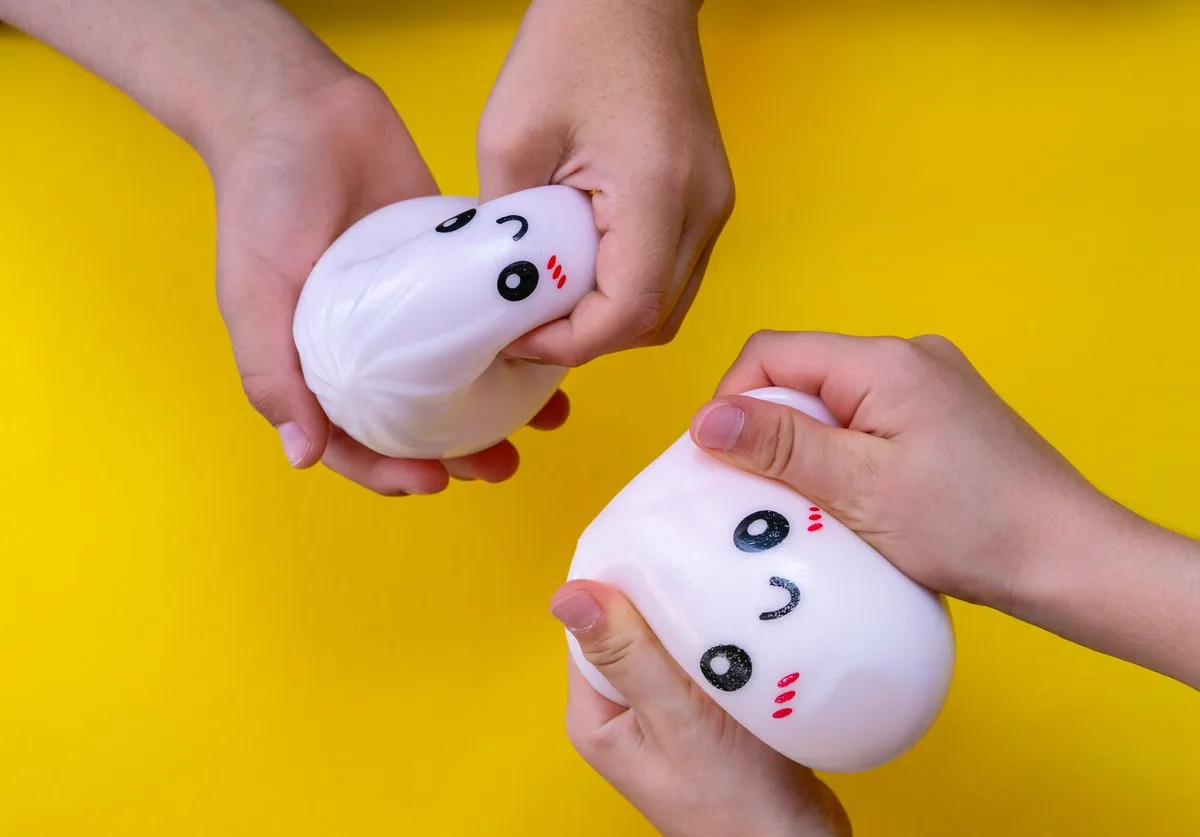
Any parent of school-age children will tell you: squishies are it. The viral squeezable toys come in all shapes and sizes—some of the most popular look like food items such as dumplings, bananas, fried chicken or sticks of butter; others are animals, including capybaras, cats, axolotls and sharks; and some are simply squishable balls or cubes.
Squishies are essentially next-generation stress balls, marketed as a tactile tool to boost concentration and relieve stress. They’re popular among children, but adults seeking a satisfying squeeze have started collecting them, too. On social media, product reviews, along with videos of proud squishy owners ranking their collections and parents poking fun at their kids’ obsessions, have generated millions of views .
But what makes squishies so flexible, springy and just, well, squishable? And are they safe? The answer is surprisingly complicated.
If you're enjoying this article, consider supporting our award-winning journalism by subscribing . By purchasing a subscription you are helping to ensure the future of impactful stories about the discoveries and ideas shaping our world today.
For parents, information can be sparse: “There’s no requirement for these toy companies to tell us what’s in any of these products,” says Deborah Bennett, a professor and exposure scientist at the University of California, Davis.
Toy company Schylling, which makes the popular squishy brand NeeDoh, says on its website that its NeeDoh products are made of thermoplastic rubber and may be filled with polyvinyl alcohol (PVA) or maltose, a type of sugar, and, in some cases, water-soluble dye. Filling materials are disclosed on individual packaging, and NeeDoh products are tested by third-party laboratories, Schylling tells Scientific American in a statement. The website for Tabasquishy, another popular brand, says that its squishy products are made of “100% solid food grade silicone,” a material “used for baby pacifiers and high-quality kitchenware.”
These materials are intended to squish—thermoplastic rubber and silicone are designed to be soft and pliable but bounce back to their original shape. Polyvinyl alcohol is a polymer you might find in, say, dishwasher detergent pods or in coatings on pills or supplements .
As for other squishies, it’s hard to say. Without sending them off to a lab for analysis, we just don’t know what’s in the various unbranded bao, gummy bears, and more on offer at retailers and fun fairs everywhere.
When it comes to safety, what’s not included on ingredient lists is often the problem: In May, for instance, the U.S. Consumer Product Safety Commission (CPSC), the primary body responsible for regulating toy safety, issued a recall for more than 120,000 units of “Funkee Monkee” squishy toys from the company Orb because of potential asbestos contamination. And in June the U.K.’s Office for Product Safety and Standards recalled “Squeezy Dumplings” linked to a Welsh wholesaler because of an “excess concentration of benzene,” at 20 milligrams per kilogram.
5News aggregated this summary from the outlet’s public feed. The full article, with all the context, is on www.scientificamerican.com — the content belongs to Scientific American.