Why Data Centers Have Become Military Targets
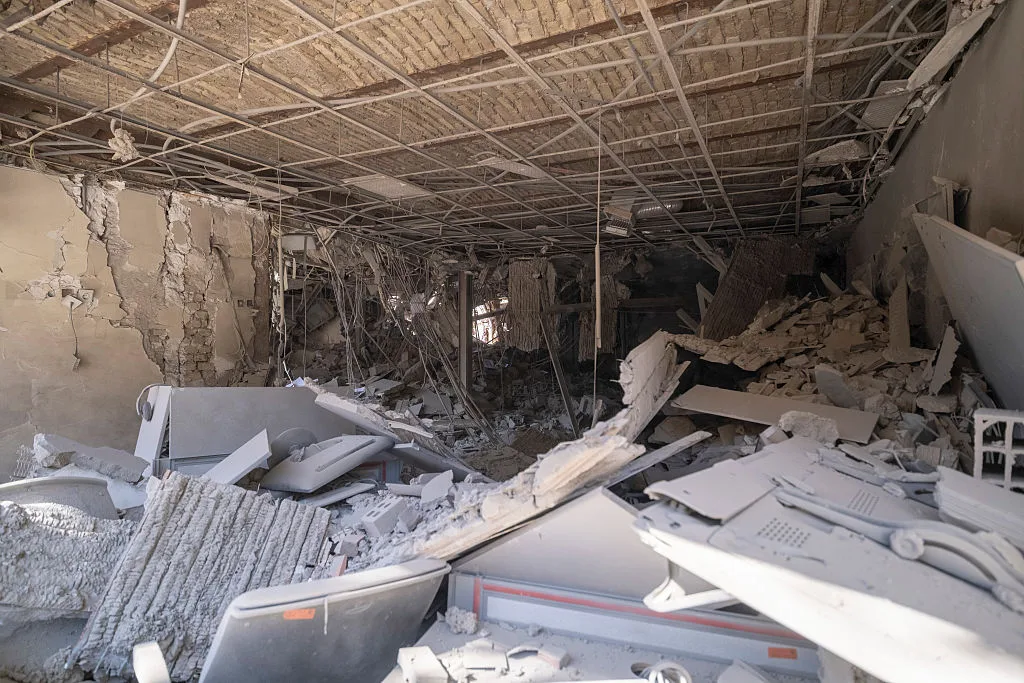
The damaged data center at Sharif University of Technology in Tehran on April 7, 2026, a day after it was struck during U.S. and Israeli military operations. —Morteza Nikoubazl—NurPhoto/Getty Images When the U.S. and Israel launched attacks against Iran earlier this year , Tehran responded by striking energy infrastructure across the Gulf.
The result was a severe shock to global energy markets that continues to this day.
Less publicized at the time were its strikes on another kind of infrastructure: data centers .
Similar attacks have since taken place in Russia and Ukraine, where both sides have been trading tit-for-tat strikes on data centers.
Experts say these attacks represent a new front in warfare, in which facilities powering the technology behind many critical industries have become military targets.
Read more: How the Iran War Could Threaten Global Internet Access The AI boom has led to a surge in demand for computing power, data storage and cloud services, making the data centers that provide them a crucial part of modern infrastructure.
A mass of data center construction is currently underway in the U.S., and tech companies are investing hundreds of billions of dollars a year to meet AI demand.
Telecommunications companies, banks, hospitals and energy suppliers all rely on them.
“Data centers are now on the critical path for modern digital infrastructure,” Kirk Cameron, founding director of the Institute for Advanced Computing at Virginia Tech, tells TIME.
“The loss of key data centers could collapse economies, disrupt public and private transportation with loss of GPS, and affect government essential services for health, emergency dispatch, and power grids.” Military use of AI for targeting and information processing has made data centers crucial to fighting a war.
Ukraine uses AI for an array of battlefield functions such as drone targeting, battle planning, and missile analyzing Russian missile attacks.
U.S. tech companies such as Palantir now work closely with Ukraine’s military to develop new AI-powered weaponry , taking advantage of the ability to immediately test their technology on the battlefield.
The U.S. military also uses Palantir’s Maven system to help identify targets for strikes.
“Data centers are competitive advantages in warfare,” Cameron says.
5News aggregated this summary from the outlet’s public feed. The full article, with all the context, is on time.com — the content belongs to TIME.