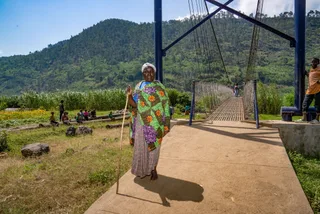
The Taliban has taken a terrible toll on the education of girls -- and boys as well
By Grade 11, Hashmat Mubariz had stopped attending school regularly. He was still officially enrolled. The Taliban had not barred him from the classroom, as they had barred his two sisters. But Mubariz, who later taught himself English, became an English instructor and now hosts a podcast and helps run a nongovernmental organization, said the school he once attended no longer felt like a place of learning.
"I felt I was wasting my time at school rather than learning," he said.
Before the Taliban returned to power five years ago — on August 15, 2021 — Mubariz remembered his public school as friendly and relatively open. Students studied English, science, mathematics, biology and literature alongside religious subjects. They could speak in class, share their opinions and ask questions. The school was not perfect, he said, but it felt safe and focused on learning.
Mubariz, 19, says after the Taliban takeover, that atmosphere slowly disappeared.
"Many people believe that only girls' education is affected," Mubariz said. "But boys are also facing a serious education crisis."
The Taliban's restrictions on girls and women have been sweeping and severe, barring girls from secondary schools and women from universities and robbing millions of any formal path to education. But interviews with boys and young men show another, less visible part of Afghanistan's education crisis: Boys are still allowed to attend school, but many say the education being offered inside the classroom has changed so sharply that it no longer prepares them for the future.
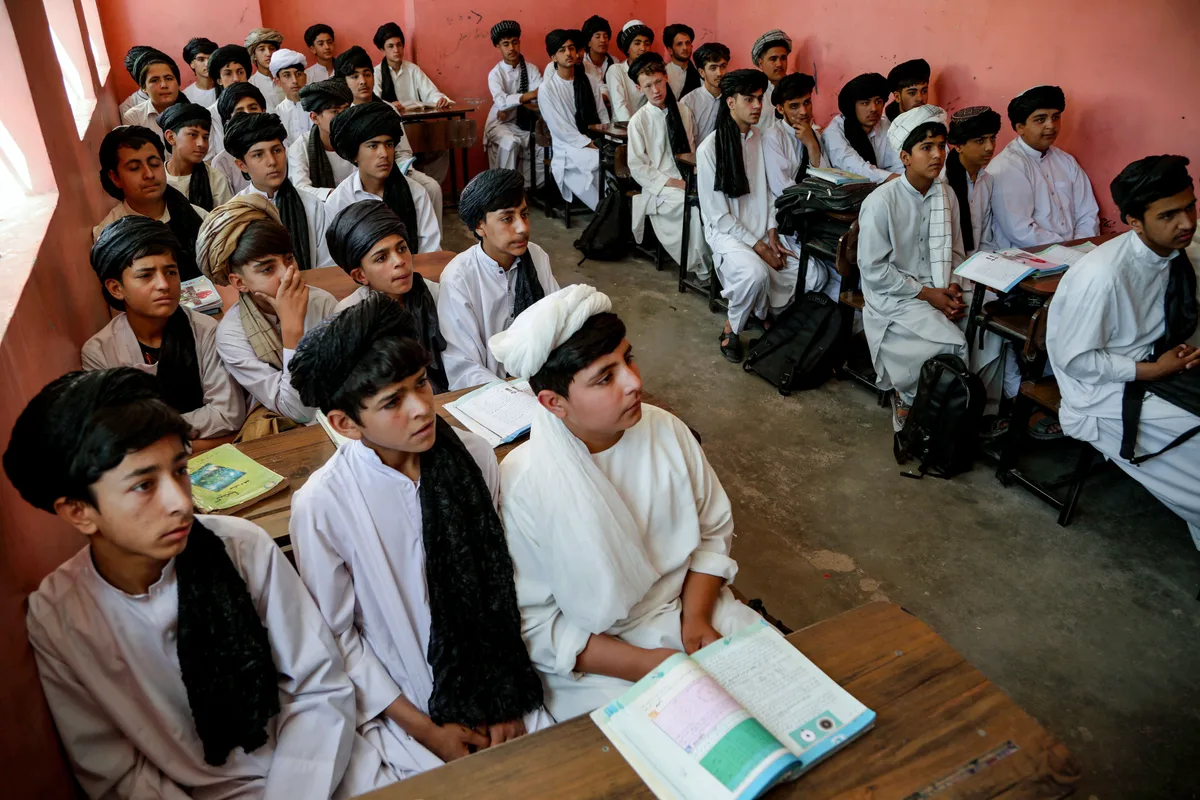
NPR spoke to 15 middle and high school students in Kabul, Herat, Helmand, Ghazni, Ghor, Mazar-e-Sharif and Bamiyan. They described similar experiences: less attention to science, languages such as English and Persian, and civic subjects; more pressure to study religion; stricter rules around appearance; and a growing belief that secular education may no longer lead TO a future career. Students and families said the shift has been especially severe in parts of the south, including Helmand and Kandahar, where families already placed a stronger emphasis on religious studies and Taliban rule has deepened that pressure.
The first changes were visible. Male teachers were ordered to grow longer beards and wear turbans and traditional clothing. Students, too, were expected to follow new rules governing their clothing and appearance.
English, science and biology received less attention, Mubariz said, while the Quran and other religious subjects became more prominent. Religious instruction was no longer confined to Islamic studies. Teachers of science, mathematics and English were expected to include Quranic verses, sayings and traditions attributed to the Prophet Muhammad or other religious messages in their lessons.
For many Afghan children, particularly in areas where access to public schools is limited, madrasas are among the only educational institutions available to them.
Religious education has become a central priority under The Taliban rule, while modern schools have received far less attention.
5News aggregated this summary from the outlet’s public feed. The full article, with all the context, is on www.npr.org — the content belongs to NPR Health.