China dissents as Bessent says 19 finance ministers agree to address 'cheap exports'
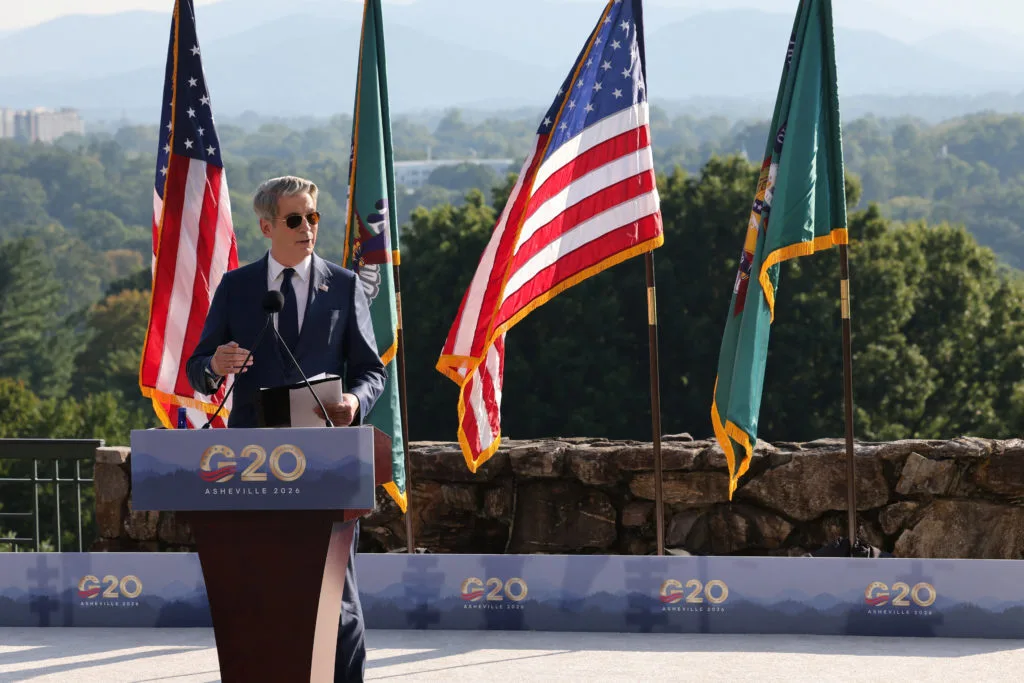
ASHEVILLE, N.C. (AP) — Treasury Secretary Scott Bessent said Tuesday that 19 of the members of the G20 agreed to address streams of "cheap exports" that cause global economic imbalances, but China dissented.
Bessent said that getting even 19 countries to agree to take on the problem was "incredible" and shows "the sheer the enormity of the problem." Bessent spoke after a two-day meeting of the 20 countries in Asheville, N.C.
READ MORE: Hosting G20 meeting, Bessent tries to rally allies on Iran as tariffs strain ties
Bessent said earlier that he's urging some of his G20 counterparts to take a page from the Trump administration's playbook of using tariffs and other measures to crack down on trade imbalances.
China is a leading source of the "cheap exports" Bessent criticized and the administration, echoing many economists, has blamed China for trade imbalances that have left it with a large trade surplus while the U.S. has a sizable deficit. At a closing press conference Tuesday, Bessent also previewed the upcoming meeting between President Donald Trump and China's President Xi Jinping.
He told reporters that he had warned other nations at the beginning of President Donald Trump's second term that the new U.S. "tariff wall" would mean that Chinese goods would flood their markets.
"And unfortunately, I was right," Bessent told reporters on the sidelines of the G20 finance minister meetings. "The rest of the world probably needs to take a hard look at what they should be doing to protect their citizens' jobs, their manufacturing base, so that everything they do doesn't get offshored."
The Trump administration's tariff policies have been criticized by economists and politicians for raising costs for U.S. consumers and, in many cases, for punishing allies. The Tax Foundation, an independent think tank, found that the tariffs imposed by the Trump administration throughout 2025 raised the overall retail price of imported consumer goods by roughly 7% relative to pre-tariff trends.
Ultimately, the U.S. Supreme Court in February decided that the sweeping global tariffs that Trump imposed under an emergency powers law during his second term in office were unconstitutional. The Trump administration has been overhauling its approach, and is eyeing an additional 7.5% tariff on Chinese imports after investigating alleged Chinese excess industrial capacity and forced-labor regulations.
Bessent met with his counterparts from China at the summit and said there was some common ground on Iran, specifically that Iran "cannot have a nuclear weapon" and that oil and other goods should flow freely through the Strait of Hormuz, which Iran has restricted.
He also said Trump and Xi would discuss AI policy when they meet later this month. It "behooves all of us to put up guardrails ... to prevent the non-state actors" building their own models.
Bessent has said China's trade surplus, which reached a record-high $1.2 trillion in 2025, is a barrier to global economic growth — as well as what he calls excessive regulation.
Global debt has reached a record high of $353 trillion, with the U.S. debt reaching a record $40 trillion in August.
5News aggregated this summary from the outlet’s public feed. The full article, with all the context, is on www.pbs.org — the content belongs to PBS NewsHour.