Infectious diseases will seed new ground as the planet warms — here's where they'll spread
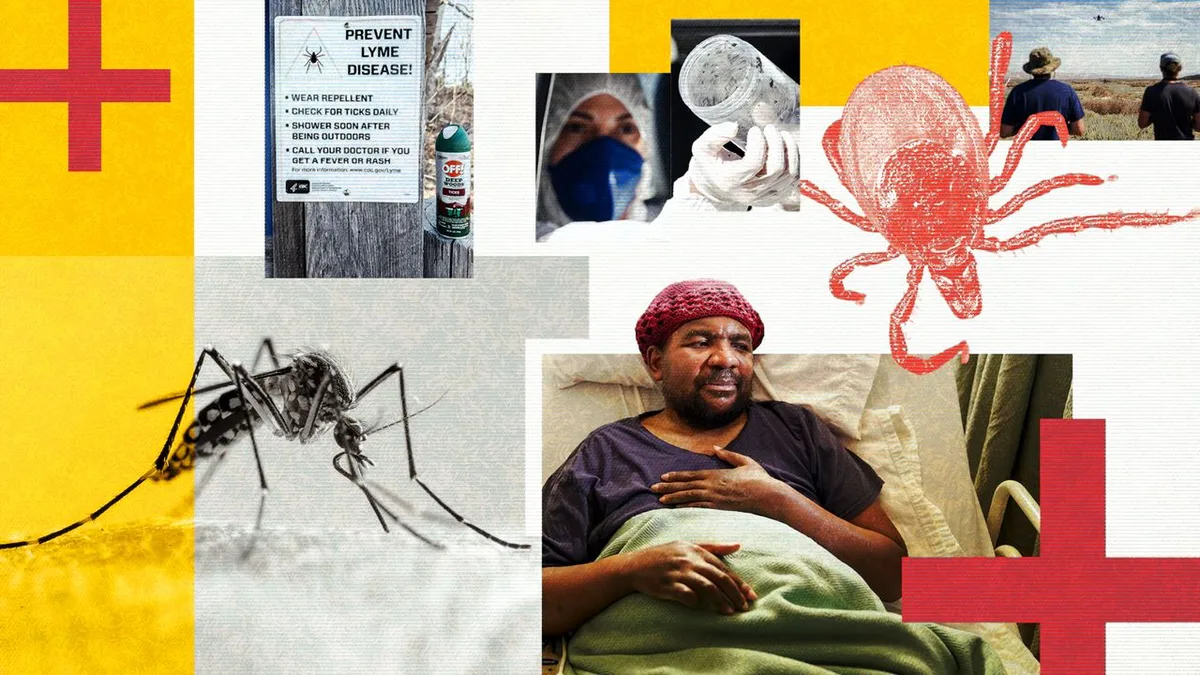
Burning Up As the planet warms, our environment will be transformed, but so will our bodies.
In this series, ' Burning up ,' we investigate the health impacts of climate change, focusing on heat , air quality , food and infection risk.
We also evaluate the promising solutions that could help us adapt to our warmer future.
To the untrained eye, Xiaoyu Shan 's lab bench looked like a home gardening experiment gone bad: dishes filled with dirt — some that looked like mud pies and others that were bone-dry — and not a plant to be seen.
But those dishes held a warning.
The dirt that Shan, a postdoctoral research associate in biology and biological engineering at Caltech, was studying contained soil microbes.
And those soil microbes were exhibiting a concerning propensity: In dried-out soil, they were evolving to become more antibiotic resistant.
The study describing those findings, published in March , systematically showed that drought conditions could fuel the evolution of antibiotic-resistant bacteria.
Most of this resistance is driven by humans' misuse of antibiotics, which spurs bacteria to evolve genes that help them ward off the drugs.
But the Caltech study raised a new worry: As many places face increased drought conditions, climate change itself could act as a selective pressure that could supercharge the evolution of these drug-resistant superbugs .
"We can expect to have more resistant bacteria being selected for in certain places around the globe," said Dianne Newman , a Caltech microbiologist and co-author of the study.
Increased antibiotic resistance is just one way that climate change is likely to put new populations at risk of multiple types of infections.
And this increased disease burden will coincide with climate change scrambling supply chains, eroding nutrition and stressing our health in other ways.
"No individual metric really does justice to the overall risk and health and well-being of these multiple stressors being exacerbated all at once and compounding each other," said Marina Romanello , a principal research fellow at the Institute of Global Health at University College London.
5News aggregated this summary from the outlet’s public feed. The full article, with all the context, is on www.livescience.com — the content belongs to Live Science.